
Roof Inspection & Estimate in Orlando, FL
A roof can look fine from the driveway and still be letting water into the attic. We connect Orlando and Central Florida property owners with licensed local crews who climb the roof, photograph what they find, check the attic from underneath, and hand you a written condition report and estimate, at no cost and with no obligation.
What a Roof Inspection Is, What It Costs, and What You Get
Most people search for this because they need one of four things. Here is how to tell which you need.
A roof inspection is a documented look at the roof surface, the flashing and penetrations, the roof edges, and the attic underneath, with photos and a written summary of what is sound, what is wearing, and what is failing. The inspection we arrange through our network is free, and it comes with a written estimate for any recommended work. There is no obligation to hire anyone.
| If you need... | What you actually need | Typical cost |
|---|---|---|
| To know whether your roof has a problem, or how much life is left | A roofing contractor inspection and estimate (what this page is about) | Free through our network |
| Documentation after a storm | A contractor inspection with dated photos, then a claim with your insurer | Free through our network; the claim is between you and your insurer |
| An insurer asked for a 4-point inspection | A 4-point inspection by a Florida-licensed inspector or contractor, with roof section completed | Usually a separate paid inspection. Ask when you book |
| Wind mitigation credits on your premium | A wind mitigation inspection on the state form (OIR-B1-1802) | Usually a separate paid inspection by a licensed inspector |
| A condition letter for a home sale or a lender | A roof certification letter, sometimes from a roofing contractor | Varies; ask what is included |
Pricing for paid inspections varies by provider and property. We do not publish a figure for them.
The rest of this page explains what a thorough roof inspection should cover, what you should receive, how Florida's insurance-oriented inspections differ, how to prepare, and how to tell a real inspection from a sales pitch.
When a Roof Inspection Makes Sense
Most people call after something goes wrong. These are the better reasons to call earlier.
After a Storm
Wind, heavy rain, or a fallen limb can damage a roof without leaving an obvious sign from the ground. A dated record is useful whether or not you file a claim.
As the Roof Ages
Local roofers commonly report that asphalt shingle roofs in Florida last roughly 15 to 20 years, shorter than the label suggests, because of heat, UV, and humidity. A condition report tells you how much life is left.
Before Buying or Selling
A documented roof condition avoids surprises in a sale, and can support negotiations or insurance underwriting.
When an Insurer Asks
Insurers sometimes request roof condition information, particularly on older homes. See certification and 4-point letters.
After a Leak
If you have had a leak, an inspection tells you whether it was a one-off or a symptom of wider wear.
Before Hurricane Season
A pre-season look, ideally before June 1, finds loose roofing and failed sealant before the next storm does. For what to check, see the pre-season roof maintenance checklist for Central Florida homes.
What a Roof Inspection Actually Covers
A real inspection goes beyond a walk around the yard. These are the three parts.
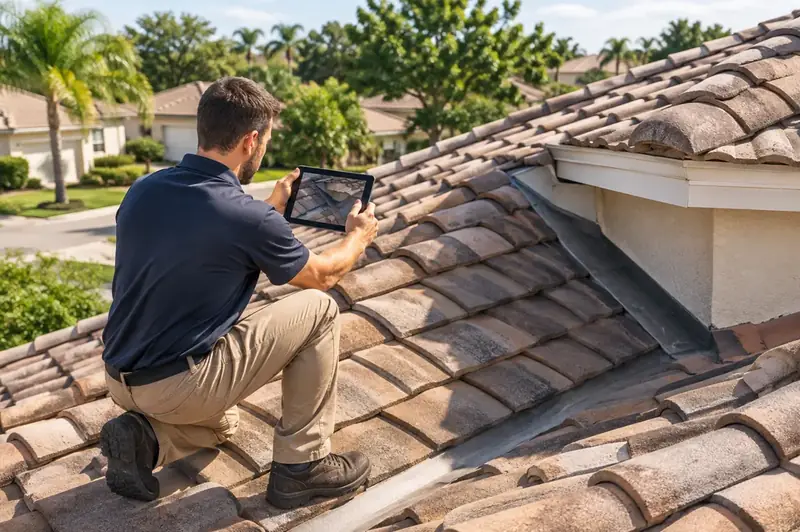
Surface, Flashing & Penetrations
The inspector walks the roof where it is safe and accessible, checking the condition of the shingles, tile, or metal; the seals around vents, pipes, chimneys, and skylights; valleys; and ridge and hip caps. Findings are photographed and dated. On shingle roofs, the inspector looks for cracking, curling, granule loss, exposed asphalt or felt, missing or loose tabs, and soft spots, which are the same categories insurers' forms ask about.
- Shingle wear, granule loss, cracks, and lifted or missing pieces
- Tile that is cracked, slipped, or loose, with attention to how it is attached
- Flashing, sealant, and pipe boot condition
- Valleys, ridge and hip caps, and roof edges
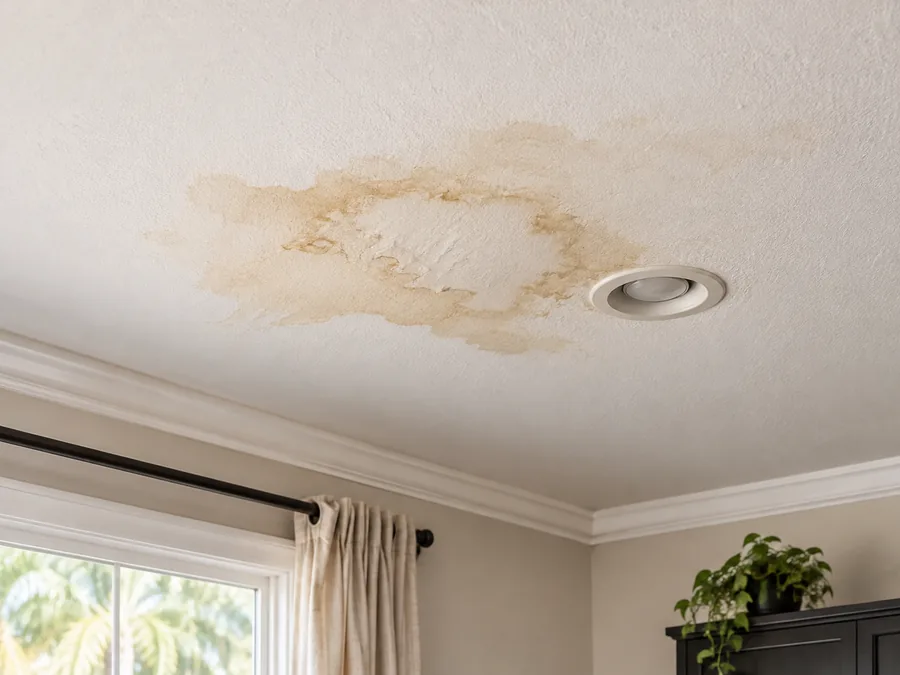
Decking, Insulation & Ventilation
The attic tells the story the surface can hide: water staining on decking and rafters, wet or compressed insulation, daylight where there should be none, and whether ventilation is moving air. In many Florida homes the air handler sits in the attic, so the inspector also notes condensate drain lines and pans, because leaks from them are often mistaken for roof leaks.
- Staining, soft spots, or rot on decking
- Moisture and mold indicators
- Ventilation, insulation, and where visible, how the roof is attached to the structure
- Signs of animal intrusion, such as roof rats, which chew vents and soffits
Gutters, Fascia & Drainage
Where gutters exist, the inspector checks fascia and soffit condition and how the roof sheds water away from the structure. Many Florida homes have none, in which case runoff and ground drainage are noted instead.
- Fascia and soffit rot or damage
- Gutter attachment and downspout discharge
- Drip edge and roof edge condition
The Most Common Findings on Orlando-Area Roofs
Every roof is different, but the same handful of issues come up again and again in Central Florida.
| Finding | Why it happens here | What it usually means |
|---|---|---|
| Cracked or hardened pipe boots | UV and heat break down the rubber collar | A leak waiting for a heavy rain. Cheap to fix now, costly later |
| Failed sealant at flashing and vents | Sun dries and shrinks sealant | Gaps for wind-driven rain. Needs proper flashing, not more sealant |
| Granule loss and curling on shingles | Heat and UV age the asphalt | Surface wearing out; look at remaining life |
| Black streaks and algae growth | High humidity and shade | Mostly cosmetic early, but it holds moisture. See algae on Florida roofs |
| Cracked or slipped tiles | Foot traffic, falling debris, wind, age | Water path to the underlayment |
| Aging tile underlayment | Heat cycles in the attic over decades | Leaks with intact-looking tile; may need a re-roof |
| Debris-packed valleys and edges | Oaks, pines, and palms | Water backs up and wears roofing faster |
| Deck staining or soft spots | Slow leaks over time | Moisture damage; decking repair needed before new roofing |
| Loose or missing ridge and hip caps | Wind and age | Edges where water enters first |
| Air-handler drain issues in the attic | Clogged condensate lines, overflowing pans | A stain that looks like a roof leak but is not |
These are general patterns from roofing practice, not statistics for any one neighborhood.
Many of these findings are cheap to fix when found early and expensive when found after they have caused interior damage. That is the main argument for regular inspections.
Contractor Inspection vs. 4-Point vs. Wind Mitigation vs. Certification
These get confused all the time. They answer different questions, are done by different people, and are used by different parties.
| Contractor inspection | 4-point inspection | Wind mitigation inspection | Roof certification letter | |
|---|---|---|---|---|
| Purpose | Roof condition and what to do about it | Insurer evaluates four systems on an older home | Documents wind-resistant features for premium credits | Written statement of roof condition and remaining life |
| What it covers | Roof, attic, edges | Roof, electrical, plumbing, HVAC | Roof covering, deck attachment, roof shape, secondary water resistance, roof-to-wall, openings | Roof only |
| Who performs it | Roofing contractor | A Florida-licensed inspector or contractor; trade professionals may sign only their trade's section | A licensed inspector | A qualified roofing professional |
| Who uses it | You | Your insurer | Your insurer | Insurers, lenders, buyers |
| Typically free? | Yes, through our network | No; usually a paid inspection | No; usually a paid inspection | Depends on what is requested |
The 4-point inspection in detail
A 4-point inspection is what many Florida insurers ask for before they will write or renew a policy on an older home. Age thresholds and how recent the report must be vary by carrier, so ask your agent. Citizens Property Insurance publishes a sample form that shows the minimum an underwriter expects. On the roof, the form asks for the covering material, roof age, estimated remaining useful life, date of the last roofing permit, whether the roof was fully or partially replaced, overall condition, and any visible damage or deterioration: cracking, cupping or curling, excessive granule loss, exposed asphalt or felt, missing, loose or cracked tabs or tiles, soft spots in the decking, or hail damage. It also asks whether there are visible signs of leaks in the attic or on interior ceilings. Photos of each roof slope are required.
The form must be completed and signed by a verifiable Florida-licensed professional, such as a general, residential, or building contractor, a building code inspector, or a home inspector. A trade professional can sign only the section for their trade. The form states plainly that underwriting relies on it and that it is not a warranty on any system. The HVAC section also asks whether the air handler, condensate line, or drain pan shows blockage or leakage, which is why a leaking drain pan can complicate a 4-point report.
The wind mitigation inspection in detail
A wind mitigation inspection documents features that can reduce wind damage, using the state's Uniform Mitigation Verification Inspection Form, OIR-B1-1802. A revised version, Rev. 04/26, took effect April 1, 2026: inspectors must complete every field and attach photos, the roof covering, roof deck attachment, roof-to-wall, and secondary water resistance questions were updated, and the form recognizes the FORTIFIED Home program. Citizens has said the revisions do not change the credits available, and older forms completed within five years before April 1, 2026 remain acceptable if the home has not been structurally changed. Credit amounts are set by each insurer.
Ask your agent first
Before you pay for any insurance-related inspection, ask your agent exactly what the carrier needs, how recent it must be, and who may perform it. That avoids paying for the wrong report.
Sources & Verification
Facts on this page were checked against the sources below in October 2026. Laws, codes, and program rules change, so confirm current details with the agency before you rely on them.
- Citizens Property Insurance: sample 4-Point Inspection Form — minimum data and inspector requirements
- Citizens Property Insurance: OIR-B1-1802 changes (Rev. 04/26)
How the Free Inspection Works
Most inspections take under an hour on site.
Request & Scheduling
Fill out the form or call. A local crew contacts you to confirm a time that works, and asks about roof type, age, and any known leaks.
On-Site Inspection
The inspector reviews the roof, attic, and roof edges and photographs what they find. Where walking is unsafe or would damage the roof, they use a drone or ladder. Signs of animal damage at vents are covered in animal damage to Orlando roofs.
Findings Review
You walk through the results together: what needs attention now, what can wait, and what it means for cost.
Written Report & Estimate
You receive dated photos, a plain-language condition summary, and a written estimate for any recommended work, free and without obligation.
How to Prepare for a Roof Inspection
A few minutes of preparation makes the inspection faster and the report more useful.
- Gather the roof's history. Installation year, any repairs, permits, previous inspection reports, and warranty paperwork. If you do not know, say so; the inspector can estimate age from condition.
- List what you have noticed. Ceiling stains, where and when they appear, past leaks, missing pieces after a storm, and anything the previous owner mentioned.
- Clear attic access. Make sure the attic hatch is reachable and the way is clear.
- Make gates and pets easy. In a gated community, give the guard or gate code. Secure dogs.
- Have your insurer's requirements ready. If the report is for an insurer, buyer, or lender, tell the crew what the recipient needs.
- Be present for the findings review if you can. It is the best way to ask questions and see photos.
Roof Age, Remaining Life, and What Inspectors Estimate
Remaining useful life is an estimate, not a countdown. Here is what goes into it.
Insurers, buyers, and lenders often ask for a roof's age and remaining useful life. An inspector estimates remaining life from the roofing material, its condition, the climate it has lived through, past repairs, and the evidence in the attic. No inspector can promise exactly how many years a roof will last, and a good report says so.
| Roof type | What strongly affects remaining life in Central Florida | What inspectors look for |
|---|---|---|
| Asphalt shingle | Heat, UV, algae, installation quality. Local roofers commonly report 15 to 20 years, sometimes to 25 | Granule loss, cracking, curling, brittle or lifted tabs, exposed asphalt or felt, sealant failure |
| Concrete or clay tile | The tile can last decades. The underlayment, commonly reported at roughly 20 to 25 years, is usually the limiting part | Cracked or slipped tile, flashing condition, evidence of leaks, age of underlayment if known |
| Metal | Coating and finish condition, fastener and seal condition on exposed-fastener roofs, installation quality | Fastener backout, sealant failure, corrosion at cut edges and fasteners, panel damage |
| Flat or low-slope | Membrane type, drainage, UV exposure | Seams, ponding, blistering, flashing, and drainage |
These are general indications from roofing industry sources, not guarantees.
Under section 627.7011 of the Florida Statutes, an insurer may not refuse to issue or renew a homeowner's policy solely because of the age of a roof less than 15 years old. For roofs 15 years old or older, the homeowner can have an authorized inspector assess the roof, and the insurer may not refuse solely on age if the inspection shows five or more years of useful life remaining. Legislation proposed in 2026 would change these protections, so confirm the current rule with your agent.
Sources & Verification
Facts on this page were checked against the sources below in October 2026. Laws, codes, and program rules change, so confirm current details with the agency before you rely on them.
Inspecting a Roof After a Storm
A post-storm inspection has a different job: finding damage, recording it, and separating storm damage from age.
After a hurricane, tropical storm, or severe thunderstorm, damage to a roof is often invisible from the ground. Shingles can be creased or have broken sealant strips without falling off. Tiles can crack or shift. Fasteners can back out. Flashing can lift. Water can enter at a spot that does not show up until the next heavy rain. A dated inspection while the evidence is fresh gives you a record of what the storm did, which is useful whether or not you file a claim.
What a post-storm inspection looks for
- Missing, creased, torn, or lifted shingles, and broken sealant strips
- Slipped, cracked, or missing tile, and displaced ridge and hip tile
- Lifted or creased metal panels and torn trim
- Damaged or lifted flashing, loose vent caps, and displaced pipe boots
- Impact marks and punctures from limbs and airborne debris
- Exposed underlayment or decking
- Interior and attic evidence of new water entry
Separating storm damage from wear
Insurers distinguish sudden storm damage from long-term wear and age, and a good inspection helps by documenting the difference: fresh breaks, directional damage consistent with the wind, and impact marks versus uniform granule loss, curling, and brittleness across the whole roof. We do not predict what an insurer will decide. We document what is there.
Timing matters
Under SB 2-A (2022), a new or reopened claim must be reported within one year of the date of loss, and a supplemental claim within 18 months. Inspect and report promptly. Details are in our Florida roofing insurance guide.
Using a Roof Inspection When Buying or Selling a Home
Roofs are one of the biggest items in a Florida home sale, and one of the most negotiated.
If you are buying
A general home inspection looks at the roof, but it is a visual look and a generalist's opinion. A roofing contractor inspection can add the attic review, a closer look at flashing and penetrations, and an estimate of remaining life and repair cost. That estimate gives you real numbers to bring to a negotiation: a repair credit, a price reduction, or a request that the seller repair before closing. Because many insurers will not write or will price higher on older roofs, ask your agent for an insurance quote before the inspection period ends, and find out what roof documentation the carrier needs.
If you are selling
A recent roof report can remove a point of friction. If the roof is in good shape, the photos and condition summary support your price. If it needs a repair, you can fix it before listing or offer a credit with a documented estimate. Surprises discovered during a buyer's inspection tend to cost more than problems you already know about and have priced.
| Situation | Typical roof outcome | What the inspection helps with |
|---|---|---|
| Roof is young and healthy | Little or nothing to negotiate | Photos and report support the price and insurance application |
| Roof is middle-aged with minor issues | Repair credit or seller repair | Itemized estimate for a fair credit |
| Roof is near end of life | Price reduction, replacement credit, or seller replaces | Remaining-life estimate and replacement estimate for negotiation |
| Roof is old and insurer is unwilling to write | May block the sale unless addressed | Documentation for the insurer, and a plan and cost for replacement |
See roof certification letters for documentation insurers and lenders sometimes ask for.
Drone and Ladder Inspections: When and Why
Walking a roof is not always the best way to inspect it.
Some roofs are better inspected from the air or from a ladder. Steep pitches are dangerous to walk. Wet roofs are slippery. Concrete and clay tile cracks under foot traffic, so each step can cause the damage the inspection is trying to find. In those cases a drone gives a clear, photo-documented view of every slope, ridge, and penetration without anyone stepping on the roof, and a ladder gives a close look at edges and accessible sections.
- Good for: steep roofs, fragile tile, large or complex roofs, post-storm documentation, and getting complete photos of every slope.
- Limits: a drone cannot press on soft spots, test fastener tightness, or see under flashing, so close-up checks are still needed where safe.
- Always paired with an attic check where there is access, because the attic shows what the surface does not.
Inspecting Commercial and Flat Roofs
Flat roofs are inspected differently, and the stakes for owners and managers are different.
On low-slope roofs, the questions are about drainage, seams, flashing, penetrations, and moisture inside the roof system. Standing water that remains for days after rain, blistering, split seams, torn flashing at walls and curbs, and clogged drains are the common findings. Wet insulation under the membrane is the most consequential, because it usually pushes the decision from repair or coating toward replacement. Infrared moisture surveys can help find wet insulation, and are a tool to narrow the search rather than proof on their own.
For property managers, the deliverable is a prioritized, documented report: what is urgent, what can be scheduled, and what to plan for in the budget. See commercial roof inspection in Orlando and how often to inspect a commercial flat roof.
Questions to Ask Before an Inspection
These questions work for any roofer, and tell you a lot about who you are dealing with.
- Are you licensed in Florida, and what is your license number?
- Can you provide proof of general liability insurance and workers' compensation or an exemption?
- Will you look in the attic, and will I get dated photos?
- Will you walk the roof, or use a drone or ladder, and why?
- Will I receive a written report and estimate, and when?
- If the roof only needs a repair, will you tell me that?
- Is there any charge, and what happens if I do not proceed?
- If this is for an insurer, which form do you complete, and who signs it?
What You Receive After the Inspection
You should walk away with documents you can use, not just an opinion.
| Deliverable | What it should contain |
|---|---|
| Dated photo documentation | Overview and close-up photos of problem areas and of the roof's general condition, for each roof slope, plus attic photos where accessible |
| Condition summary | A plain-language assessment of what is sound, what is wearing, and what is failing, and how urgent each is |
| Written estimate | Itemized pricing for any recommended repair or replacement, so you can compare it with other quotes |
| Honest recommendation | If the roof only needs a small repair, that is what it says. A replacement is recommended only when the evidence supports it |
| Roof age and remaining life estimate (on request) | An estimate of age and remaining life, with the reasoning behind it, for insurers, buyers, or lenders |
An inspection report is a snapshot of the roof's condition on that day. It is not an insurance policy or a warranty, and it does not guarantee coverage or approval by any insurer.
How to Tell a Real Inspection From a Sales Pitch
'Free inspection' is also the oldest opener in roofing sales. A few signs separate the useful ones.
- A real inspection includes the attic. If nobody looks from underneath, the report is half a report.
- Photos are dated and specific. You should see the problem, not just a stock image.
- The recommendation matches the evidence. 'Replace the whole roof' after a five-minute look at a six-year-old roof is a red flag.
- No pressure. You should be able to take the report and compare it.
- License and insurance are verifiable. Look up the contractor's license on MyFloridaLicense.com and ask for proof of insurance.
- No offers to cover your deductible. It is insurance fraud under section 489.147 of the Florida Statutes for a contractor to pay, waive, or rebate a deductible with intent to defraud, and contractors cannot offer anything of value in exchange for inspecting your roof.
- No requests to sign claim paperwork on the spot. Anything that assigns rights or lets a contractor negotiate your claim deserves a hard look. Assignment of benefits was eliminated for policies issued on or after January 1, 2023.
Where Findings Usually Lead
Related Services
Roof Inspections Across Orlando & Central Florida
Inspections are scheduled through our partner network across Orlando and nearby communities. Roof types vary widely by neighborhood, from tile in Windermere to shingle in Oviedo.
Roof Inspection FAQs
Yes. The on-site inspection, photo documentation, and written estimate from your assigned local crew are free and carry no obligation.
Most take under an hour on site, depending on roof size, complexity, and attic access. A written report follows.
Not always for the exterior, but being present for the findings review is helpful, and attic access requires someone to let the inspector in.
Where it is safe. Steep, wet, or fragile surfaces, including some tile roofs, may be assessed by drone or from a ladder to avoid causing damage.
No. Those are separate insurance-oriented inspections, often performed by licensed inspectors for a fee. See the comparison above and certification letters.
A dated photo record of storm damage helps document the loss. It does not guarantee coverage, which depends on your policy. See the Florida insurance guide.
A general rule is once a year and after any major storm, ideally before June 1. See how often to inspect your roof.
No. You receive findings and an estimate, and the decision is yours. If the roof only needs a small repair, that is what the report will say.
A verifiable Florida-licensed professional such as a general, residential, or building contractor, a building code inspector, or a home inspector. A trade professional may sign only the section for their trade.
Typically the covering material, age, remaining useful life, condition, any visible damage or leaks, and last permitted work. The 4-point form shows the specific items.
No. It covers the roof, attic, and roof edges. A 4-point inspection also covers electrical, plumbing, and HVAC.
You receive a diagnosis and a written scope. See roof leak repair. If water is actively entering, see emergency roof repair.
Find Out What Your Roof Really Needs
Book a free inspection and get a documented answer you can use, whether you repair, replace, or leave it alone.
Orlando Roofing Crew connects property owners with vetted, independently licensed and insured Florida roofing contractors. Inspections, repairs, and workmanship warranties are provided directly by the independent licensed contractor assigned to your property.
Request a Free Inspection
A local specialist inspects your roof and gives you a written scope. No obligation.