
Roofing in Orlando, FL
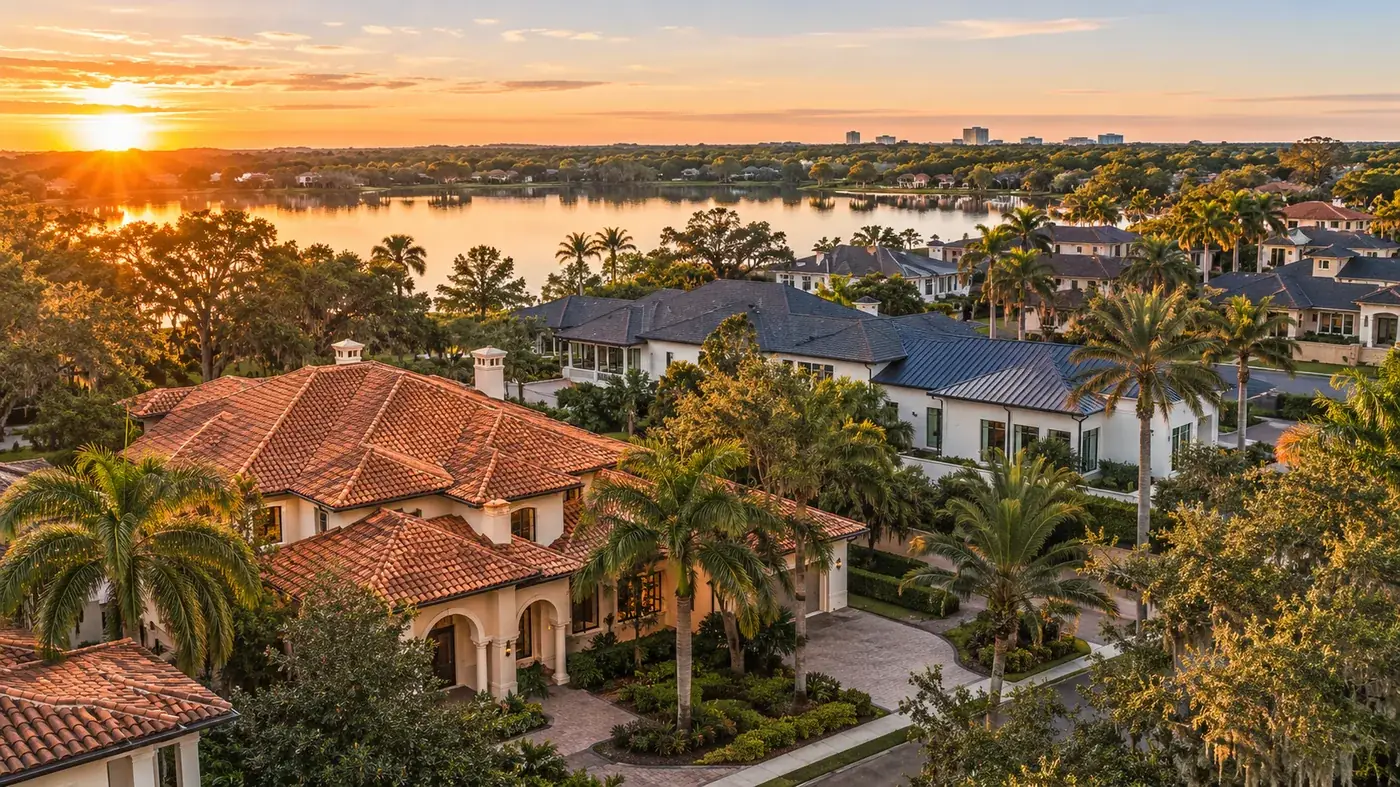
From historic bungalows in College Park to new construction in Lake Nona, Orlando roofs face daily summer storms, intense sun, and hurricane-season wind. Orlando Roofing Crew connects Orlando homeowners and commercial owners with licensed, insured local crews for leak repair, emergency response, replacement, metal and tile roofing, and inspections.
What Shapes Roofing Decisions in Orlando
Orlando's climate and its wide mix of housing eras decide most roofing choices here.
Daily Summer Storms
From roughly June through September, afternoon thunderstorms are routine. Heavy rain finds roof defects fast, so a small leak shows up quickly inside.
Hurricane-Season Wind
Hurricane season runs June 1 through November 30. Orlando is inland, but storms such as Charley in 2004 and Ian in 2022 still brought damaging wind and rain to Central Florida. Wind performance matters when choosing and installing a roof.
Sun, Heat and Humidity
Constant UV and heat age shingles faster than in cooler climates, and humidity encourages algae and black streaking.
Every Era of Housing
Pre-1960s homes in College Park and Audubon Park, 1980s-2000s subdivisions in Conway and Hunters Creek, and new construction in Lake Nona all need different approaches.
City and County Permitting
Inside city limits, re-roofs go through Orlando Permitting Services with a dry-in inspection and an inspection affidavit. Some Orlando-area addresses are unincorporated Orange County and use a different office.
Roof Age Drives Insurance
With so many 1990s and 2000s roofs, age and condition documentation matters to insurers, and Florida law has specific protections that depend on it.
Roofing Problems Orlando Property Owners Encounter
The most common issues found during Orlando roof assessments.
UV-Baked Boots, Flashing and Sealant
Constant sun dries out rubber collars and sealant. A small crack lets in rain every afternoon until it is found.
Storm DamageWind and Debris Damage After Storms
Missing shingles, slipped tile, and limb impacts after a storm often need tarping fast.
Aging RoofsShingle Roofs at the End of Their Life
Florida heat shortens shingle life, and 1990s and 2000s subdivisions are reaching replacement age.
TileUnderlayment Failing Beneath Sound Tile
Tile can look fine while the layer beneath it fails, which is a classic Orlando leak source.
Not Sure Which Service You Need?
Match what you are seeing at your Orlando property to the right next step.
Orlando Housing Stock & Roof Types
Orlando's roofs reflect a century of growth, from downtown bungalows to master-planned communities.
Orlando Architectural Eras & Roof Systems
- Historic core (pre-1960): bungalows and period homes in College Park, Thornton Park, and Lake Eola Heights with older decking and detailed rooflines.
- Post-war neighborhoods (1950s-70s): Audubon Park, Delaney Park, and Colonialtown with single-story homes that have often been re-roofed more than once.
- Suburban growth (1980s-2000s): Conway, Azalea Park, Hunters Creek, and MetroWest, where original shingle roofs are reaching replacement age.
- Newer communities (2010s-today): Baldwin Park and Lake Nona, with tile and architectural shingle roofs still early in their life.
What This Means For Your Project
- Older homes often need deck repair once the old roof comes off
- Suburban shingle roofs from the 1990s and 2000s are common replacement candidates
- Newer roofs may still be within manufacturer or builder warranty, so check before repairs
- Historic districts such as Lake Eola Heights may require review for exterior changes
What Orlando Roofs Are Made Of, and Where They Fail
Orlando's housing spans a century. The roof on your street usually tells you the era.
Orlando grew in waves. The citrus-and-lakes city of the early 1900s left bungalows and masonry homes in neighborhoods such as College Park, Lake Eola Heights, and Thornton Park. Post-war growth added single-story ranch and block homes in places like Audubon Park, Delaney Park, and Colonialtown. The theme-park era, from the 1970s on, built the large suburbs ringing the city: Conway, Azalea Park, MetroWest, and Hunters Creek. More recently, redevelopment such as Baldwin Park, on the former Naval Training Center, and the master-planned communities of the southeast, including Lake Nona, added new construction. Each era brings different roof types and failure patterns.
| Era and area | Typical roof | What fails first |
|---|---|---|
| Pre-1960 bungalows and masonry homes (College Park, Thornton Park, Lake Eola Heights) | Mixed: older shingle, some clay or concrete tile, metal accents | Flashing at chimneys and dormers; aged decking under multiple layers; mature tree damage |
| 1950s to 1970s ranch and block homes (Audubon Park, Delaney Park, Colonialtown) | Mostly shingle, often re-roofed more than once | Penetrations and valleys; deck rot under old leaks; ventilation shortcomings |
| 1980s to 2000s suburbs (Conway, Azalea Park, MetroWest, Hunters Creek, Southchase) | Shingle and concrete tile, many original | Aging shingles at replacement age; tile underlayment at or past life; flashing |
| 2010s and newer (Baldwin Park, Lake Nona) | Architectural shingle and tile, early in life | Installation defects; builder warranty issues; storm damage |
| Commercial corridors (Orange Avenue, Colonial Drive, Orange Blossom Trail, International Drive area) | Low-slope membranes: TPO, modified bitumen, built-up | Ponding, penetrations, drains, and aging membranes |
General patterns, not a survey. Your roof's details are specific to your property.
A useful rule: if your home is more than about 20 years old and the roof is original, you are in the window where replacement conversations begin, with shingles often reaching the end of their service life sooner in Florida than the label suggests, and tile roofs reaching the age where underlayment is the question. A free inspection documents which you have.
The City of Orlando Re-Roof Process, Step by Step
Orlando publishes its re-roof requirements. These are the points that matter to you.
Inside Orlando city limits, a re-roof is applied for through the City's Permitting Services Division. The City says it contacts applicants within three business days of receiving the application, fees are determined after approval, and the permit, inspection sheet, and inspection affidavit are sent by email. The application asks for the estimated project cost, roof specifications including underlayment and covering details, and the fastener type. Inspections are scheduled online. For the Orange County and City of Orlando comparison, see roof permits in Orange County and the City of Orlando.
- Dry-in inspection. As of January 1, 2020, the City reinstated the in-progress (dry-in) inspection, inspection code 125, for all residential and commercial re-roof projects. Projects that skip it may be disapproved and required to remove the roof.
- Inspection affidavit. A completed affidavit is required for the final inspection, verifying roof deck nailing and the secondary water barrier.
- Who can pull the permit. A licensed roofing contractor, or an owner-builder who signs a declaration in person at the Permitting office. For self-performed work over $5,000, a recorded Notice of Commencement is required.
- Is my address in the City? Parts of the Orlando area, including some Dr. Phillips and Conway addresses, are unincorporated Orange County, which uses a different office (Division of Building Safety) and its own online system and affidavit. Check the Orange County Property Appraiser site: it shows 'Un-Incorporated' if the county serves the address.
Your contractor handles these steps. You should ask for the permit number, and confirm the dry-in inspection is scheduled before the new roof is covered.
Sources & Verification
Facts on this page were checked against the sources below in October 2026. Laws, codes, and program rules change, so confirm current details with the agency before you rely on them.
- City of Orlando: Apply for a Residential Roof Permit
- Orange County: Roof Permit information — unincorporated Orange County
Roof Age, Insurance, and Older Orlando Homes
Many Orlando owners learn about their roof's age from their insurance agent.
With much of Orlando's housing stock built in the 1980s through the 2000s, roof age is a daily underwriting topic. Under section 627.7011 of the Florida Statutes, an insurer may not refuse to issue or renew a homeowner's policy solely because of the age of a roof under 15 years old. For a roof 15 years old or older, a homeowner can have an authorized inspector assess the roof, and the insurer may not refuse solely on age if the inspection finds five or more years of remaining useful life. Older homes may also be asked for a 4-point inspection, and many policies pay on an actual-cash-value basis or a reimbursement schedule for roofs 10 or more years old.
- Ask your agent what roof documentation your carrier needs, and how recent it must be
- A free roof inspection documents condition; a 4-point or wind mitigation inspection is a separate, usually paid, inspection
- A new roof can qualify for wind mitigation credits, which are carrier-specific. See certification, 4-point, and wind mitigation letters
- After a storm, report claims promptly: one year for a new claim from the date of loss under SB 2-A. See storm damage and claims
Orlando's Weather and What It Does to a Roof
Orlando's climate is predictable, which makes planning possible.
Orlando averages roughly 50 inches of rain a year, mostly from June through September in short, intense afternoon thunderstorms. Hurricane season runs June 1 through November 30. Inland as it is, the area has seen damaging wind and rain from storms such as Hurricane Charley in 2004 and Hurricane Ian in 2022. Between storms, relentless sun and heat age roofing materials, and humidity grows algae on shaded roofs.
| Season | What the roof faces | What to do |
|---|---|---|
| February to May | Drier, calmer weather | Best time for inspections, repairs, and replacements. Book early |
| June to September | Daily storms, heat, peak humidity, tropical activity | Keep drains clear; inspect after storms; watch for new stains |
| October to November | Late-season storms; falling leaves and limbs | Post-season check; clear debris; document damage promptly |
| December to January | Mild, dry stretches | Plan next year's repairs and replacements |
Rainfall figures are long-term averages and vary by year; we confirm normals against National Weather Service data.
See our hurricane season roof prep checklist and emergency roof repair.
Commercial Roofing in Orlando
From downtown offices to retail strips to multifamily, low-slope roofs dominate commercial Orlando.
Orlando's commercial roofs include office and mixed-use buildings downtown, retail along Colonial Drive and Orange Blossom Trail, restaurants and hospitality in the tourist corridors, medical offices around Lake Nona, and large multifamily communities across the metro. Most are low-slope roofs with membranes such as TPO, modified bitumen, or built-up systems, and many carry rooftop equipment. Ponding, penetrations, drains, and aging membranes are the recurring issues. Owners and managers benefit from documented inspections, a prioritized scope, and a roof plan. See commercial roofing and its sub-pages on leak repair, coatings, and maintenance.
Serving Communities Across Orlando
Orlando spans downtown, a ring of established neighborhoods, and fast-growing southeast and west sides.
College Park & Ivanhoe
Historic bungalow neighborhoods with older decking and mature trees.
Thornton Park & Lake Eola Heights
Close-in historic areas where exterior review may apply.
Baldwin Park & Audubon Park
Newer and mid-century neighborhoods with very different roof ages.
Conway, Azalea Park & Hunters Creek
Southeast Orlando suburbs with 1980s-2000s shingle and tile roofs.
Vetted local crews serve residential subdivisions and commercial corridors throughout Orlando and the surrounding area. A brief call confirms crew availability for your street.
Roofing Services in Orlando, FL
Orlando property owners can access leak repair, emergency response, replacement, metal and tile roofing, inspections, and commercial roofing.
Roof Leak Repair
Leak tracing and repair for flashing, penetrations, valleys, and tile underlayment across Orlando's older and newer neighborhoods.
Orlando Roof Leak Repair →Emergency Roof Repair
Emergency tarping and temporary protection when water is coming in or a storm has opened the roof.
Orlando Emergency Roof Repair →Roof Replacement
Permitted replacement in shingle, tile, or metal for Orlando homes from historic districts to new subdivisions.
Orlando Roof Replacement →Metal Roofing
Standing seam and other metal systems for Orlando homes that want long life and wind performance.
Orlando Metal Roofing →Roof Inspection
Photo reports, attic checks, and written estimates for homeowners, buyers, and sellers.
Orlando Roof Inspection →Commercial Roofing
Flat and low-slope roof service for Orlando businesses, retail centers, and multifamily properties.
Orlando Commercial Roofing →How a Orlando Roof Inspection Works
A documented first step with no obligation.
Schedule On-Site Evaluation
Request an inspection and a local crew confirms a time for your Orlando property.
Roof & Attic Review
The crew reviews the roof surface, flashing, penetrations, and the attic from below.
Date-Stamped Photo Report
You receive photos of problem areas and a plain-language condition summary.
Written Scope & Estimate
An itemized estimate follows, with no obligation to proceed.
Orlando Building Permits & Local Rules
Roof replacements inside Orlando city limits are permitted through City of Orlando Permitting Services, while unincorporated areas fall under Orange County. Your contractor confirms which applies to your address and handles the paperwork.
- Replacements are permitted and inspected by the local building department, including an in-progress dry-in inspection and a final inspection with an affidavit in the City of Orlando
- Locally designated historic districts such as Lake Eola Heights may need review before exterior changes
- HOA and neighborhood rules vary. Check yours before ordering materials
- Your contractor can confirm requirements for your specific address
More Roofing Help in Orlando
Nearby Areas We Serve
Orlando is part of our Central Florida service area. Neighboring communities are listed below.
Orlando Roofing FAQs
Yes, including the city proper and surrounding Orange County communities. Use the area pages for local detail.
Routine inspections are scheduled within a few days. Active leaks are dispatched ahead of routine calls.
Yes. In the City of Orlando, it also needs an in-progress dry-in inspection and a final inspection with an affidavit on deck nailing and the secondary water barrier. Your contractor handles it.
Check the Orange County Property Appraiser site, which shows 'Un-Incorporated' for county-served addresses. Your contractor will confirm which office issues your permit.
Yes. See tile roofing and metal roofing.
Florida roofing contractors are licensed through the state. Look up any license at MyFloridaLicense.com. See how to vet a roofing contractor.
Not automatically. Under section 627.7011, an insurer may not refuse to issue or renew solely because of age on a roof under 15 years old, and for older roofs an inspection showing five or more years of useful life remaining protects against refusal on age alone. Ask your agent.
Any time with a good schedule, but the drier months are easier to manage. See the best time of year to replace a roof.
Yes. See commercial roofing.
Stay safe, document damage, call for temporary protection if needed, and report the loss to your insurer promptly. See storm damage and claims.
Protect Your Orlando Property with a Trusted Local Roofing Crew
A free inspection is the fastest way to find out where your Orlando roof stands.
Orlando Roofing Crew connects property owners with vetted, independently licensed and insured Florida roofing contractors. Inspections, repairs, and workmanship warranties are provided directly by the independent licensed contractor assigned to your property.
Request a Free Inspection
A local specialist inspects your roof and gives you a written scope. No obligation.