
Tile Roofing in Orlando, FL
Tile roofs are a Central Florida signature, and they are not repaired like shingles. The tile sheds water, but the underlayment beneath it is the real waterproofing layer, and it usually ages out before the tile does. Orlando Roofing Crew connects Orlando owners with licensed local crews who know how to work on tile without breaking more of it.
How a Tile Roof Actually Keeps Water Out
Understanding this one thing explains most tile roof problems, and most of the bad advice about them.
A tile roof is two systems stacked. On top, the tile is a rugged, sun-resistant shield that sheds most water and protects what is below. Underneath, the underlayment is the actual waterproofing: a membrane laid over the roof deck that catches whatever water gets past the tile and sends it down to the gutters or edge. Flashing at walls, valleys, and penetrations connects the two.
That is why the most common tile roof complaint is a leak with perfectly intact-looking tile. The tile is fine; the underlayment or flashing has failed. Roofing industry sources commonly report that concrete and clay tile can last 40 to 50 years or more, while the underlayment beneath typically lasts roughly 20 to 25 years, so on an older tile roof the real service life is usually set by the underlayment, not the tile. Heat in a Florida attic accelerates the aging.
| Component | Job | Typical failure |
|---|---|---|
| Tile | Shields the underlayment from sun, wind, and most rain; sheds water | Cracks from impact or foot traffic; slips when fasteners or adhesive fail; fades |
| Underlayment | Waterproofing layer | Hardens and cracks with age and heat; fastener holes open |
| Flashing | Seals walls, valleys, penetrations, and edges | Corrodes, separates, or was installed poorly |
| Attachment (fasteners, foam adhesive, or mortar) | Holds tile to the roof in wind | Adhesive or mortar degrades; fasteners corrode |
| Deck | Structural base | Rot and delamination from long-term leaks |
Signs Your Tile Roof Needs Attention
Tile can look intact from the ground while the layer underneath is failing.
Interior Leaks With Intact-Looking Tile
This usually points to underlayment or flashing, not the tile itself.
Cracked, Chipped, or Slipped Tiles
Foot traffic, falling limbs, and wind can crack or shift tile. See cracked and slipped roof tiles.
Roof Reaching Underlayment Age
On a 20-to-25-year-old tile roof, the underlayment may be at or past its life even if nothing has leaked yet.
Cracked Mortar or Foam at Ridges and Hips
Material at ridges and hips can crack with age and movement, letting wind and water under the caps.
Tiles That Rattle, Sit Crooked, or Look Loose
Loose tile is a wind risk. In high wind, unsecured tile can become a projectile.
Insurance Questions About Roof Age
Carriers often ask about the age and condition of a tile roof's underlayment. A documented inspection helps.
Concrete Tile vs. Clay Tile
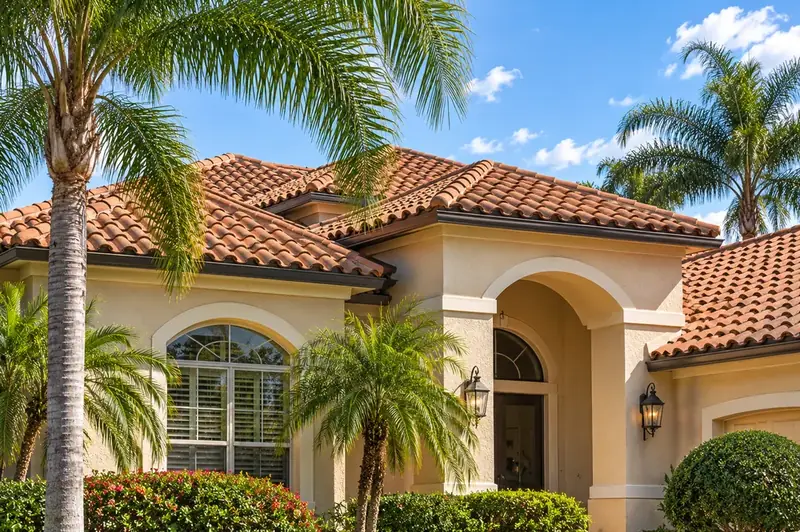
Concrete Tile
Widely used across Central Florida subdivisions. Concrete tile is durable, available in many profiles and colors, and usually costs less than clay. It is heavy: standard concrete tile commonly runs about 9.5 to 12 pounds per square foot, versus roughly 2.5 to 4 for asphalt shingles, and lightweight versions exist at roughly 5.5 to 7.
- Heavy, so structure is verified before installation
- Color can fade over time depending on finish
- Matching older profiles for repairs can take sourcing
Clay Tile
Fired clay tile is common on Mediterranean and Spanish-style homes. It keeps its color well and has a long track record, but tends to cost more and can be more brittle underfoot.
- Color is generally fired in, so it holds its appearance
- Requires careful handling during repair
- Historic districts may favor the original look
How Tile Is Attached in Florida, and Why It Matters
After hurricanes in the 1990s, Florida changed how tile is installed. How your tile is attached affects wind performance.
In high winds, loose tile is dangerous, both to the roof and to whatever the pieces hit. Florida's building code addresses tile attachment, and the industry's reference is the Florida High Wind Concrete and Clay Roof Tile Installation Manual, produced by the Tile Roofing Industry Alliance with the Florida Roofing and Sheet Metal Contractors Association. Its current edition, the 7th, took effect December 31, 2023, and many tile manufacturers adopt it as their installation guide. The manual covers the underlayment and attachment methods acceptable in high-wind applications in Florida.
| Attachment method | How it works | Notes |
|---|---|---|
| Mechanical fasteners (screws or nails) | Tile is fastened through to the deck or battens | Common and straightforward; fastener corrosion and underlayment penetrations matter |
| Foam adhesive | Polyurethane foam adhesive bonds tile to the underlayment or battens | Widely used in Florida, particularly on re-roofs; requires correct surface prep and temperature conditions |
| Mortar set | Tile is bedded in mortar | A traditional method, especially for hips and ridges; mortar can crack with age |
Allowed methods depend on the product, the code edition, and the wind zone. Your contractor should show you what the product's approval and the manual require.
The practical meaning: when you re-roof tile or replace tile after a storm, ask which attachment method will be used and whether it matches the product's approval and the manual. An old tile roof attached by mortar alone may not meet current standards, which a re-roof is the moment to correct.
Sources & Verification
Facts on this page were checked against the sources below in October 2026. Laws, codes, and program rules change, so confirm current details with the agency before you rely on them.
- Tile Roofing Institute: Florida High Wind installation manuals — 7th Edition effective December 31, 2023
- Florida Building Commission: 6th Edition manual on file
Why the Underlayment Is the Real Roof
On a tile roof, the tile protects the underlayment from sun and wind, but the underlayment is what actually stops water. Over many years of heat it hardens and cracks, and fasteners that pierce it become leak paths.
- Leaks with sound tile almost always trace to underlayment or flashing
- A full re-roof lifts the tile, replaces the underlayment, and reinstalls the tile
- Sound tile is typically reused, with broken pieces replaced and matched where available
- Attachment is checked and upgraded to current code during a re-roof
- A stronger underlayment, such as a self-adhering membrane, is often specified when re-roofing, which can extend the system's service life
- See tile roof repair vs. replacement
The Tile Re-Roof, Step by Step
A tile re-roof is one of the more involved residential roofing jobs. This is the sequence.
- Inspection and scope. The crew assesses tile condition, flashing, underlayment (where accessible), and deck, and decides how much tile can be reused.
- Permit and approvals. The contractor applies for the permit and, where required, HOA approval. The permit lists the underlayment and attachment method.
- Tile removal and staging. Tile is removed in sections, inspected, and stacked. Broken pieces are culled. This is heavy, careful work and takes time.
- Deck inspection and repair. Exposed decking is checked for rot and delamination. Damaged sections are replaced and the deck is re-fastened as the permit requires.
- Underlayment and flashing. New underlayment, secondary water barrier where specified, and new flashing and edge metal go on.
- Tile reinstallation. Sound tile is reinstalled by the specified attachment method, with replacements for broken pieces matched as closely as possible. Ridges and hips are re-set.
- Inspection and cleanup. Required inspections are completed, and the site is cleaned.
The City of Orlando requires an in-progress (dry-in) inspection on re-roofs, and a final inspection with an affidavit confirming roof deck nailing and the secondary water barrier. Other jurisdictions have comparable steps. Your contractor schedules them; you should ask for the results.
Sources & Verification
Facts on this page were checked against the sources below in October 2026. Laws, codes, and program rules change, so confirm current details with the agency before you rely on them.
What Tile Repair Fixes, and When a Re-Roof Makes Sense
Repair Works For
- A handful of cracked or slipped tiles
- Isolated flashing failures
- Localized underlayment problem around one penetration
- Cracked ridge or hip mortar
A Re-Roof Is Usually Needed When
- Leaks are occurring in multiple areas
- Underlayment has aged across the whole roof
- Repeated repairs keep adding up
- Attachment is outdated and the roof needs to be brought to current standards
Walking on Tile
Walking on tile cracks it. Crews experienced with tile use planned paths and minimize foot traffic. This is also why you should avoid sending a general handyman up there.
Wind Considerations
Loose tiles can become projectiles in high winds. Attachment method and condition matter. Inspect after storms, and have loose tile re-secured.
Common Tile Roof Repairs and How They're Done
Knowing what a repair involves helps you judge a quote.
| Problem | What the repair involves | What to ask |
|---|---|---|
| Cracked or broken tile | Remove the damaged tile, check the underlayment beneath, install a matching tile, and secure it by the correct method | How will the replacement match, and what is done about the underlayment under it? |
| Slipped or loose tile | Lift, re-seat, and re-secure the tile; investigate why it slipped (failed adhesive, corroded fastener) | Is the cause fixed, or only the symptom? |
| Cracked ridge or hip mortar or foam | Remove failed material, re-set ridge or hip tile, and re-seal with a suitable method | Which material is being used, and does it fit the original system? |
| Leaking flashing at walls, valleys, penetrations | Remove surrounding tile, replace flashing with the correct metal and overlaps, re-set tile | Will the flashing be replaced rather than sealed over? |
| Localized underlayment failure | Lift tile in the affected area, replace underlayment, reinstall tile | How far does the repair extend, and how are edges tied into old underlayment? |
| Full underlayment failure | A lift-and-relay re-roof: remove all tile, replace underlayment and flashing, reinstall tile | How much tile is reusable, and how is breakage handled? |
Repairs on tile roofs are only as good as the crew's tile experience. A repair that patches over a failed underlayment without opening the area to check it is a patch, not a repair.
Maintaining a Tile Roof and Preparing It for Storm Season
Tile is durable, but it is not maintenance-free, and it behaves differently in storms.
Annual care
- Have the roof inspected once a year, ideally before June 1, by a crew experienced with tile.
- Stay off the roof. Foot traffic cracks tile. If someone must go up, use a tile-experienced crew.
- Clear debris gently, especially from valleys and where tile meets walls, where leaves hold moisture.
- Be careful with cleaning. Pressure washing can damage tile surfaces and push water under tile. Ask about gentle soft-wash methods for algae. See soft wash vs. pressure washing.
- Trim overhanging limbs, which crack tile when they fall and drop debris.
Before a storm
- Have loose, slipped, or cracked tile re-secured or replaced
- Check ridge and hip caps
- Photograph the roof's condition for your records
- Know who to call for emergency tarping on a tile roof, since the method differs from shingles
After a storm
- Look from the ground for displaced tile and debris, and watch for new interior stains
- Do not walk the roof. Call for an inspection and temporary protection
- Document damage before repairs, and report any claim promptly
Tile Roof Myths That Cost Homeowners Money
Because tile looks permanent, people believe things about it that are not true.
'My tile roof will last 50 years, so I don't need to worry.'
The tile may. The underlayment, commonly reported at roughly 20 to 25 years, usually does not. A tile roof at 25 years old with original underlayment is the most common tile roof problem.
'If the tile looks fine, the roof is fine.'
Tile hides the underlayment. A leak, a stain in the attic, or the roof's age is a better indicator than the surface.
'Any roofer can fix tile.'
Tile needs crews who handle it often. A careless repair breaks more tile and can leave the underlayment untouched.
'A sealer or coating will restore my tile roof.'
A coating may change color or surface appearance, but it does not renew a failed underlayment. Ask for evidence of what a coating will and will not do before paying for one.
'Tile roofs don't leak in hurricanes.'
Tile roofs can perform well, but loose or poorly attached tile can become projectiles, and wind-driven rain can get under tile into an aged underlayment. Attachment and underlayment condition matter.
Structure, Weight, and Switching Materials
Tile is heavy. Changing to or from tile is a structural question first.
Concrete tile commonly weighs several times what asphalt shingles do, roughly 9.5 to 12 pounds per square foot for standard tile compared with about 2.5 to 4 for shingles. A house built for tile is framed for it. A house built with shingles may need a structural review, and in some cases reinforcement, before switching to tile. Going the other way, from tile to shingle or metal, reduces the load, but the roof deck and attachment still have to be brought to current standards and the project permitted.
- Tile to shingle or metal: lighter and increasingly common on aging tile roofs, especially where underlayment replacement would be costly. Check HOA rules, and read metal vs. tile vs. shingle in Central Florida.
- Shingle to tile: requires confirming the structure can carry the weight, usually with an engineer's or building department's input.
- Tile to tile: the usual re-roof, with sound tile reused over new underlayment.
Tile Roofs, Insurance, and Roof Age
Age and condition matter to insurers, and tile roofs are not exempt.
Insurers often ask for a tile roof's age, condition, and underlayment status, since an aged underlayment is a leak risk even when the tile looks perfect. Under section 627.7011 of the Florida Statutes, an insurer may not refuse to issue or renew a homeowner's policy solely because of the age of a roof under 15 years old. For roofs 15 or older, an authorized inspection showing five or more years of remaining useful life protects against refusal on age alone. A tile roof with older underlayment may not meet that bar, even when the tile is sound, so a documented inspection matters.
Policies on older roofs may pay on an actual-cash-value basis or through a roof surface reimbursement schedule. Under Florida's 2022 legislation, insurers can offer such schedules for roofs 10 years or older, with statutory minimum reimbursement percentages that differ by roof type. A storm claim on an older tile roof may therefore pay less than the cost of the work. Read your roof coverage terms before a storm. See our Florida insurance guide.
Sources & Verification
Facts on this page were checked against the sources below in October 2026. Laws, codes, and program rules change, so confirm current details with the agency before you rely on them.
What Drives Tile Roof Costs in Orlando
Tile repair and re-roof costs vary widely. These factors explain the range.
| Cost factor | How it changes the price |
|---|---|
| Repair or re-roof | A handful of cracked tiles is a small repair. An underlayment failure across the roof is a full re-roof. |
| Tile profile and availability | Common concrete profiles are easier to source than older or custom clay profiles. |
| Roof size and pitch | Tile is heavy and slow to handle. Steep or complex roofs cost more. |
| Reuse vs. new tile | Reusing sound tile can reduce material cost, but breakage during removal has to be replaced. |
| Underlayment and deck | Underlayment type and any deck repair found once tile is lifted affect the total. |
| Attachment method | Foam, mortar, or fasteners, and what the product approval requires, change labor and material. |
One published Orlando-area guide (RoofingCalc, updated March 2025) puts full tile replacement at roughly $14.00 to $19.50 per square foot installed, or about $28,000 to $39,000 for a 2,000-square-foot roof. A tile re-roof that reuses sound tile and replaces the underlayment is a different job and priced differently, as are small repairs. Treat published figures as indications, and ask for a written, itemized estimate after an inspection.
Sources & Verification
Facts on this page were checked against the sources below in October 2026. Laws, codes, and program rules change, so confirm current details with the agency before you rely on them.
- RoofingCalc: How Much Does a New Roof Cost in Orlando? — published estimate, updated March 26, 2025
Published estimates vary between sources and over time.
Choosing a Tile Roofing Contractor
Tile work is a specialty, and the wrong crew can cause more damage than the original problem.
- Verify the license. A Certified Roofing Contractor license (CCC) is valid statewide; a Registered Roofing Contractor (RC) is valid only in the local jurisdiction. Check MyFloridaLicense.com.
- Ask about tile experience. How many tile re-roofs have they done recently, and can they show local examples?
- Ask about attachment. Which method will they use, and does it match the product approval and the Florida High Wind tile manual?
- Ask how tile will be handled. Staging, walking paths, and how broken tile is replaced and matched.
- Get insurance proof. General liability and workers' compensation or a valid exemption.
- Compare quotes line by line. Underlayment type, deck repair, flashing, attachment, and warranty.
- Check the warranty. Workmanship and manufacturer coverage are separate.
Which Path Fits Your Tile Roof?
Related Services
Tile Roofing Across Orlando & Central Florida
Tile roofs are common across Orlando, especially in Windermere, Dr. Phillips, Lake Nona, Lake Mary, Winter Park, and Celebration. See your area's page for detail.
Tile Roofing FAQs
The tile itself can last for decades. The underlayment beneath it usually wears out first, commonly reported at roughly 20 to 25 years, which is why a re-roof often reuses the tile over new underlayment.
Because the underlayment or flashing is the waterproofing layer. See why tile roofs leak when the tiles look fine.
Yes, though matching an older profile or color can take sourcing. A crew experienced with tile should do it to avoid more cracking.
Often, yes. Sound tile is lifted, the underlayment replaced, and the tile reinstalled, with broken pieces replaced.
Each has strengths. See metal vs. tile vs. shingle.
Yes. Walking on tile cracks it. Use tile-experienced crews, and avoid DIY roof access.
Yes, generally. In the City of Orlando, that includes an in-progress dry-in inspection and a final inspection with an affidavit.
Roof age and condition affect underwriting in Florida. Details are carrier-specific. See the Florida insurance guide.
With mechanical fasteners, foam adhesive, or mortar, depending on the product approval and the Florida High Wind tile manual. Ask which method your contractor will use.
Only after confirming the structure can carry the weight. Standard concrete tile commonly weighs several times what shingles do.
An industry installation manual from the Tile Roofing Industry Alliance and the Florida Roofing and Sheet Metal Contractors Association, now in its 7th edition (effective December 31, 2023), that many manufacturers adopt as their installation guide.
Book a free inspection. The crew checks tile, flashing, and underlayment where accessible and gives you a written report.
Get a Tile Roof Assessment
A free inspection tells you whether you need a repair, a partial fix, or a full re-roof, and what it would involve.
Orlando Roofing Crew connects property owners with vetted, independently licensed and insured Florida roofing contractors. Inspections, repairs, and workmanship warranties are provided directly by the independent licensed contractor assigned to your property.
Request a Free Inspection
A local specialist inspects your roof and gives you a written scope. No obligation.