
Roof Replacement in Orlando, FL
A roof replacement in Central Florida has to handle intense sun, daily summer downpours, and hurricane-season wind. Orlando Roofing Crew connects Orlando property owners with licensed, insured local crews who tear off to the deck, repair what is hidden underneath, and install shingle, tile, or metal systems to Florida Building Code, with permits, inspections, and a written scope handled up front.
Do You Need a New Roof? A Straight Framework
Replacement is the biggest roofing decision most owners make. These are the questions that settle it.
A roof needs replacement when repairs will not hold, when the roof is too worn to keep water out reliably, or when its age is causing problems with insurance or a sale. It does not need replacement just because it is old, because a salesperson says so, or because a stain has appeared. The honest way to decide is to answer four questions in order.
- Where is the damage? One identified area (a boot, a valley, a few tiles) usually means repair. Damage across several slopes, or wear everywhere, points toward replacement.
- How old is the roof, and what is it made of? Local roofers commonly report that asphalt shingle roofs in Florida last roughly 15 to 20 years, sometimes to 25, shorter than the label suggests. On tile roofs, the tile often outlasts the underlayment, which is commonly reported at roughly 20 to 25 years. Metal commonly lasts decades longer than shingle when properly installed.
- What does the building department require for your address? Florida's rules on repairing part of a roof changed in 2022 (see below). Your roof's age and history determine how they apply.
- What does your insurer say about roof age? Many policies pay on an actual-cash-value basis for older roofs, and some carriers ask about roof age and condition at renewal. That can change the economics of repair versus replacement.
| Signal | Points toward repair | Points toward replacement |
|---|---|---|
| Leaks | One identified source | Several leaks in different areas |
| Surface | Mostly sound with a few damaged pieces | Widespread granule loss, curling, cracking, brittleness; or aged tile underlayment |
| Age | Well within expected life | At or beyond expected life |
| Repair history | Few or none | Repeated repairs that keep adding up |
| Deck | Solid except one small area | Soft or delaminated in multiple areas |
| Storm damage | A few damaged pieces | Damage across most slopes |
| Insurance and sale | No pressure from insurer or buyer | Insurer or buyer is asking about roof age or condition |
Our repair vs. replace guide goes further, and a free inspection gives you a documented answer.
Signs It's Time to Replace, Not Repair
Repairs make sense for localized problems. These signals point to a roof that is wearing out as a system.
Age Is Catching Up
Florida sun and heat shorten roof life compared with many other climates. Check the install date, and remember that the label's life figure assumes a milder climate.
Widespread Granule Loss or Curling
Bare patches, curled edges, and heavy granule buildup in gutters or at downspouts indicate the surface is failing broadly. See excessive granules in gutters.
Leaks in More Than One Place
When repairs keep appearing in different spots, the roof is usually failing everywhere, not in one location.
Storm Damage Across Multiple Slopes
Damage spread across the roof after a storm is typically a replacement conversation, and a claim one. See storm damage and claims.
Soft or Sagging Decking
Soft spots, sagging, or a wavy roofline indicate moisture damage to the deck. See sagging decking.
Insurer or Buyer Concern
A carrier asking about roof age or condition, or a buyer's inspector flagging the roof, can make replacement the practical path.
Shingle, Tile or Metal: Which Fits Your Roof
Each system performs differently in Florida's climate. The right one depends on the house, the budget, and the HOA.

Architectural Shingle
The most common replacement on Orlando homes. Dimensional asphalt shingles offer a wide range of colors and a lower upfront cost than tile or metal. Algae-resistant shingles are widely available and worth specifying in Florida's humidity. Wind performance varies by product and, just as much, by how the roof is installed.
- Wind classifications range widely. Ask which ASTM class the specific product carries and how it must be nailed
- Typically the lowest upfront cost of the three systems
- Shorter expected life in Florida heat than in cooler climates
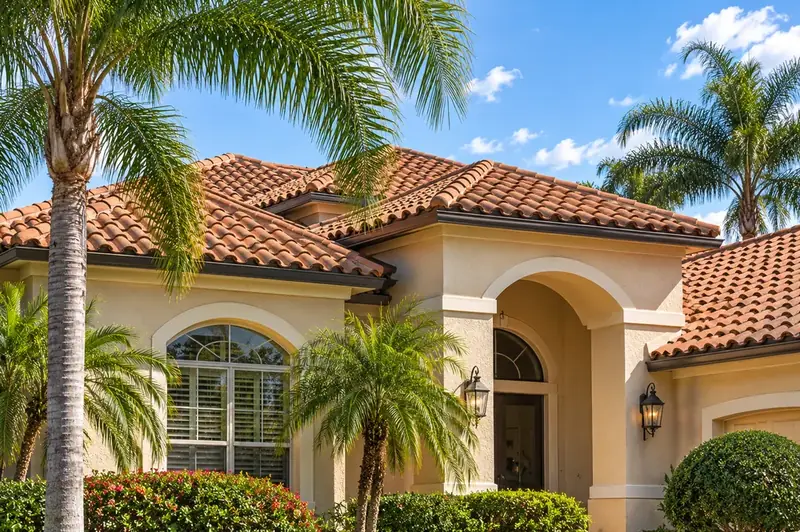
Concrete & Clay Tile
Tile has long been popular in Central Florida for its appearance and durability. The tile itself can last for decades, while the underlayment beneath it is usually the component that ages out first, which is why many tile re-roofs lift the tile, replace the underlayment, and reinstall sound tile.
- Strong curb appeal, common in Windermere, Dr. Phillips, and Lake Nona
- Heavy, so structure is checked before a tile install
- Re-roofs often reuse sound tile over new underlayment
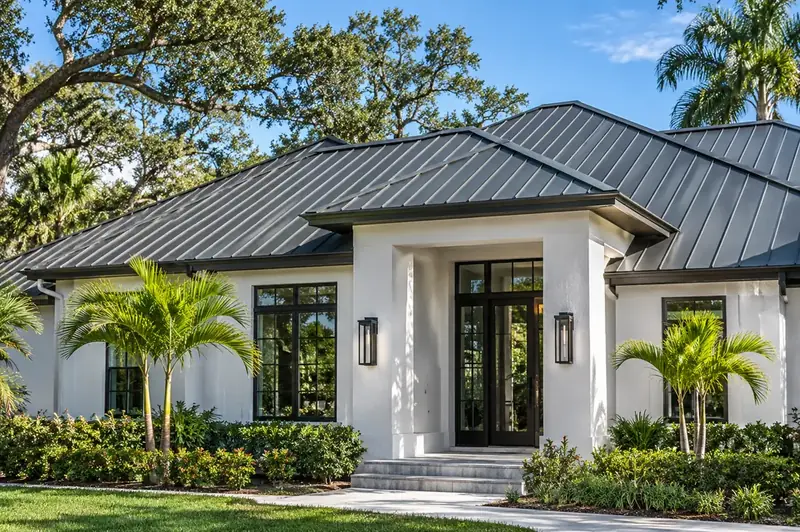
Metal Roofing
Standing seam, 5V crimp, and metal shingle roofs reflect heat, shed water quickly, and are designed and tested for high wind uplift when installed to the product's approved method. They cost more upfront than shingles and can last decades longer.
- Well suited to wind and heat when installed to the product's tested attachment
- Many HOAs allow certain profiles and colors, so check before you commit
- Ask your insurer about any wind-related premium credits. They are carrier-specific
Florida Building Code, Permits, and Inspections on a Re-Roof
A replacement is permitted work with inspections. These are the rules that matter to you as the owner.
Roof replacements in Florida are governed by the Florida Building Code and enforced locally. Orlando is not in the High-Velocity Hurricane Zone, which applies to Miami-Dade and Broward, but the code's wind provisions still apply, and roofing products must have Florida product approval and be installed as their approval requires.
Deck attachment and secondary water barrier
Under the Florida Building Code, Existing Building volume, replacing the roof covering on an older home generally requires the roof deck to be re-fastened to current standards and a secondary water barrier to be installed, unless the structure already complies, such as one permitted under a more recent code. In summaries published by Florida building departments, the deck re-fastening calls for ring-shank nails at a specified spacing and the secondary water barrier can be a self-adhering membrane over deck seams or an approved strip application. The exact details depend on the code edition and your home, so ask your contractor to show you what the permit requires for your roof.
What the City of Orlando requires
- A permit, applied for through Permitting Services. The city says it contacts applicants within three business days, and fees are determined after approval.
- The application asks for the estimated project cost, roof specifications including underlayment and covering, and the type of fasteners.
- An in-progress (dry-in) inspection on all residential and commercial re-roofs, reinstated as of January 1, 2020.
- A completed inspection affidavit for the final inspection, verifying roof deck nailing and the secondary water barrier. Projects that skip the dry-in inspection can be disapproved and required to remove the roof.
- Owner-builders must sign a declaration in person and, for work over a set dollar amount, record a Notice of Commencement.
Orange County (for unincorporated addresses), Seminole County and its cities, and Osceola County each run their own permit systems and forms; Orange County, for example, publishes a re-roof dry-in inspection affidavit. Your contractor should know which office serves your address. You can check whether an address is unincorporated Orange County on the Property Appraiser's website. For a plain-language comparison, see roof permits in Orange County and the City of Orlando.
Part of a roof versus the whole roof: the 2022 change
For years the code treated any repair or replacement of more than 25% of a roof section within 12 months as a trigger to bring the whole section up to current code. Senate Bill 4-D (effective May 26, 2022), now in section 553.844(5), Florida Statutes, changed that for roofs built, repaired, or replaced under the 2007 Florida Building Code or later: only the portion being repaired, replaced, or recovered must meet the current code. Roofs that were not, which generally means homes built before March 1, 2009 with no later re-roof, can still be subject to the older rule. The building department decides for your address.
A new code edition is coming
The 9th Edition (2026) Florida Building Code takes effect December 31, 2026. It adjusts the reroofing provisions, including when tear-off is required and a few exceptions for reusing an adequate substrate. If your project spans that date, your contractor should confirm which edition applies.
Sources & Verification
Facts on this page were checked against the sources below in October 2026. Laws, codes, and program rules change, so confirm current details with the agency before you rely on them.
- City of Orlando: Apply for a Residential Roof Permit — permit steps, dry-in inspection, affidavit
- Orange County: Roof Permit information — unincorporated Orange County
- Florida Statutes s. 553.844 (SB 4-D)
- Florida Roofing & Sheet Metal Contractors Association: 2026 FBC updates — 9th Edition effective December 31, 2026
Code details such as nail spacing and barrier options change by edition. Confirm current requirements with your building department.
The Roof Replacement Process, Step by Step
A typical residential replacement runs from several days to a couple of weeks, depending on size, weather, and material.
Free Inspection & Written Estimate
A crew lead inspects the roof and attic and provides an itemized estimate naming the materials, the deck and underlayment plan, and exclusions.
Contract, Permit, Materials & HOA
You sign a written contract. The contractor pulls the permit, orders materials with Florida product approval, and requests HOA approval where required.
Tear-Off, Deck Repair & Dry-In
The old roof is removed to the deck, compromised decking is replaced, the deck is re-fastened as the permit requires, and the secondary water barrier and underlayment go on. The dry-in inspection happens at this stage.
Roofing Install, Final Inspection & Warranty
Shingle, tile, or metal goes on, the building department does the final inspection, the crew cleans up, and you receive workmanship and manufacturer warranty documentation.
What to Expect Before, During, and After
Tear-off day is loud and messy. Knowing the sequence makes it easier.
Before work starts
- Confirm the permit has been applied for, and ask for the permit number once issued
- Move vehicles out of the driveway and away from the house, and clear the area around it
- Take down wall hangings and fragile items on top floors, because vibration from nailing can shake things loose
- Cover or move items stored in the attic, and expect dust and debris to filter down
- Protect pool equipment, patio furniture, and landscaping, or ask the crew how they will
- Tell neighbors, and arrange for pets to stay away from the noise and debris
- Ask how the roof will be protected if rain arrives mid-job
During the job
- The crew tears off old roofing, which is the loudest and dustiest part
- Rotten or loose decking is replaced, and the deck is re-fastened as the permit requires
- The roof is 'dried in' with underlayment and the secondary water barrier, and the in-progress inspection is scheduled where required
- The roofing material goes on, with flashing, vents, and ridge details
- Magnets sweep the yard for nails, and debris is hauled away
After the job
- The building department's final inspection is completed, with the inspection affidavit where required
- You receive the final invoice, lien release documentation, and warranty paperwork
- Keep copies of the permit, inspection results, product information, and warranties together with your insurance records
- Consider a wind mitigation inspection on the new roof, which may support premium credits with your insurer
Florida Contract Rules That Protect You on a Roof Replacement
Florida has specific rules about deposits, contracts, and licensing. Most roofing sites do not mention them. You should know them.
Verify the license
Florida roofing contractors are licensed through the Department of Business and Professional Regulation's Construction Industry Licensing Board. A Certified Roofing Contractor holds a license beginning with CCC valid statewide, while a Registered Roofing Contractor holds a license beginning with RC valid only in the local jurisdiction where it was registered. Look up the contractor on MyFloridaLicense.com and confirm the status is current and active. See what licensed and insured actually means for how the license and insurance checks work in practice.
The down payment rule
Under section 489.126 of the Florida Statutes, a contractor who receives more than 10 percent of the contract price as an initial payment for residential repair or improvement work must apply for the permit within 30 days after the payment, unless no permit is required, and must start work within 90 days after the permits are issued. A contractor who fails to do so without lawful excuse can face serious consequences, including having the conduct treated as theft. The rule does not ban larger deposits, but it gives you leverage when a contractor takes your money and does nothing. Be cautious about any large deposit, and about any request for payment in full up front.
The Recovery Fund notice
Under section 489.1425, residential repair and improvement contracts over a threshold must include a written statement explaining your rights under the Florida Homeowners' Construction Recovery Fund, which may pay limited amounts to homeowners who lose money on a contracted project because of specified violations by a licensed contractor. If a roofing contract does not include it, that is a red flag about the contractor's paperwork.
Liens and who gets paid
Under Florida's construction lien law, subcontractors and suppliers who are not paid can place liens against your property, even if you paid your contractor. Larger jobs involve a recorded Notice of Commencement, which your contractor handles. Ask for lien releases as you make payments and a final release at the end, and ask whether the contractor will provide proof that suppliers and subcontractors have been paid.
What a good written contract includes
- The contractor's name, license number, and contact information
- The exact scope: tear-off, deck repair and how it is priced, underlayment and water barrier, flashing, vents, roofing product and color, and cleanup
- The product's Florida approval and manufacturer, and the warranty terms
- Who pulls the permit and handles inspections and HOA submittals
- The total price, payment schedule, and what triggers each payment
- How extra work (such as additional rotten decking) is priced and approved in writing
- Start and estimated completion dates and the weather protocol
- The Recovery Fund statement and any cancellation or right-to-rescind language
- A statement that you will receive lien releases
If a contractor offers to cover your deductible
Do not hire them. Under section 489.147 it is insurance fraud for a contractor to pay, waive, or rebate your deductible with intent to defraud. See our insurance guide.
Sources & Verification
Facts on this page were checked against the sources below in October 2026. Laws, codes, and program rules change, so confirm current details with the agency before you rely on them.
How to Compare Roof Replacement Quotes
Two quotes with the same total can be very different roofs. Compare these lines.
| Line item | What to compare | Why it matters |
|---|---|---|
| Tear-off | Full tear-off or recover? How many layers? | A recover hides deck problems and has code limits |
| Deck | How rotten or loose decking is repaired and priced; how the deck will be re-fastened | Deck attachment affects wind performance and is checked at inspection |
| Water barrier and underlayment | Brand, type, and whether a secondary water barrier is included | It is the layer that protects the house if the surface leaks |
| Flashing and edge metal | Replaced or reused? Material | Reused flashing is a common source of leaks on a new roof |
| Roofing product | Manufacturer, line, wind class or product approval, color | 'Shingles' is not a product |
| Ventilation | Vents and ridge ventilation | Attic heat and moisture affect roof life |
| Permit and inspections | Who pulls it, who pays, who schedules | Missing inspections can mean a roof must be removed |
| Cleanup and protection | Magnet sweep, landscaping, pool, AC protection | Damage and debris are your problem if not addressed in writing |
| Warranty | Workmanship years and terms; manufacturer coverage; transferability | Terms vary widely; read exclusions |
| Payment terms | Deposit, progress payments, final payment trigger | Large deposits and payment in full up front are risks |
A much lower price usually means something on this list is missing or lesser.
What Drives the Cost of a Roof Replacement in Orlando
Replacement is the largest roofing expense most owners face. These factors move the estimate, and a good quote itemizes them.
| Cost factor | How it changes the price |
|---|---|
| Roof size and complexity | Square footage is only part of it. Steep pitch, many valleys, dormers, and multiple levels add labor and safety requirements. |
| Material choice | Shingle, tile, and metal have different material and labor costs, and structure may need checking for heavier materials. |
| Deck condition | Rotten or poorly fastened decking is only fully visible after tear-off. A good estimate explains how deck repairs are priced. |
| Permits, HOA, and access | Permit fees, HOA submittals, gated-community logistics, and tight access can all affect the total and the schedule. |
| Code-required work | Deck re-fastening and secondary water barrier on older homes are part of a compliant re-roof. |
| Insurance involvement | Storm claims follow your insurer's scope. Your contractor's estimate should be itemized so it can be compared. |
For scale: one published Orlando-area guide (RoofingCalc, updated March 2025) puts asphalt shingle replacement at roughly $4.50 to $7.50 per square foot installed, or about $9,000 to $15,000 for a 2,000-square-foot roof; metal at roughly $10.50 to $18.50 per square foot; and tile at roughly $14.00 to $19.50 per square foot. A local contractor's published guidance cites most homeowners spending between $8,000 and $15,000 on a replacement. Different sources give different figures, and costs have moved with material prices and labor. Treat these as indications, not quotes. Your written estimate after a free inspection is the number that counts. For the difference between per-square and per-square-foot pricing, see roof replacement cost per square foot vs per square.
Financing
Financing may be available for qualified projects. See financing options.
Sources & Verification
Facts on this page were checked against the sources below in October 2026. Laws, codes, and program rules change, so confirm current details with the agency before you rely on them.
- RoofingCalc: How Much Does a New Roof Cost in Orlando? — published estimate, updated March 26, 2025
- Kidd Roofing: Orlando Roofing Contractors — contractor-published guidance
Published estimates vary between sources and over time. Cited here as indications only.
Shingle Wind Ratings, Decoded
Shingle packaging brags about mph. Here is what those numbers are, and are not.
Asphalt shingles are tested to standard wind classes, and the Florida Building Code ties which class is acceptable to the design wind speed where the house sits. The class is a test result, not a promise that a roof will survive a storm of that speed, and a roof only performs to its class if it is installed exactly as the manufacturer's approval requires: the right number of nails, in the right place, over a sound deck.
| Standard | Class | Wind speed in the test |
|---|---|---|
| ASTM D3161 (fan-induced) | Class A | 60 mph |
| ASTM D3161 (fan-induced) | Class D | 90 mph |
| ASTM D3161 (fan-induced) | Class F | 110 mph |
| ASTM D7158 (uplift) | Class D | 90 mph basic wind speed |
| ASTM D7158 (uplift) | Class G | 120 mph basic wind speed |
| ASTM D7158 (uplift) | Class H | 150 mph basic wind speed |
Sources: ASTM test classifications as summarized by the Florida Building Commission and the Florida Division of Emergency Management. Class F (D3161) or Class H (D7158) is acceptable in all of Florida's wind zones under the Florida Building Code's shingle table.
In practice: ask which class the specific shingle carries, ask how it must be nailed to achieve it (some classes require extra nails or special starter strips), and ask the contractor to confirm that is what the quote includes. See shingle wind ratings explained.
Sources & Verification
Facts on this page were checked against the sources below in October 2026. Laws, codes, and program rules change, so confirm current details with the agency before you rely on them.
Underlayment and Secondary Water Barriers, Explained
Under the shingles, tile, or metal is the layer that actually keeps water out if the surface leaks. It deserves a line in your contract.
| Type | What it is | Where it fits |
|---|---|---|
| Felt (asphalt-saturated) | The traditional underlayment, in different weights | Common historically; older and less durable than synthetics in hot attics |
| Synthetic underlayment | Polymer-based sheet that resists tearing and is lighter | Widely used under shingle and tile; check its rating for the roof covering above it |
| Self-adhering (peel-and-stick) membrane | A membrane that bonds to the deck and seals around fasteners | Used as a secondary water barrier over deck seams, and under tile and metal where specified |
| High-temperature underlayment | Underlayment rated for the heat that builds under metal and tile | Specified under metal roofs and sometimes tile |
Product choices and requirements depend on the roof covering's approval and the code edition. Ask your contractor to show which underlayment is in your quote and why.
Why this matters in Florida: attic heat cooks underlayment, and a leak under a tile or metal roof often means the underlayment has aged out. A new roof is the cheapest time to put in a better one. The secondary water barrier, a self-adhering membrane over deck seams or an approved strip application, is also what the City of Orlando's inspection affidavit asks the contractor to verify.
Roof Warranties: What Each Type Covers
'Lifetime warranty' is a marketing phrase. These are the types that actually exist, and their usual limits.
| Warranty | Who provides it | What it usually covers | Common limits |
|---|---|---|---|
| Workmanship | The roofing contractor | Installation errors, leaks from installation defects | Length varies by contractor; ends if the contractor goes out of business; usually excludes storm damage and neglect |
| Manufacturer material | The product manufacturer | Defects in the shingle, panel, or tile itself | Often prorated; excludes installation errors and weather events; may require registration |
| Enhanced or system warranty | Manufacturer, through a certified installer | A broader package covering materials and sometimes labor | Requires a certified installer; terms and transferability vary |
| Finish or paint warranty (metal) | The coating manufacturer | Paint adhesion, chalking, and fading to stated limits | Exposure exclusions apply; check coastal and industrial exclusions |
Read each warranty for transferability (it affects resale), what voids it (unapproved repairs, missed maintenance, installation changes), and who you call. A strong manufacturer warranty from a contractor who is not around in five years is worth less than a modest one from a contractor who is. For how a new roof is treated in resale conversations, see does a new roof increase home value in Central Florida.
How to Check Quality While the Job Is Underway
You do not need to climb up. These checks can be done from the ground and from the paperwork.
- Permit posted or available. Ask for the permit number and check inspection scheduling, including the dry-in inspection where required.
- Deck work is visible. Ask for photos of replaced decking and of the deck once it is re-fastened, before it is covered.
- Dry-in is done daily. Any open section should be protected each night, and you should not see bare deck exposed to rain.
- Product matches the contract. Check the bundle labels, wrappers, and product names against your quote.
- Flashing is replaced, not reused, at walls, valleys, and penetrations, unless the contract says otherwise.
- Lines are straight and clean. Courses of shingles or tile should be even, and ridge and hip details tidy.
- Cleanup is real. Magnet sweeps of the yard and driveway, and protection of landscaping and equipment.
- Paperwork arrives. Final inspection result, warranty documents, and lien releases before you make the final payment.
Do not make the final payment until
The final inspection has passed, any required inspection affidavit is complete, you have your warranty documents and lien releases, and you have walked the finished roof (or its photos) and the property with the crew lead.
Insurance, Roof Age, and Replacement
Insurance affects roof replacement in three ways: claims, roof age, and premiums.
When insurance pays for a replacement
Insurance generally covers sudden, accidental damage such as wind or a falling tree, and generally excludes age, wear, and neglected maintenance. A claim for storm damage may be paid as a repair or, if the damage is severe enough and the policy allows it, a replacement. Many policies on older roofs pay on an actual-cash-value basis, subtracting depreciation, and some carriers use a payment schedule for older roofs. Read the roof coverage terms in your policy before a storm so you know what to expect. See our Florida insurance guide.
Roof age and keeping your policy
Under section 627.7011, an insurer may not refuse to issue or renew a homeowner's policy solely because of the age of a roof under 15 years old. For roofs that are 15 or older, you can have an authorized inspector assess the roof, and the insurer may not refuse solely on age if the inspection shows five or more years of remaining useful life. A new roof resets that clock.
A new roof and your premium
A new roof installed to current code can qualify for wind mitigation credits, which are documented on the state's Uniform Mitigation Verification Inspection Form (OIR-B1-1802; a revised version took effect April 1, 2026). Credit amounts are set by each insurer. After a replacement, schedule a wind mitigation inspection and send the result to your insurer or agent. See wind mitigation inspections.
Help with hardening costs
My Safe Florida Home is a state program that has offered a free wind mitigation inspection and grants of up to $10,000 toward eligible home-hardening improvements for eligible owner-occupied, homesteaded, site-built homes. Funding is limited, first come first served, and changes by year. Check the program website for current availability and whether roof work qualifies before you plan around it.
Sources & Verification
Facts on this page were checked against the sources below in October 2026. Laws, codes, and program rules change, so confirm current details with the agency before you rely on them.
When to Replace a Roof in Central Florida
You can replace a roof any month, but timing affects schedule risk and exposure.
Central Florida's wet season runs roughly June through September, with daily afternoon storms, and hurricane season runs June 1 through November 30. Roofing continues year-round, but crews schedule around storms and must dry in the roof each day, so rain delays are more likely in summer. The drier months, roughly November through May, tend to be easier to schedule, which is also when many owners try to book, so lead times can lengthen. Ask your contractor how an open roof will be protected overnight and how weather delays are handled and communicated.
- Do not wait for a leak. Replacing before a roof fails avoids interior damage and rushed decisions.
- Plan HOA approvals early. Review can take weeks, and your start date depends on it.
- Be careful in storm season. A tear-off right before a forecast tropical system is a risk. Good crews will tell you when to wait.
- Ask about material lead times. Tile and metal can have longer lead times than shingle.
See the best time of year to replace a roof in Central Florida.
After the Replacement: Documents, Inspections, and Care
What you do in the first few weeks can save you money and trouble later.
- Get the paperwork. Permit, passed inspection results (including the affidavit where required), product approval and data sheets, color and product names, and warranty documents.
- Register manufacturer warranties if registration is required, and note the transfer terms.
- Schedule a wind mitigation inspection and send the form to your insurer or agent to request credits.
- Update your insurer with the roof's new age, material, and installation date.
- Keep records together: photos from before and after, invoices, lien releases, and contacts.
- Plan maintenance. A yearly check and cleaning keep warranties valid and problems small. See roof maintenance program.
Which Service Do You Actually Need?
Related Services
Roof Replacement Across Orlando & Central Florida
Replacement projects range from 1990s shingle subdivisions in Oviedo and Lake Mary to tile re-roofs in Windermere and Dr. Phillips. See your area's page for local detail.
Roof Replacement FAQs
Widespread wear, leaks in several places, or a roof near the end of its service life point to replacement. A free inspection gives a documented answer.
Many residential roofs take several days to a couple of weeks, depending on size, material, and weather. Ask for the schedule in writing.
Roof replacements generally require a permit and inspection. The contractor handles it with your local building department. In the City of Orlando, that includes an in-progress dry-in inspection and a final inspection with an affidavit.
Yes. Expect noise and debris, and protect items in the attic and on walls.
Only if the damage is covered. Sudden storm damage is treated differently from age and wear. See the Florida insurance guide.
Any time with a good schedule, but dry-season months are easier to manage. See the best time of year to replace a roof.
Most approve standard materials and colors with a submittal. Check your HOA rules first. See HOA roofing rules.
Financing may be available for qualified projects. See financing options.
The performing contractor provides a workmanship warranty and passes on manufacturer warranty documentation. Terms vary, so review them in writing.
There is no single rule, and large deposits are a risk. Florida law gives you protection if a contractor takes more than 10 percent up front and then fails to apply for permits within 30 days or start work within 90 days of permitting. Pay by a traceable method and tie payments to progress.
Sometimes, within code limits and your jurisdiction's rules, but a tear-off lets the deck be inspected and re-fastened. See metal over shingles for the metal case.
It is the old rule that repairing more than 25% of a roof section required bringing the whole section up to code. A 2022 change limits it for roofs built or replaced to the 2007 Florida Building Code or later. See above.
Not for the whole job, but be reachable. A walkthrough at the start and end is worth your time.
A current Florida license (verify it on MyFloridaLicense.com), proof of liability and workers' compensation coverage, a written itemized scope, a clear payment schedule, and local references.
Get a Written Roof Replacement Estimate
Start with a free inspection. You will get a documented condition report and an itemized estimate, with no obligation.
Orlando Roofing Crew connects property owners with vetted, independently licensed and insured Florida roofing contractors. Inspections, repairs, and workmanship warranties are provided directly by the independent licensed contractor assigned to your property.
Request a Free Inspection
A local specialist inspects your roof and gives you a written scope. No obligation.