Thinking of metal over old shingles? Learn when Florida allows a recover, the conditions and risks, and why many crews still suggest tear-off. Read first.
When considering a new metal roof in Central Florida, homeowners frequently ask if they can install the metal directly over their existing asphalt shingles to save on labor, dumpster rental, and tear-off costs. While the short answer under the Florida Building Code is technically "yes, under strictly defined conditions," the professional engineering answer for most Orlando homeowners is an emphatic "no." Installing metal over old shingles introduces serious hidden risks—including concealed deck rot, voided manufacturer warranties, poor wind uplift resistance, and the total loss of valuable wind mitigation insurance discounts. This guide explains the exact code rules, the two recover installation methods, and why saving two thousand dollars on tear-off often ruins a thirty-thousand-dollar metal roof investment.
The Florida Building Code Rule: What Florida Building Code Re-Roofing Rules (Existing Building Section 706) Actually Allows
Under the Florida Building Code (FBC) Existing Building Chapter 7 and FBC Residential Existing Building Section 706 (per municipal summaries).3 (Roof Recovering), installing a new roof covering over an existing roof is governed by clear statutory restrictions:
- Maximum Two Roof Layers: Not more than one overlay is permitted. If the home already has two layers of roofing (such as shingles over old shingles), complete tear-off down to the bare wood deck is legally mandated by code.
- Structural Soundness Requirement: A roof recover is permitted only if the underlying roof structure and decking are structurally sound, dry, and capable of supporting the combined dead and live loads.
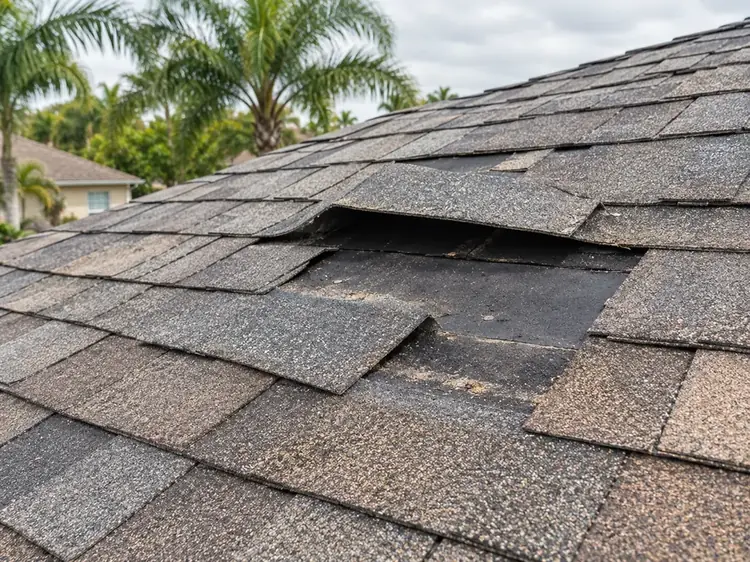
- Moisture and Rot Disqualification: If the existing roof is water-soaked, blistered, severely curled, or has active rot in the decking sheathing, recover is explicitly prohibited.
- Local Building Department Approval: Building departments across Orange, Seminole, and Osceola counties require contractors to submit an engineer's letter or manufacturer Florida Product Approval specifying that the metal panel system is certified for recover over asphalt shingles.
| Decision Factor | Recover Over Existing Shingles | Complete Tear-Off to Bare Deck |
|---|---|---|
| Upfront Labor & Dump Cost | Saves roughly $1,500 to $2,800 | Includes full tear-off and dump disposal ($65–$115/sq) |
| Wood Deck Inspection | Blind installation; cannot inspect wood deck | 100% of decking inspected; rotted sheets replaced |
| Mandatory Deck Re-Nailing (FBC) | Impossible to re-nail deck to 8d ring-shank code | Fully re-nailed to 6-inch code spacing with 8d ring-shanks |
| Secondary Water Barrier (SWB) | Cannot install peel-and-stick membrane to wood | FBC-approved self-adhering SWB membrane installed |
| Florida Wind Mitigation Credits | Disqualified from Key Deck/SWB Insurance Credits | May Support Wind Mitigation Credits (Carrier-Specific) |
| Hurricane Wind Uplift Safety | Reduced; screws anchor through unverified wood | Engineered maximum uplift resistance (150+ mph) |
| Manufacturer Warranty Status | Often voided or restricted by panel makers | Full 30- to 50-year manufacturer warranty active |
| Panel Flatness & Aesthetics | Can telegraph curled shingles (oil-canning) | Perfect, laser-straight planar installation |
The Hidden Trap: The Deck Inspection Blindspot
The single most dangerous risk of installing metal over shingles in Orlando is the impossibility of inspecting the wood roof decking. Central Florida's subtropical climate is notorious for slow, undetected roof leaks. Small flashing failures around plumbing vent pipes, chimneys, or valley intersections can saturate plywood or OSB sheathing for years without staining the drywall ceiling inside the home.
When an existing shingle roof is stripped down to bare wood during a proper replacement, the roofing crew inspects every square inch of sheathing. Any rotted, delaminated, or termite-damaged plywood is cut out and replaced with fresh CDX plywood (typically $75 to $120 per 4x8 sheet). When metal is laid directly over shingles, the crew drives fasteners blindly through the shingles into unseen decking. If a panel's fasteners hit rotted, spongy wood, the screw threads have zero pull-out resistance. During the first major windstorm or tropical storm, the metal panels in that section will unseat, flap, and peel off the house.
Why Code Deck Re-Nailing Matters
Under Florida Building Code Re-Roofing Rules (Existing Building Section 706).7.1, when a roof covering is completely removed, the contractor is required by Florida law to re-nail the existing plywood deck to modern hurricane standards using 8d ring-shank nails at 6-inch intervals. In a recover over shingles, this life-saving structural reinforcement cannot be performed.
The Insurance Penalty: Losing Your Florida Wind Mitigation Discounts
In Florida's property insurance market, installing metal over shingles can limit your insurance and inspection options. Florida insurers file wind mitigation discounts tied to features verified on the Uniform Mitigation Verification Inspection Form (Form OIR-B1-1802). OIR-B1-1802 wind mitigation discounts are carrier-, policy-, and roof-age-specific and never guaranteed — ask your insurance agent to calculate your exact premium credit.
To qualify for maximum discounts, a licensed inspector must physically verify two critical structural items:
- Question 2 (Roof Deck Attachment): The inspector must photograph the nail spacing and verify 8d ring-shank nails driven into trusses. On a recover, the inspector cannot see the deck, resulting in the lowest baseline credit category.
- Question 6 (Secondary Water Barrier): The inspector must verify a self-adhering polymer-modified bitumen membrane (peel-and-stick) installed directly over the plywood sheathing or all joints sealed. On a recover, you cannot apply an approved secondary water barrier directly to the deck.
Skipping tear-off can make it harder to verify bare-deck nailing and a secondary water barrier, and unverified features may reduce wind mitigation credits. OIR-B1-1802 wind mitigation discounts are carrier-, policy-, and roof-age-specific and never guaranteed — ask your insurance agent to calculate your exact premium credit.
The Two Installation Methods for Metal Over Shingles
If an engineer or municipal code allows a recover, contractors typically use one of two mechanical approaches:
1. Wood Furring Strips (1x4 Strapping)
In this method, 1x4 wood battens (furring strips) are laid horizontally across the old shingles at 16- or 24-inch intervals and anchored through the shingles into the roof rafters with heavy framing screws. The metal panels are then fastened to the wood purlins. While this creates a ventilation air gap that reduces heat transfer into the attic, it raises the entire roof plane by nearly an inch. This complicates perimeter edge metal, flashing at walls, and gutter integration, and can create an attractive nesting space for insects and rodents beneath the panels.
2. Direct-to-Shingle with Synthetic Slip Sheet
If existing shingles are completely flat and smooth, contractors may lay a heavyweight synthetic underlayment directly over the shingles and fasten metal panels directly against it. The slip sheet is critical: as metal expands and contracts under intense Florida heat, the coarse mineral granules on asphalt shingles act like industrial sandpaper against the underside of the metal panels, scratching away the protective Galvalume coating and initiating galvanic corrosion unless an approved separator layer is installed.
Want an Honest Metal Roof Evaluation?
We provide comprehensive roof inspections to determine whether full tear-off is necessary to protect your home and maximize insurance savings.
Weight and Structural Load Calculations
Homeowners often worry about the structural weight of adding metal on top of asphalt shingles. Modern 24- or 26-gauge steel metal roofing is remarkably lightweight, weighing roughly 1.0 to 1.5 pounds per square foot, compared to 2.3 to 2.8 pounds per square foot for architectural shingles (and 9 to 12 pounds for concrete tile).
While most sound truss framing can support the combined dead load of one layer of shingles plus metal (roughly 3.5 to 4.0 pounds per square foot), older homes in historic Orlando neighborhoods (such as Thornton Park, Delaney Park, or Winter Park) built before modern hurricane truss engineering may experience minor rafter deflection. If the existing decking is thin 3/8-inch plywood or tongue-and-groove planking, adding weight without inspecting the framing can cause ceiling drywall cracking inside the home.
Manufacturer Warranty Considerations
Before agreeing to an overlay, request the manufacturer's warranty documentation in writing. Premium standing seam manufacturers (such as Englert, McElroy Metal, and Drexel Metals) frequently state in their technical manuals that full structural and paint warranties are conditional upon installation over clean, dry, and flat substrates. Installing panels over irregular, curled shingles can cause "oil-canning" (visible surface waviness across panel flats) and may void or severely restrict the manufacturer's finish and weather-tightness warranties.
Frequently Asked Questions
Yes, under strictly limited conditions. Florida Building Code Re-Roofing Rules (Existing Building Section 706).3 permits one roof recover if the existing roof has only one layer of shingles, the wood deck is sound and dry, shingles are not severely blistered or curled, and the metal panel system has an approved Florida Product Approval allowing recover installation.
On an average 2,400 sq ft Orlando home, skipping tear-off saves between $1,500 and $2,800 in labor and dumpster fees. However, skipping tear-off can make it harder to verify the bare-deck nailing and secondary water barriers that wind mitigation credits depend on. OIR-B1-1802 wind mitigation discounts are carrier-, policy-, and roof-age-specific and never guaranteed — ask your insurance agent to calculate your exact premium credit.
It can. Many major metal roofing manufacturers require their panels to be installed over a continuous flat deck with a smooth underlayment slip sheet. Installing directly over coarse shingles can abrade the underside protective coating and cause oil-canning, voiding weather-tightness warranties.
1x4 wood furring strips (strapping) are commonly used when shingles are uneven or when an air gap is desired for thermal insulation. However, furring strips raise the roofline, complicate perimeter flashing, and create potential voids where vermin or insects can nest.
No. While an inspector can check for obvious soft spots by walking the roof or entering the attic, minor water saturation, fungal decay, and localized rot beneath valleys and flashing cannot be reliably diagnosed through existing shingles. Tear-off is the only foolproof method to guarantee deck integrity.
Sources & Technical Verification
Statutory and technical citations verified in October 2026:
- Florida Building Code Existing Building 8th Edition — Chapter 7, Section 706.3 & Residential Existing Building Section 706 (per municipal summaries).3 (Roof Recovering)
- Florida Office of Insurance Regulation — Uniform Mitigation Verification Inspection Form OIR-B1-1802 Guidelines
- Metal Construction Association — Direct-to-Deck and Recover Application Standards for Standing Seam Metal
Under Florida Building Code Existing Building provisions, tearing off existing shingles allows full deck re-nailing and peel-and-stick membrane adhesion. In Windermere, FL, learn more in our Windermere metal roofing guide.
Keep Reading
- Windermere, FL Roofing Overview
- Metal Roofing in Windermere
- Orlando Metal Roofing Services & Systems
- Complete Roof Replacement & Tear-Off Procedures
- Metal vs. Tile vs. Shingle: Central Florida Comparison
- Standing Seam vs. Corrugated Metal: Lifespan in Florida
- Do Metal Roofs Lower Florida Insurance Premiums?