Architectural or 3-tab shingles for your Florida roof? Compare wind, life and cost differences and see when the upgrade pays off. See the full comparison.
If you are replacing an asphalt roof in Central Florida, the first material decision is almost always whether to stick with traditional 3-tab shingles or upgrade to architectural (dimensional) shingles. In Orlando's intense climate—characterized by 130+ mph design wind zones, brutal solar ultraviolet exposure, and torrential summer downpours—the small difference in upfront price is eclipsed by massive differences in wind resistance, roof life, and homeowners insurance underwriting. This guide breaks down the physical construction differences, real-world Florida lifespans, actual 2026 installed costs, and why 3-tab shingles have become an endangered species on Orlando rooftops.
The Structural Construction Difference: Single-Layer vs. Multi-Layer Laminate
At a physical level, the difference between 3-tab and architectural shingles is a matter of material mass, dimensional lamination, and structural cutouts. A traditional 3-tab shingle is manufactured from a single flat layer of fiberglass mat coated with asphalt and mineral granules, featuring two vertical machine-punched cutouts (slots) that create the illusion of three individual 12-inch tabs. Because it is a single thin layer (typically weighing 60 to 70 pounds per bundle, or 190 to 210 pounds per square), it relies entirely on a thin strip of sealant adhesive to hold down the loose bottom edge of each separate tab.
Architectural shingles (also referred to as laminate or dimensional shingles) are constructed from two separate layers of asphalt-impregnated fiberglass mat bonded together with high-temperature industrial laminating adhesive. The top decorative layer features random cutouts with darker shadow lines, while the continuous bottom shim layer provides continuous structural reinforcement. This dual-layer construction yields a shingle that is roughly 50% heavier—weighing 75 to 85 pounds per bundle, or 240 to 260 pounds per square. Crucially, architectural shingles eliminate the vertical cutout slots entirely. With no loose tab edges to catch the wind, the physical surface presents a much higher resistance to wind peel and aerodynamic uplift.
| Specification / Attribute | Traditional 3-Tab Shingles | Architectural Dimensional Shingles |
|---|---|---|
| Mat Construction | Single-ply fiberglass mat | Dual-ply laminated fiberglass mats |
| Weight Per Square (100 sq ft) | 190 to 215 lbs | 240 to 275 lbs |
| Cutout Slots | Two vertical slots creating 3 tabs | Continuous surface; no cutout slots |
| Standard Wind Warranty | 60 mph (ASTM D3161 Class A) | 110 to 130 mph (ASTM D7158 Class H) |
| Enhanced High-Wind Fastening | Usually capped at 70–80 mph | 130 to 150 mph with 6-nail pattern |
| Central Florida Lifespan | 10 to 14 years | 18 to 22 years |
| Algae Resistance Warranty | 5 to 10 years (basic) | 15 to 25 years (copper-infused / StreakFighter) |
| Insurance Underwriting Status | Strictly scrutinized past 10 years | Standard underwriting up to 15–20 years |
Wind Performance Under Florida Building Code Requirements
Central Florida may sit inland from coastal storm surges, but Orange, Seminole, and Osceola counties are subject to the Florida Building Code's design wind speed requirements, which follow ASCE 7 maps by parcel and risk category. During a severe convective summer squall or an inland tropical cyclone like Hurricane Ian or Irma, roof surfaces experience intense negative pressure (aerodynamic uplift) along the eaves, ridges, and rake edges.
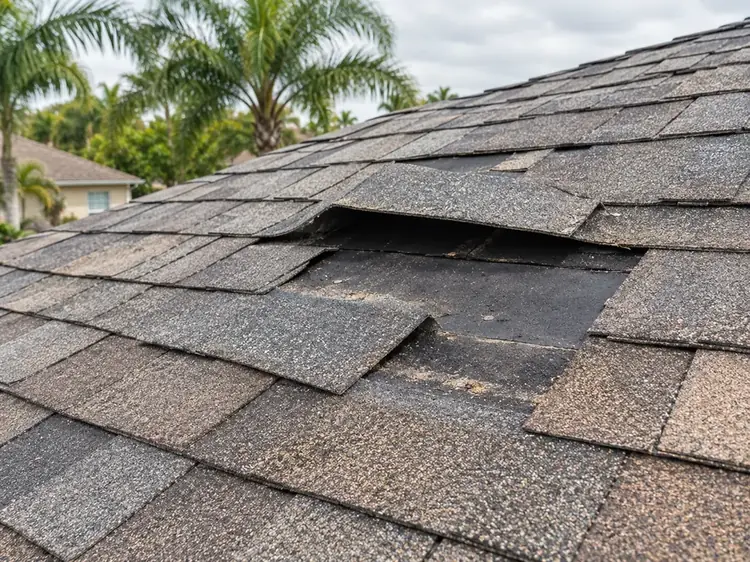
Traditional 3-tab shingles are typically tested only to ASTM D3161 Class A, rating them for 60 mph wind resistance. In Central Florida's intense heat, the factory sealant strip on 3-tab shingles undergoes thermal oxidation over time, becoming brittle. Once high winds penetrate beneath a single tab, the tab creases along the slot line and snaps off, exposing the underlying roofing felt and fasteners to wind-driven rain.
In contrast, modern architectural shingles are rated under ASTM D7158 Class H (the highest possible shingle classification), demonstrating resistance to uplift forces up to 150 mph. When fastened according to Florida Product Approval specifications using an enhanced 6-nail pattern with 8d ring-shank nails or heavy roofing fasteners, architectural shingles form an interlocking monolithic barrier across the roof deck. For Orlando homeowners seeking wind mitigation insurance discounts, architectural shingles are practically required to pass modern insurer underwriting guidelines.
Florida Wind Code Reality
Under the 2023/2026 Florida Building Code Residential Chapter 9 (Section R905.2.4.1), asphalt shingles installed in Orlando's wind zones must meet ASTM D7158 Class G or H, or ASTM D3161 Class F. Most commercial 3-tab shingles barely meet the minimum baseline and leave zero safety margin during hurricane gusts.
Lifespan in Central Florida: The 10-Year vs. 20-Year Reality
National manufacturer brochures frequently advertise 25-year warranties on 3-tab shingles and "Lifetime Limited" warranties on architectural shingles. In Central Florida, however, those national marketing figures bear little resemblance to real-world performance. Orlando experiences over 230 sunny days per year with an average summer UV index exceeding 10, combined with surface roof temperatures reaching 160°F to 175°F followed by sudden cooling afternoon downpours.
This intense thermal shock causes asphalt compounds to dry out and lose volatile oils. On 3-tab shingles, the thin single layer curls upward along the tab edges within 7 to 9 years. By year 10 to 12, granule loss is severe, tabs become brittle, and organic growth or wind creasing is widespread. Local roofers rarely see a 3-tab roof survive past year 12 in Orlando without active leaks.
Architectural shingles, possessing roughly 50% greater asphalt and granule mass, absorb UV degradation far more effectively. The multi-dimensional surface resists edge curling, and copper-infused granules (such as GAF StainGuard Plus or CertainTeed StreakFighter) inhibit black algae streaks (*Gloeocapsa magma*) for 15 to 25 years. On an Orlando home, a properly ventilated architectural shingle roof routinely delivers a dependable 18 to 22 years of service life.
Real 2026 Cost Difference: Material and Turnkey Installation
Homeowners often assume that upgrading from 3-tab to architectural shingles involves a 50% jump in their final invoice. In reality, labor, tear-off, dump disposal, permits, and secondary water barrier underlayment cost the exact same amount regardless of which shingle is nailed down. The price difference between 3-tab and architectural shingles is confined almost entirely to the material manufacturing cost.
| Cost Component | 3-Tab Shingle System | Architectural Shingle System | Variance / Premium |
|---|---|---|---|
| Material Cost Per Square | $110 to $135 / sq | $145 to $185 / sq | +$35 to +$50 / sq |
| Installed Turnkey Cost Per Square | $400 to $490 / sq | $450 to $570 / sq | +$50 to +$80 / sq |
| Total Cost (24 Squares) | $9,600 to $11,760 | $10,800 to $13,680 | +$1,200 to +$1,920 |
| Annualized Cost (Cost / Expected Life) | ~$960 to $1,050 / year | ~$600 to $680 / year | Architectural saves ~$350/yr |
On a standard 2,400-square-foot roof in Orlando, upgrading from 3-tab to architectural shingles adds roughly $1,200 to $1,900 to the total contract. However, because the architectural roof lasts nearly twice as long (20 years versus 11 years), the annualized ownership cost of an architectural shingle roof is actually 35% lower. Paying 12% more up front to double your roof's working lifespan is one of the clearest financial bargains in residential construction.
Planning a Roof Replacement in Orlando?
Get an itemized quote comparing premium architectural shingles with complete tear-off and FBC-approved secondary water barriers.
Insurance Underwriting and the 4-Point Inspection Trap
Beyond wind physics and aesthetics, the single most compelling reason Orlando homeowners choose architectural shingles is the Florida property insurance market. Florida carriers operate under strict underwriting guidelines regarding roof age and material type. Many private insurers operating in Orange and Seminole counties will not bind a new homeowners policy or renew an existing policy on a 3-tab shingle roof that is more than 10 to 12 years old without a clean 4-point inspection showing zero defects.
When insurance carriers inspect an older 3-tab roof, any missing tab, minor edge curl, or granular loss can trigger a mandatory non-renewal notice or require immediate roof replacement within 30 to 60 days. In contrast, architectural shingles retain their structural integrity and curb appeal significantly longer, allowing homeowners to pass 4-point inspections and wind mitigation certifications well into their late teens. Furthermore, architectural shingles fastened with code-approved 6-nail patterns earn maximum credits on Question 6 of the Florida Uniform Mitigation Verification Inspection Form (OIR-B1-1802).
Curb Appeal, Resale Value, and Neighborhood Standards
Roofing accounts for 40% or more of a home's visible exterior facade. 3-tab shingles produce a flat, repetitive, industrial look reminiscent of tract housing from the 1980s. Architectural shingles, with their dimensional layering, varied tab widths, and sculpted shadow bands, create deep texture that mimics cedar shakes or slate tiles.
In master-planned Central Florida communities—such as Lake Nona, Winter Park, Windermere, Celebration, and Dr. Phillips—Homeowners Associations (HOAs) frequently mandate dimensional architectural shingles as the minimum acceptable standard, explicitly prohibiting 3-tab shingles in their design guidelines. Even in neighborhoods without strict HOA rules, real estate appraisers note that homes with fresh architectural shingles photograph significantly better, appraise higher, and sell faster because prospective buyers know they will not face an immediate insurance-driven re-roofing bill.
What Matters Just as Much as the Shingle Choice
Selecting a top-tier architectural shingle from a reputable manufacturer (such as GAF Timberline HDZ, CertainTeed Landmark, or Owens Corning Duration) is only half the battle. A shingle is merely the outer weathering armor of an integrated roofing system. In Orlando, three installation components dictate whether your roof lasts 12 years or 22 years:
- Secondary Water Barrier (SWB): Under FBC Residential R908, installing a self-adhering modified bitumen underlayment (peel-and-stick) directly to the wood deck or sealing all plywood joints with 4-inch self-adhering tape prevents catastrophic water intrusion even if shingles blow off during a hurricane.
- Deck Re-Nailing: Florida building code mandates re-nailing the plywood roof sheathing with 8d ring-shank nails at 6-inch intervals along panel edges and field supports, doubling the roof's resistance to hurricane uplift.
- Attic Ventilation: Balanced intake (soffit) and exhaust (ridge vent) airflow keeps attic temperatures below 120°F. Inadequate ventilation cooks asphalt shingles from underneath, causing premature thermal cracking regardless of shingle grade.
Frequently Asked Questions
Yes, overwhelmingly. On an average Orlando home, upgrading costs between $1,200 and $1,900 more, but extends the roof's working lifespan by 8 to 10 years and carries a higher tested wind class than 3-tab shingles (ASTM D7158 Class H versus D3161 Class A test classifications). The annualized cost per year of roof life is substantially lower with architectural shingles.
Standard 3-tab shingles are rated only for 60 to 70 mph winds (ASTM D3161 Class A). Category 1 hurricane gusts easily exceed these thresholds, causing tabs to lift, crease, and tear off. Architectural shingles are rated under ASTM D7158 Class H for wind speeds up to 150 mph when installed with an enhanced 6-nail pattern.
While insurers do not mandate specific brand names, they strictly scrutinize roof age. Many Florida property insurers refuse to issue or renew coverage on 3-tab roofs older than 10 to 12 years. Architectural roofs generally enjoy standard underwriting eligibility for 15 to 20 years, provided they pass a standard 4-point inspection.
Most modern architectural shingles incorporate copper-infused ceramic granules (such as GAF StainGuard Plus or CertainTeed StreakFighter) that leach microscopic copper ions when wet, preventing Gloeocapsa magma algae from growing for 15 to 25 years. Traditional 3-tab shingles typically carry only basic 5-year algae warranties.
In many master-planned communities across Orange and Seminole counties, HOA Architectural Review Boards (ARBs) have explicitly banned 3-tab shingles from their approved materials list, requiring dimensional laminate shingles as the minimum aesthetic and structural standard.
Sources & Technical Verification
Engineering standards and building code citations verified in October 2026:
- Florida Building Code 8th Edition (2023; in effect through Dec 31, 2026, when the 9th Edition takes effect) Residential — Chapter 9 Roof Assemblies, Section R905.2 (Asphalt Shingles) & Table R905.2.4.1 (Wind Resistance)
- ASTM D7158/D7158M — Standard Test Method for Wind Resistance of Asphalt Shingles (Uplift Force / Class H 150 mph)
- Florida Office of Insurance Regulation (OIR) — Uniform Mitigation Verification Inspection Form OIR-B1-1802
Architectural shingles are tested to a higher wind class than basic 3-tab strips (ASTM D7158 Class H versus D3161 Class A); those mph figures are test classifications, not guaranteed survival speeds. For properties in Lake Nona, FL, explore installation specifications in our Lake Nona roof replacement guide.