Do cool roof coatings work in Florida heat? See what reflectance means, what one Florida study measured, the limits, costs and when they make sense.
With Central Florida experiencing intense summer heat index values exceeding 105°F and residential air conditioning units running twelve hours a day, building owners frequently look to cool roof coatings as a cost-effective way to lower utility bills and extend roof life. In Orlando, commercial low-slope roofs and residential flat-roof additions (such as enclosed patios, Florida rooms, and lanais) reach staggering surface temperatures of 165°F to 180°F under direct midday sunlight. Applying a certified cool roof coating can dramatically slash that surface temperature down to 110°F, lowering indoor cooling demands by 10% to 20%. However, coatings are not magic paint, and applying them to the wrong roof type—especially steep-slope asphalt shingles—can cause catastrophic moisture entrapment. This guide details the physics of solar reflectance, measured Florida temperature data, coating chemistry trade-offs, and where coatings actually make engineering sense.
The Physics of a Cool Roof: Reflectance, Emittance, and SRI
A cool roof does not simply insulate; it mechanically rejects solar radiation before heat can conduct into the building envelope. Two distinct scientific properties determine a coating's thermal performance:
- Solar Reflectance (Albedo): The fraction of incident solar electromagnetic energy (visible, infrared, and ultraviolet wavelengths) that is reflected away from the roof surface, expressed on a scale from 0.0 to 1.0 (or 0% to 100%). A traditional dark asphalt or black gravel roof reflects only 5% to 10% of solar radiation, absorbing up to 95% of incoming heat. A premium bright white cool roof coating reflects 75% to 88% of solar energy back into the atmosphere.
- Thermal Emittance: The measure of how efficiently an absorbed thermal energy packet is re-radiated as longwave infrared energy away from the surface back into the sky. Highly reflective metal without a coating can have high reflectance but low emittance (trapping absorbed heat), whereas quality elastomeric coatings feature thermal emittance ratings between 0.85 and 0.92.
- Solar Reflectance Index (SRI): Governed by ASTM E1980, SRI is a composite calculation combining reflectance and emittance under standard summer conditions. A standard black roof has an SRI around 0, while a high-performance white cool roof coating earns an SRI rating between 100 and 115.
| Roof Surface System | Initial Solar Reflectance | Thermal Emittance | Solar Reflectance Index (SRI) | Midday Summer Peak Surface Temp |
|---|---|---|---|---|
| Black EPDM / Smooth Mod-Bit | 0.06 (6%) | 0.86 | 0 to 5 | 165°F to 180°F |
| Dark Gray Asphalt Shingles | 0.08 (8%) | 0.91 | 8 to 12 | 155°F to 170°F |
| Bare Unpainted Galvalume Metal | 0.68 (68%) | 0.14 | 55 to 65 | 135°F to 145°F |
| White Acrylic Elastomeric Coating | 0.84 (84%) | 0.90 | 104 to 108 | 108°F to 114°F |
| High-Solids Silicone Coating | 0.88 (88%) | 0.91 | 110 to 115 | 102°F to 108°F |
What Florida Studies Measured: The FSEC Field Research
The cooling power of white roof coatings is not theoretical marketing; it has been rigorously documented by the Florida Solar Energy Center (FSEC), an energy research institute of the University of Central Florida (UCF) located in Cocoa, Florida.
In extensive controlled field trials across Central Florida, FSEC researchers instrumented low-slope commercial and residential buildings with thermal sensors beneath the roof deck and monitored air conditioning electrical consumption before and after applying white elastomeric coatings. The findings established three consistent benchmarks:
- Surface Temperature Drop: Roof surface temperatures dropped immediately from an average peak of 168°F down to 112°F—a direct 56°F temperature reduction during peak solar noon.
- Deck Underside Temperature Drop: Temperatures on the wood roof sheathing inside the attic dropped by 20°F to 35°F, dramatically reducing the radiant heat transferred across ceiling insulation.
- HVAC Energy Savings: On buildings with ductwork located in unconditioned attic spaces or low-slope commercial structures, air conditioning electrical consumption dropped by 10% to 22% during the hottest summer months (June through September). Peak cooling demand during mid-afternoon hours dropped by up to 25%, significantly reducing mechanical strain on HVAC compressors.
Where Savings Are Highest
Cool roof coatings deliver maximum financial ROI on low-slope and flat roofs with unconditioned spaces directly below (such as commercial retail buildings, warehouses, and residential patio/lanai enclosures). On a multi-story steep-slope home with an R-38 insulated attic, cooling savings are much smaller (typically 2% to 5%) because attic insulation already blocks conductive heat transfer.
Coating Chemistries Compared: Acrylic vs. Silicone vs. Polyurethane
Selecting the proper coating formulation is critical in Central Florida, where afternoon downpours create standing water conditions that quickly destroy inferior materials.
| Performance Metric | Water-Based Acrylic Elastomeric | 100% High-Solids Silicone | Polyurethane / Urethane |
|---|---|---|---|
| Ponding Water Resistance | Poor (re-emulsifies if submerged >48 hrs) | Excellent (completely unaffected by ponding) | Good to very good |
| UV Resistance & Flexibility | Good; requires periodic re-coating | Superior; does not degrade under UV | Very good |
| Tensile Strength & Foot Traffic | Moderate | Low (soft surface; tears under heavy traffic) | Highest (extremely tough and abrasion resistant) |
| Adhesion to Modified Bitumen / Metal | Requires dedicated primer | Excellent; often primerless | Requires chemical primer |
| Installed Cost Per Square (100 sq ft) | $200 to $350 / sq | $350 to $550 / sq | $400 to $650 / sq |
| Best Application in Central Florida | Positive-draining metal or sloped roofs | Flat roofs with minor ponding water | High-traffic commercial equipment decks |
Why Silicone Dominates Central Florida Flat Roofs
In Orlando's climate, acrylic coatings carry a fatal vulnerability: ponding water. Acrylics are water-based emulsions that cure by evaporation. If a flat roof develops birdbaths or depressions where rainwater collects for more than 48 hours, the acrylic film softens, blisters, and re-emulsifies, peeling away from the substrate. In contrast, 100% silicone coatings are moisture-cure polymers that form an impervious, monolithic rubber membrane. Rainwater can sit indefinitely on a silicone coating without degrading the membrane or compromising water-tightness.
Have a Flat or Metal Roof Overheating in Orlando?
We install commercial-grade 100% silicone and elastomeric roof restoration systems with 10- to 20-year leak-free warranties.
The Critical Warning: Never Coat Steep-Slope Asphalt Shingles
Homeowners in Orlando are increasingly targeted by predatory door-to-door salesmen and franchise companies marketing "roof rejuvenation" or "nano-technology clear/reflective shingle coatings" promising to delay shingle replacement by 10 to 15 years for a fraction of the cost of a new roof. Do not coat asphalt shingles.
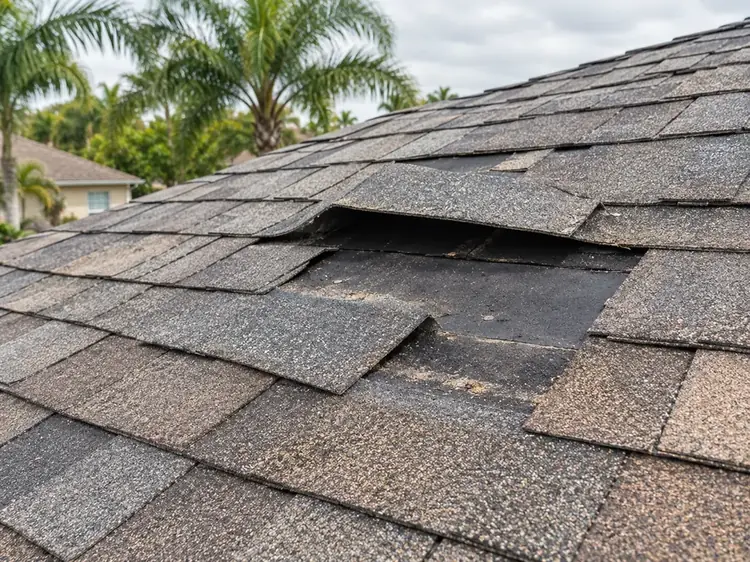
Asphalt shingles are engineered as a series of overlapping individual drainage units designed to breathe. Water vapor constantly migrates from inside the home's attic through the roof deck. When a liquid coating is rolled or sprayed across shingles, it glues the shingles together and creates a non-breathable surface vapor barrier. In Florida's humid climate, this causes three immediate failures:
- Trapped Moisture: Water vapor migrating upward from the attic condenses against the underside of the coated shingle mat, rotting the wood deck sheathing and fostering toxic attic mold.
- Blistering and Delamination: As trapped moisture superheats under 160°F sunshine, steam bubbles expand beneath the coating, causing the shingle granules to pop off and the surface to blister.
- Voided Manufacturer Warranties: Major shingle manufacturers (including GAF, CertainTeed, and Owens Corning) explicitly state in their warranty documents that applying aftermarket paints, coatings, or sealers immediately and irrevocably voids all manufacturer warranties.
The Professional Application Process: 5 Crucial Steps
Applying a commercial-grade cool roof coating system is a multi-step chemical installation, not a quick paint job:
- High-Pressure Washing: The roof surface is power-washed at 3,000+ PSI with an eco-friendly biocide to remove all dirt, grease, oxidized chalk, and organic algae growth. The substrate must be surgically clean for chemical adhesion.
- Substrate Repair & Deck Verification: Any rotted insulation, saturated membrane patches, or rusted metal panels must be excised and repaired. Fasteners are checked, and loose seams are re-secured.
- Primer Application: Dedicated asphalt bleed-blocking primers (for modified bitumen/BUR) or rust-inhibitive epoxy primers (for metal roofs) are applied to prevent chemical bleed-through and promote molecular bonding.
- Seam and Detail Flashing: All pipe penetrations, curbs, parapet wall transitions, and horizontal panel laps are reinforced with woven polyester fabric embedded in heavy flashing mastic.
- Coating Application: The topcoat is spray-applied in two cross-hatched passes to achieve a minimum dry film thickness (DFT) of 20 to 30 mils (roughly the thickness of a credit card).
Frequently Asked Questions
Yes. Studies by the Florida Solar Energy Center (FSEC) show that applying a white reflective coating drops roof surface temperatures by 50°F to 60°F and reduces cooling energy consumption by 10% to 22% on low-slope and flat-roofed structures where HVAC ductwork is adjacent to the roof deck.
No. Coating asphalt shingles traps moisture vapor escaping from the attic, which rots the plywood roof deck and causes shingles to blister and crack. Furthermore, applying coatings to shingles immediately voids all manufacturer warranties. Coatings are strictly intended for low-slope, flat, and metal roofs.
Acrylic coatings are water-based and economical, but degrade and re-emulsify if exposed to ponding water for more than 48 hours. 100% silicone coatings are moisture-cured polymers that are completely impervious to standing water, making silicone the standard choice for flat roofs in Central Florida.
A professionally installed silicone or polyurethane coating applied at 20 to 30 mils dry film thickness typically lasts 10 to 15 years before requiring a maintenance re-coat. Because the underlying roof substrate is protected from UV radiation, the roof can be re-coated indefinitely without requiring complete tear-off.
A turnkey commercial silicone coating typically costs between $3.50 and $5.50 per square foot ($350–$550 per square), whereas a complete flat roof replacement with tear-off costs $8.50 to $14.00 per square foot. Coating restores water-tightness and energy efficiency at roughly 40% to 50% of the cost of replacement.
Sources & Technical Verification
Scientific and engineering research verified in October 2026:
- Florida Solar Energy Center (FSEC) / University of Central Florida — Field Monitoring of Reflective Roof Coatings on Florida Residential and Commercial Buildings
- Cool Roof Rating Council (CRRC) — Solar Reflectance Index (SRI) Calculation Guidelines per ASTM E1980
- Florida Building Code Energy Conservation 8th Edition — Commercial and Residential Building Envelope Reflectance Criteria
High-solids silicone roof coatings restore aged low-slope commercial membranes by creating a seamless monolithic water barrier. In Lake Nona, FL, explore commercial flat roof options through our Lake Nona commercial roofing guide.
Keep Reading
- Lake Nona, FL Roofing Overview
- Commercial Roofing in Lake Nona
- Orlando Commercial Roof Coating & Restoration Services
- Commercial Roofing Services in Central Florida
- Flat Roof Systems: TPO, Mod-Bit & Liquid Membranes
- Shingle Color and Attic Temperature: Does It Actually Matter?
- Standing Seam vs. Corrugated Metal Roofing in Florida