Does shingle color change attic temperature? See what measured reflectance shows for Florida homes and what matters more for cooling costs. Read the facts.
When replacing a roof in Orlando, many homeowners wonder if choosing a light-colored or white shingle over a dark charcoal or black shingle will dramatically lower their air conditioning bills. Under Florida's blazing sun, it seems intuitive that dark shingles act like a thermal sponge, superheating the attic and forcing the HVAC system into overdrive. While basic physics proves that shingle color does alter surface temperature by 15°F to 25°F, real-world utility bill monitoring by Florida building science researchers tells a much more nuanced story. This guide breaks down measured surface reflectance by shingle color, the true impact on cooling costs, why attic ventilation and insulation matter five times more than color, and how HOA architectural rules dictate choices across Central Florida.
The Physics of Shingle Color: Surface Temperature vs. Solar Reflectance
Every asphalt shingle is surfaced with ceramic-coated mineral granules. The pigment chemistry of those granules dictates its Solar Reflectance (SR)—the percentage of total solar radiation reflected back into the atmosphere:
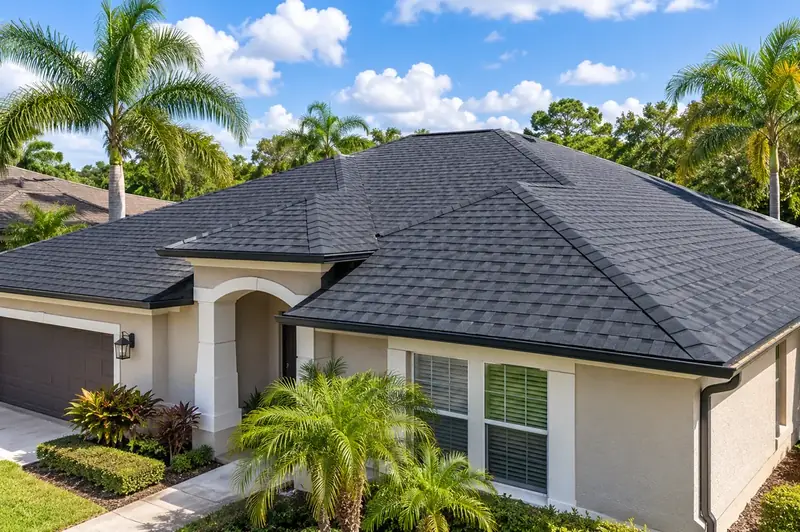
- Black & Dark Charcoal Shingles: Reflect roughly 8.2% of solar energy for a typical dark gray shingle (per Florida Solar Energy Center testing) of solar energy, absorbing up to 96% of solar radiation. On a typical 95°F Orlando July afternoon, surface temperatures reach 165°F to 175°F.
- Medium Earth Tones (Weathered Wood, Barkwood, Slate): Reflect between 10% and 14% of solar energy. Surface temperatures peak between 155°F and 165°F.
- Light Gray & Silver Birch Shingles: Reflect between 18% and 24% of solar energy. Surface temperatures peak between 140°F and 148°F.
- Specialty "Cool Roof" Reflective Shingles: Products engineered with infrared-reflective granules (such as GAF Timberline HDZ RS or CertainTeed Landmark Solaris) reflect 25% to 32% of solar radiation, keeping peak surface temperatures near 130°F to 138°F while maintaining medium color tones.
| Shingle Color Profile | Solar Reflectance (SR) | Solar Reflectance Index (SRI) | Peak Surface Temperature | Deck Underside Temp (Unvented Attic) |
|---|---|---|---|---|
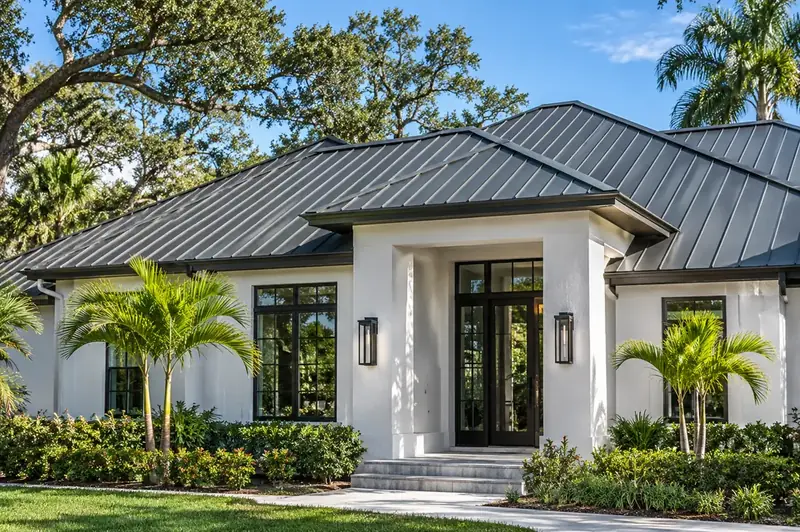
| Onyx Black / Charcoal | 0.05 (5%) | 0 to 4 | 168°F to 174°F | 142°F to 148°F |
| Weathered Wood / Shakewood | 0.12 (12%) | 10 to 14 | 158°F to 164°F | 135°F to 140°F |
| Silver Birch / Light Mist | 0.21 (21%) | 20 to 24 | 142°F to 148°F | 124°F to 128°F |
| Cool Roof IR Shingle (GAF RS / OC Cool) | 0.27 (27%) | 28 to 32 | 132°F to 138°F | 116°F to 120°F |
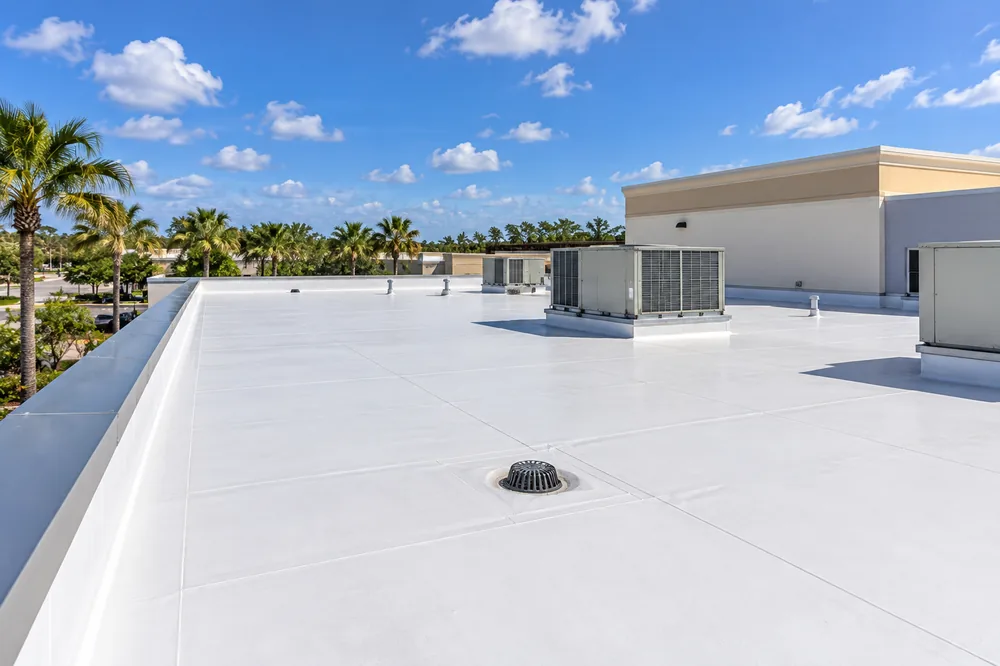
| Commercial White Reflective Metal | 0.72 (72%) | 85 to 90 | 108°F to 114°F | 98°F to 102°F |
The Utility Bill Reality: Why Shingle Color Only Saves 2% to 5%
If a white or light gray shingle is 25°F cooler on the roof surface than a dark black shingle, why doesn't that translate into a 25% drop in your electric bill? The answer lies in the building thermal envelope.
Your living space is separated from the roof surface by three separate thermal barriers: the wood roof decking, the attic air buffer zone, and the ceiling insulation layer. Heat from the roof enters the attic primarily as radiant energy. If your attic floor is insulated to Florida Building Code energy standards (R-38 to R-49 blown-in cellulose or fiberglass), that 12-to-15-inch thermal blanket resists more than 90% of conductive heat downward into your living quarters.
Comprehensive field studies conducted by the Florida Solar Energy Center (FSEC) show that in an average Orlando home with adequate attic insulation and balanced ventilation, switching from a black shingle to a standard light gray shingle reduces annual air conditioning electrical consumption by only 2% to 5%—equivalent to roughly $6 to $15 per month during peak summer months. While every dollar helps, shingle color alone will not cut your power bill in half.
The Ductwork Exception
There is one scenario where shingle color matters dramatically: HVAC ductwork in the attic. If your air handler and flexible AC ducts are suspended in a superheated 140°F unvented attic, thermal leakage through the duct insulation heats your cooled air before it reaches the vents. In homes with leaky attic ductwork, switching to a reflective shingle can improve AC efficiency by up to 10%.
The Real Attic Cooling Hierarchy: What Actually Matters
If shingle color is only responsible for a 2% to 5% cooling delta, what actually keeps an Orlando attic cool? Building scientists rank attic heat mitigation measures in the following order of engineering impact:
| Thermal Mitigation Measure | Cooling Impact & Mechanism | Relative Importance |
|---|---|---|
| 1. Ceiling Insulation (R-38 to R-49) | Blocks 88%+ of conductive heat from entering living spaces beneath the attic | Critical (Highest Impact) |
| 2. Balanced Attic Ventilation (1:150 NFA) | Continuous soffit intake + ridge exhaust purges superheated air via stack effect | Critical (High Impact) |
| 3. Sealed Ductwork in Attic | Prevents 140°F attic air from being pulled into the HVAC supply distribution stream | High Impact |
| 4. Radiant Barrier Decking (OSB Foil-Faced) | Reflects up to 97% of radiant heat before it can warm attic floor insulation | Moderate Impact |
| 5. Shingle Color Selection | Lowers surface temperature by 15°F to 25°F; provides 2% to 5% cooling savings | Low to Moderate Impact |
Is Your Attic Superheating in the Summer?
We evaluate your complete roofing envelope—shingles, intake soffits, ridge ventilation, and decking—to optimize airflow and comfort.
Does Shingle Color Affect Lifespan in Central Florida?
Yes. Asphalt is an organic, petroleum-based binder that degrades under continuous heat and ultraviolet exposure. The hotter an asphalt shingle gets, the faster its volatile chemical plasticizers evaporate. Over time, this leads to loss of flexibility, surface cracking, and edge curling.
In Orlando's climate, a dark black shingle that reaches 175°F daily will undergo thermal aging faster than a lighter shingle that peaks at 145°F. On identical homes with equal attic ventilation, a white or light gray architectural shingle typically lasts 1 to 3 years longer than a jet black shingle before showing signs of thermal cracking. However, if the roof has excellent continuous soffit-to-ridge ventilation that prevents heat buildup beneath the deck, this lifespan gap shrinks significantly.
HOA Restrictions and Curb Appeal in Orlando Neighborhoods
Before selecting a shingle color solely for thermal performance, Orlando homeowners must check their Homeowners Association (HOA) Architectural Review Board (ARB) design guidelines. In master-planned communities across Orange, Seminole, and Osceola counties—such as Lake Nona, Winter Park, Windermere, Celebration, Dr. Phillips, and Oviedo—HOAs strictly control exterior color palettes.
- Pure White Shingles: Almost universally rejected in high-end Central Florida subdivisions. ARBs consider stark white shingles to look stark, commercial, or mismatched with Mediterranean, Craftsman, or Colonial residential architecture.
- Algae Staining Stigma: Central Florida's airborne cyanobacteria (*Gloeocapsa magma*) thrives in our humid climate. Light-colored roofs show black streaks and mold spots within 4 to 6 years unless manufactured with premium copper-infused granules (such as GAF StainGuard Plus or CertainTeed StreakFighter). In contrast, popular multi-toned colors like Weathered Wood, Pewter Gray, and Driftwood camouflage airborne environmental grime while blending seamlessly with neighborhood standards.
Frequently Asked Questions
Yes, but modestly. Switching from black shingles to light gray or cool-rated reflective shingles typically saves between 2% and 5% on monthly summer cooling bills (about $6 to $15 per month). Adequate attic floor insulation (R-38+) and balanced ventilation have a much larger impact on cooling costs than shingle color alone.
On a 95°F sunny summer day in Central Florida, an asphalt shingle roof in jet black or dark charcoal reaches surface temperatures of 165°F to 175°F. A light gray or silver birch shingle reaches 140°F to 148°F—a surface difference of roughly 20°F to 25°F.
Yes. Higher surface temperatures accelerate the thermal oxidation of the asphalt binder, causing shingles to dry out, lose flexibility, and curl 1 to 2 years earlier than lighter shingles. However, proper attic ventilation mitigates heat buildup from beneath the deck, narrowing this lifespan gap.
Cool roof shingles (such as GAF Timberline HDZ RS or Owens Corning Cool Roof Collection) use specially coated granules that reflect invisible infrared solar wavelengths while retaining attractive, medium-dark color tones. They achieve solar reflectance ratings between 0.25 and 0.32 without requiring stark white granules.
Many HOAs consider pure white shingles to look overly stark, commercial, or mismatched with Mediterranean and contemporary architecture. In addition, white roofs rapidly show dark streaks from Florida's airborne Gloeocapsa magma algae, creating an unkempt appearance unless frequently cleaned.
Sources & Technical Verification
Building physics and research citations verified in October 2026:
- Florida Solar Energy Center (FSEC) — Impact of Roof Surface Color on Attic Temperatures and Cooling Energy Use in Florida Homes
- Cool Roof Rating Council (CRRC) — Rated Product Directory for Steep-Slope Asphalt Shingles
- Florida Building Code Residential 8th Edition — Section R806 (Roof Ventilation Requirements) & Energy Conservation Code
Attic ventilation and reflective roofing materials significantly reduce heat transfer into conditioned living spaces. For property owners in Dr. Phillips, FL, explore energy-efficient options in our Dr. Phillips metal roofing guide.
Keep Reading
- Dr. Phillips, FL Roofing Overview
- Metal Roofing in Dr. Phillips
- Orlando Asphalt Shingle Roofing Services
- Comprehensive Attic Ventilation & Roof Inspections
- Metal vs. Tile vs. Shingle: Central Florida Guide
- Architectural vs. 3-Tab Shingles: Is the Upgrade Worth It?
- Cool Roof Coatings and Florida Summer Heat: Do They Work?