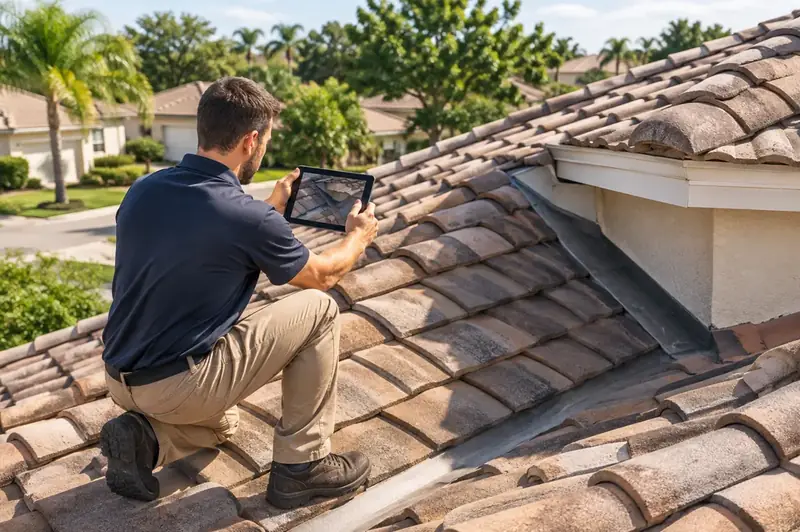
Get your Orlando roof ready before hurricane season. Use this checklist for inspection, repairs, trees, gutters, documents and a plan. Start with step one.
Every year from June 1st through November 30th, Central Florida enters the Atlantic hurricane season, with peak tropical activity converging across Orange, Seminole, and Osceola counties between mid-August and late October. While coastal communities face storm surge, Orlando's primary hurricane threat is severe, sustained wind shear, torrential convective rainfall, and catastrophic flying tree debris. Preparing your roof before a storm is named is vastly cheaper and safer than scrambling for emergency tarps while tropical storm warnings are blaring. This authoritative, engineering-backed Orlando hurricane season roof checklist breaks down the seasonal preparation timeline, tree trimming standards, soffit blowout prevention, and pre-storm insurance documentation.
The Three-Phase Hurricane Season Preparation Timeline
A resilient roof is not prepared in the final 48 hours before landfall when local hardware stores are out of plywood and contractor phone lines are jammed. Effective storm prep follows a structured three-phase calendar:
| Timeline Phase | Time Window | Primary Engineering & Preparation Focus | Key Deliverable / Outcome |
|---|---|---|---|
| Phase 1: Pre-Season Audit | March 1 to May 31 | Professional roof inspection; tree trimming; gutter cleanout; flashing repairs | Clean roof certification; zero overhanging branches; sealed flashings |
| Phase 2: Active Watch Window | 48 to 72 Hours Prior | Ground photographic inventory; clearing loose yard items; checking soffits | Timestamped cloud video baseline; secured perimeter; clear downspouts |
| Phase 3: Immediate Post-Storm | Hours 0 to 48 After | Safe ground damage inspection; emergency mitigation; claims notification | Tarped breaches; water extraction; written claim notice logged |
Phase 1: Spring Structural Roof Audit and Repairs (March to May)
Spring is the ideal window to address minor roof vulnerabilities before summer afternoon thunderstorm season begins and roofing contractor schedules fill up.
1. Inspect Weathering Flashings and Pipe Boots
In Central Florida's intense heat, the rubber neoprene collars on plumbing vent pipe boots dry-rot and crack within 6 to 8 years, creating an open conduit for hurricane-driven rain directly into your attic. Replace cracked rubber boots with lead boots or silicone high-temp collars. Inspect metal step flashings along sidewalls, chimneys, and dormers, ensuring all caulking joints are resealed with high-grade elastomeric flashing sealant.
2. Check for Loose, Unsealed, or Brittle Shingles
Walk around your home and examine shingle edges along eaves, rakes, and ridges. If tabs are lifted, curling, or have lost their adhesive seal, hurricane winds will easily catch the underside of the shingle and tear entire courses off the deck. A licensed roofing professional can hand-seal loose tabs using code-approved roofing cement or replace damaged shingles before storm winds hit.
3. Secure Soffits and Ridge Vents (Preventing Attic Pressurization)
One of the most catastrophic yet overlooked roof failures in Central Florida is soffit blowout. When hurricane-force winds hit the exterior wall, air rushes upward under the eaves. If vinyl or aluminum soffits are loosely fastened in plastic J-channels, the wind rips them away. Wind then enters the attic space, causing massive internal pressurization (the "balloon effect") that pushes the plywood roof deck upward off the trusses. Ensure all soffit panels are mechanically anchored with corrosion-resistant screws into solid framing.
Why Soffit Anchoring Saves Roofs
During Hurricane Ian, forensic engineering audits showed that over 60% of inland Orlando roof deck failures were initiated by displaced soffit vents that allowed wind to pressurize the attic from within, doubling the net aerodynamic uplift force on roof sheathing.
Tree Trimming Guidelines: Protecting Against Botanical Projectiles
In historic and mature Central Florida neighborhoods—such as Winter Park, Windermere, College Park, and Celebration—heavy live oak, laurel oak, and pine canopies pose the single greatest threat to residential roofs during a storm.
- Maintain a 6- to 10-Foot Clearance: Prune all tree branches so that no limb extends within 6 to 10 feet of your roof plane. Strong hurricane gusts cause branches to whip violently, scouring granules off shingles or puncturing the roof deck.
- Hire a Certified Arborist (ISA Standards): Tree pruning should comply with ANSI A300 standards. Prohibit contractors from "lion-tailing" (removing all interior branches and leaving heavy foliage at the branch tips), which actually increases the branch's susceptibility to wind shear and snapping.
- Remove Dying or Diseased Trees: Laurel oaks have an average lifespan of only 50 to 70 years in Florida and rot from the inside out. Have an arborist perform a core health test on any mature oak with fungal mushrooms, hollow cavities, or heavy leaning towards your home.
Schedule a Pre-Hurricane Season Roof Audit
Ensure your shingles, flashings, boots, and soffits are fortified against hurricane-force winds before storm warnings are issued.
Phase 2: The 72-Hour Pre-Storm Countdown Checklist
When the National Hurricane Center places Central Florida under a Tropical Storm or Hurricane Watch (48 to 72 hours prior to arrival):
| Task Category | Specific Preparation Action | Why It Matters |
|---|---|---|
| 1. Gutter Clear-Out | Flush all gutters, downspouts, and underground drainage pipes | Prevents thousands of gallons of water from overflowing behind fascia boards |
| 2. Yard Missile Defense | Secure or garage patio furniture, trampolines, grills, potted plants | Prevents airborne objects from shattering windows or puncturing roofing |
| 3. Digital Video Baseline | Record a 4K video walkthrough of all roof slopes and interior ceilings | Creates indisputable pre-storm condition proof for insurance adjusters |
| 4. Policy Document Vault | Save insurance declarations, claim phone numbers, and deductible data in cloud | Allows instant claim reporting even if paper documents are lost or power is out |
| 5. Emergency Tarp Kit | Store two heavy-duty 20x30 woven tarps, 2x4 furring strips, and 3" screws | Enables immediate post-storm leak mitigation while contractors are backlogged |
Creating Your Digital Pre-Storm Insurance Vault
Before the storm arrives, assemble a digital dossier stored in a cloud service (Google Drive, iCloud, or Dropbox) accessible from any smartphone:
- A copy of your current Homeowners Insurance Policy Declarations Page showing Coverage A limits and your specific Hurricane Deductible percentage (2%, 5%, or 10%).
- Direct claims reporting phone numbers and policy account login credentials.
- Contact information for your preferred local, licensed Orlando roofing contractor.
- A continuous 4K video walkthrough showing the current intact condition of all roof slopes, ceilings, walls, and personal property, spoken with the current calendar date.
Frequently Asked Questions
Start in early spring (March through May) before hurricane season officially begins on June 1st. This gives you ample time to hire a licensed roofing contractor for an inspection, complete necessary flashing repairs, and schedule certified arborists to prune tree branches before contractor backlogs occur.
Tree branches should be pruned back a minimum of 6 to 10 feet from the edge of your roof plane. Hurricane gusts cause large limbs to whip violently, and overhanging branches can snap under wind shear, puncturing roof decking and causing catastrophic interior water damage.
Tropical storms dump 6 to 12 inches of rain in a few hours. Clogged gutters back up, forcing water beneath the metal drip edge and under the first course of shingles, saturating fascia boards, and rotting roof decking along the eaves.
Eaves, ridges, and soffit vents are the most vulnerable zones. Wind forces accelerate across roof edges, creating extreme negative pressure that lifts ridge caps and unsealed edge shingles. Unsecured soffits can blow out, allowing hurricane winds to pressurize the attic and lift roof sheathing from beneath.
Store two 20x30 heavy-duty woven poly tarps, a box of 3-inch exterior wood screws, 1x4 or 2x4 wood furring strips, a tube of all-weather roofing sealant, and heavy plastic sheeting. These supplies allow you to quickly execute emergency leak mitigation while waiting for professional roofing crews.
Sources & Safety Verification
Hurricane preparedness guidelines verified in October 2026:
- National Oceanic and Atmospheric Administration (NOAA) / NHC — Tropical Cyclone Preparedness Guide
- Florida Division of Emergency Management (FDEM) — Florida Severe Weather & Hurricane Readiness Protocol
- International Society of Arboriculture (ISA) — ANSI A300 Standards for Tree Risk Assessment and Storm Pruning
Attic Structural Fortifications: Hurricane Clips and Truss Retrofits
For homes built prior to the adoption of the landmark 2001 Florida Building Code, the structural connection between your roof trusses and exterior masonry or wood-framed walls is often the weakest link in your home's hurricane defense envelope. During pre-season preparations, inspecting your attic truss anchoring can unlock substantial wind protection and permanent insurance discounts:
- Toenails vs. Hurricane Clips: Older Central Florida homes were built with "toenail" connections—three 8d or 16d nails driven at an angle through the truss into the wall plate. Under Category 2 or 3 hurricane wind uplift, toenails pull straight out of the wood. Retrofitting with galvanized steel hurricane clips or single wraps (such as Simpson Strong-Tie H2.5A or H10A straps) mechanically locks the roof truss to the wall framing, increasing uplift capacity by more than 300%.
- Gable End Bracing: If your home features a vertical triangular gable end, hurricane winds pushing against the wall create extreme lateral pressure. Retrofitting horizontal and diagonal 2x4 L-bracing across gable studs prevents the gable wall from collapsing inward into the attic.
- Secondary Water Barrier Retrofits: If you are planning a re-roofing project this season, always specify an FBC-approved self-adhering modified bitumen underlayment (peel-and-stick) directly over the wood deck. If shingles blow off during a hurricane, this rubberized waterproof membrane seals around nails and prevents catastrophic water intrusion into your attic.
Clearing valley debris and inspecting flashing before hurricane season prevents unexpected indoor water damage. For rapid storm response in Lake Mary, FL, refer to our Lake Mary emergency roof repair team.