Storm just hit your Orlando roof? Follow these steps for the first hours and days: safety, protection, photos and claims. Call (689) 359-5257.
In the immediate aftermath of a hurricane or severe tropical storm in Orlando, the hours following the storm's passage determine whether your property is safely protected and whether your insurance claim is approved or denied. Between fallen live oaks, downed power lines, structural framing damage, and torrential standing water, homeowners face immense stress. In Florida's heavily regulated property insurance environment, policyholders have strict contractual and statutory duties—including the legal obligation to mitigate active leaks immediately and report storm damage within one year under Florida Statute § 627.70132. This comprehensive guide outlines the exact four-phase emergency protocol every Central Florida homeowner must follow immediately after a storm passes.
Phase 1 (Hours 0 to 2): Life Safety and Hazard Assessment Before Property
Before stepping outside to inspect roof shingles or check gutters, you must confirm the physical environment is safe. More post-hurricane injuries occur during cleanup than during the actual storm. In Central Florida neighborhoods—such as Winter Park, Windermere, College Park, and Conway—mature oak canopies frequently bring down high-voltage utility lines alongside large tree limbs.
- Downed Power Lines: Treat every downed wire as live and lethal. Do not walk through standing puddles near downed lines, and keep a minimum 35-foot perimeter. Report immediate electrical hazards to the Orlando Utilities Commission (OUC) or Duke Energy before touching anything on your property.
- Structural Ceiling Sagging: If you hear dripping water or observe a drywall ceiling bowing downward like a water balloon, do not stand underneath it. The ceiling drywall has absorbed gallons of water and can collapse without warning. Puncture the center of the sag with a screwdriver or broom handle from an angle into a bucket to relieve water weight and prevent broad ceiling collapse.
- Gas and Electrical Shutoffs: If water has penetrated ceiling fixtures or electrical panels, shut off power at the main breaker if you can safely reach it without standing in water. If you smell natural gas, shut off the exterior gas meter and immediately evacuate the premises.
Safety First: Stay Off the Roof
Never climb onto a wet, storm-damaged roof following a hurricane. Wet shingles, damaged plywood decking, and gusting trailing storm winds create severe fall hazards. Perform all initial inspections safely from the ground using binoculars or smartphone camera zoom.
Phase 2 (Hours 2 to 12): Emergency Leak Mitigation and Temporary Tarping
Every Florida residential property insurance policy contains an explicit Duty to Protect Property from Further Damage. If you allow rainwater to pour into your home for days without attempting to mitigate the leak, the insurance adjuster can legally deny coverage for subsequent drywall mold, rotted subfloors, and ruined personal property.
Emergency mitigation involves two primary actions:
- Interior Water Containment: Place buckets under active drips, line floors with heavy plastic drop cloths, and use wet/dry vacuums to extract standing water from carpets. Run dehumidifiers and air conditioning (if power is restored) to lower indoor humidity below 50% to prevent black toxic mold (*Stachybotrys chartarum*) from germinating within 48 hours.
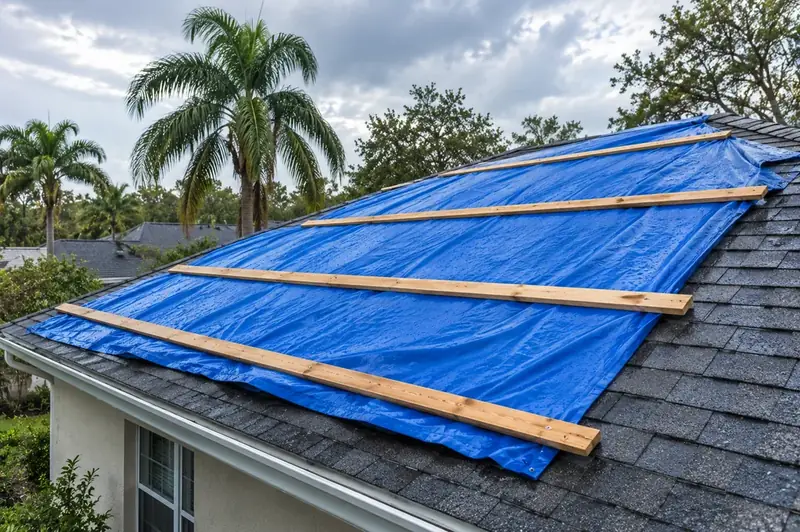
- Exterior Roof Tarping: Secure an industrial 10-mil woven polyethylene waterproof tarp over the damaged roof plane. Proper emergency tarping in Central Florida requires wrapping the top edge of the tarp over the roof ridge and securing it with 2x4 wood furring strips screwed into rafters. Never allow an emergency crew to nail tarps straight through the middle of good shingles, which causes secondary leak paths.
| Timeline Window | Primary Objective | Key Action Steps | Common Mistakes to Avoid |
|---|---|---|---|
| Hours 0 to 2 | Life Safety | Check for downed power lines; relieve ceiling water pockets; secure family and pets | Walking under waterlogged drywall ceilings; stepping in electrified water |
| Hours 2 to 12 | Damage Mitigation | Extract standing water; deploy buckets; arrange professional emergency roof tarping | Climbing on wet roof; failing to document before moving personal items |
| Hours 12 to 24 | Forensic Documentation | Capture 100+ timestamped photos/videos; record serial numbers; log weather data | Throwing away water-damaged items before the insurance adjuster sees them |
| Hours 24 to 72 | Claims & Inspection | Report claim to insurer; hire licensed, local roofing contractor for forensic inspection | Signing an Assignment of Benefits (AOB); paying cash to unlicensed storm chasers |
Phase 3 (Hours 12 to 24): Forensic Documentation Before Clean-Up
Before sweeping, discarding soaked drywall, or cutting up fallen tree branches, document everything. In property insurance claims, unrecorded damage is unpaid damage.
Conduct a systematic forensic sweep of your home:
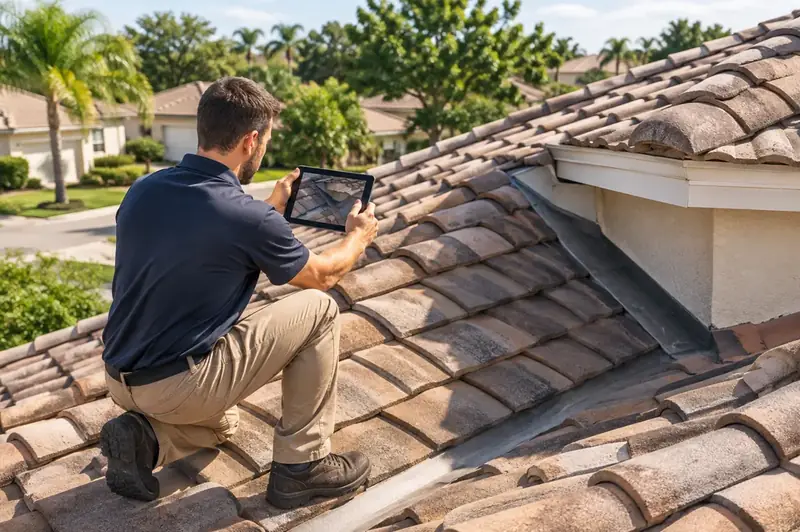
- Exterior Ground Sweep: Walk the perimeter of your home with your smartphone camera. Photograph missing shingles, damaged ridge vents, bent metal drip edge, dented aluminum gutters, and displaced valley flashing. Capture wide-angle establishing shots showing the entire roof slope alongside close-ups of specific damaged areas.
- Collateral Storm Proof: Photograph secondary storm damage around the yard—such as shredded window screens, dented air conditioner condenser fins, cracked vinyl siding, and bent mailboxes. These "collateral markers" provide indisputable forensic proof of high wind speeds and storm trajectory that insurance adjusters cannot dismiss as ordinary wear and tear.
- Interior Damage: Photograph every water stain, warped baseboard, blistered paint blister, and swollen door frame. Photograph damaged personal property, electronics, and furniture with model labels and serial numbers clearly visible.
- Save Receipts: Keep every receipt for emergency tarping, tarps, plywood, dehumidifiers, fans, and temporary hotel lodging. These expenses are reimbursable under your policy's Additional Living Expense (ALE) and Reasonable Repairs provisions.
Need Emergency Roof Tarping or Storm Inspection?
We provide rapid-response emergency tarping and comprehensive forensic storm damage reports for Orlando homeowners.
Phase 4 (Days 1 to 3): Reporting the Claim and the 1-Year Statutory Deadline
Under major Florida legislative reforms (Senate Bill 2A and Florida Statute § 627.70132), the legal window to file a hurricane or storm property insurance claim is strictly limited:
- 1-Year Initial Notice Deadline: You must give formal written notice of an initial windstorm or hurricane claim to your property insurer within exactly one year of the date of the storm's landfall. If you miss this deadline, your claim is legally barred, regardless of how severe the damage is.
- 18-Month Supplemental Deadline: Any reopened or supplemental claims for hidden damage discovered later must be filed within 18 months of the date of loss.
When contacting your insurance company's claims hotline, provide your policy number, the official storm date, a concise factual description of the damage ("roof penetration, shingle blow-off, active ceiling water intrusion"), and state that temporary emergency mitigation is underway. Request an official claim number and the name and contact details of the assigned field adjuster.
Understanding Florida Hurricane Deductibles: The Percentage Reality
Unlike standard property claims that carry a flat $500 or $1,000 deductible, hurricane damage in Florida is subject to a separate statutory Hurricane Deductible. Governed by Florida Statute § 627.701, hurricane deductibles are calculated as a percentage of your home's total Coverage A (Dwelling) insurance limit—typically 2%, 5%, or 10%.
| Coverage A (Dwelling Limit) | 2% Hurricane Deductible | 5% Hurricane Deductible | 10% Hurricane Deductible |
|---|---|---|---|
| $300,000 | $6,000 out-of-pocket | $15,000 out-of-pocket | $30,000 out-of-pocket |
| $450,000 | $9,000 out-of-pocket | $22,500 out-of-pocket | $45,000 out-of-pocket |
| $600,000 | $12,000 out-of-pocket | $30,000 out-of-pocket | $60,000 out-of-pocket |
| $800,000 | $16,000 out-of-pocket | $40,000 out-of-pocket | $80,000 out-of-pocket |
If your home is insured for $450,000 with a standard 2% hurricane deductible, you must absorb the first $9,000 of damage out of pocket before the insurance company pays a single dollar. Understanding this number immediately helps you decide whether filing a claim is financially prudent or whether a localized repair makes more economic sense.
Avoiding Storm Chasers and Contractor Scams in Orlando
Within 48 hours of an Orlando hurricane, out-of-state "storm chasers" and door-to-door sales canvassers descend on storm-impacted neighborhoods. Protect yourself by adhering to three non-negotiable rules:
- Verify the Florida CCC/CRC License: Under Florida Statute § 489.127, only a Certified Roofing Contractor (CCC) or Certified General Contractor (CGC) licensed by the Florida Department of Business and Professional Regulation (DBPR) can legally contract for roofing work in Florida. Ask to see their physical state license pocket card and verify it at myfloridalicense.com.
- Never Sign an Assignment of Benefits (AOB): Under recent Florida legislation (Senate Bill 2A / F.S. § 627.7152), policyholder assignment of benefits to contractors has been rendered legally void. Any contractor demanding you sign over your insurance rights is using outdated or predatory legal contracts.
- Deductible Waivers Are Illegal: Under Florida Statute § 817.234(7), it is a third-degree felony for a contractor to offer to "waive," "absorb," or "rebate" any portion of a homeowner's insurance deductible. Any roofer who promises a "free roof" with zero deductible is inviting you into insurance fraud.
Frequently Asked Questions
Under Florida Statute § 627.70132, you have exactly one year from the date of hurricane landfall to submit an initial claim to your property insurance company. Supplemental or reopened claims must be submitted within 18 months of the date of loss. Missing this deadline legally bars your claim.
Yes. Emergency tarping to prevent further water intrusion is covered under the "Reasonable Repairs" provision of standard Florida homeowners insurance policies. Keep detailed invoices and before-and-after photographs to submit for full reimbursement with your claim.
A standard deductible is a flat dollar amount (typically $500 or $1,000) applied to fire or plumbing losses. A hurricane deductible applies specifically to damage caused by a storm declared a hurricane by the National Hurricane Center and is calculated as a percentage (2%, 5%, or 10%) of your home's total dwelling coverage limit.
No. Under Florida law, roofing contractors cannot act as public adjusters or negotiate insurance claim settlements unless they hold a separate public adjuster license. A contractor can provide an itemized repair estimate, identify code upgrade requirements, and meet the adjuster on the roof to review physical damage.
Do not stand underneath the sag. Place a bucket underneath and use a long screwdriver or broom handle from the side to punch a small hole in the center of the pocket. Relieving the trapped water prevents the entire drywall sheet from collapsing under thousands of pounds of water weight.
Sources & Statutory Verification
Florida statutes and emergency directives verified in October 2026:
- Florida Statutes § 627.70132 — Notice of Property Insurance Claims (One-Year Hurricane Filing Deadline)
- Florida Statutes § 627.701 — Statutory Hurricane Deductible Guidelines
- Florida Statutes § 817.234(7) — Insurance Fraud & Prohibition of Deductible Rebates
Immediate mitigation after a severe storm stops internal ceiling collapse and preserves insurance claim rights under Florida law. In Oviedo, FL, local crews provide rapid containment through our Oviedo emergency roof repair dispatch.