Don't let a mistake sink your roof claim. See what can void Florida coverage: late notice, no mitigation, excluded causes and misstatements.
Filing a property insurance claim for roof storm damage in Orlando is not a guaranteed path to a check. In Florida's heavily regulated and litigated insurance market, carriers enforce strict policy conditions, exclusionary endorsements, and statutory rules designed to reject or invalidate claims. Even with legitimate hurricane or hail damage, a single misstep by a homeowner or an unscrupulous contractor—such as missing the one-year reporting deadline, failing to tarp an active leak, accepting an illegal "deductible waiver," or signing an invalid Assignment of Benefits—can void your claim entirely. This guide details the seven most common pitfalls that legally void or sink roof insurance claims in Florida, and the practical steps to keep your claim valid and enforceable.
The Seven Deadly Pitfalls That Void a Florida Roof Claim
Insurance policies are binding legal contracts governed by the Florida Insurance Code. If a policyholder breaches a contractual condition, the insurer is legally released from its obligation to pay for the loss.
| Pitfall / Defense | Legal & Contractual Basis | What Occurs During the Claim | How to Protect Your Claim |
|---|---|---|---|
| 1. Statutory Late Notice | Florida Statute § 627.70132 (SB 2A) | Initial claim filed past the 1-year deadline; claim is barred by law | Give written notice immediately after the storm; never wait |
| 2. Failure to Mitigate | Policy Condition: Duty to Protect Property | Carrier denies interior drywall, mold, and flooring damage due to no tarp | Arrange emergency tarping within 24–48 hours; keep invoices |
| 3. Illegal Deductible Schemes | Florida Statute § 817.234(7) (Insurance Fraud) | Contractor offers to "waive" deductible; voids claim and risks felony charges | Pay your legal deductible directly to the roofer by check/card |
| 4. Wear, Tear & Age Exclusions | Standard Policy Perils Exclusion | Adjuster attributes damage to thermal cracking and granule loss, not wind | Provide pre-storm photos, maintenance logs, and collateral storm proof |
| 5. Anti-Concurrent Causation (ACC) | Wind-Driven Rain Exclusion Clause | Water entered through worn flashing without an exterior storm breach | Forensically prove an exterior storm opening created the water path |
| 6. Unpermitted Prior Repairs | Florida Building Code Re-Roofing Rules & Policy Permitting Clauses | Previous unpermitted re-roof or DIY patch cited as non-compliant building work | Ensure all prior roofing work was properly permitted and inspected |
| 7. Prohibited AOB Contracts | Florida Statute § 627.7152 (SB 2A) | Homeowner signs over claim rights to contractor; contract is legally void | Maintain full control of your policy; never sign an AOB contract |
Pitfall 1: Missing the 1-Year Florida Notice Deadline (F.S. § 627.70132)
Following major legislative reforms under Senate Bill 2A, Florida drastically shortened the statute of limitations for filing property insurance claims. Under Florida Statute § 627.70132:
- An initial claim or reopened claim for loss or damage caused by a hurricane or windstorm must be reported to the insurer within exactly one year of the date of landfall.
- Supplemental claims (seeking additional funds after an initial payment) must be reported within 18 months of the date of loss.
Historically, homeowners had three years to report storm claims. Under current Florida law, if you discover roof leaks 13 months after a hurricane, your insurance carrier is legally entitled to issue an immediate, absolute claim denial, regardless of whether the hurricane unquestionably tore off your shingles.
Pitfall 2: Neglecting the Duty to Mitigate Active Water Leaks
Every homeowners insurance policy contains an explicit covenant requiring the insured to protect the property from further damage following a loss. If hurricane winds rip off shingles over your master bedroom and rainwater pours into your attic, you cannot simply let the water run for weeks while waiting for an adjuster to arrive.
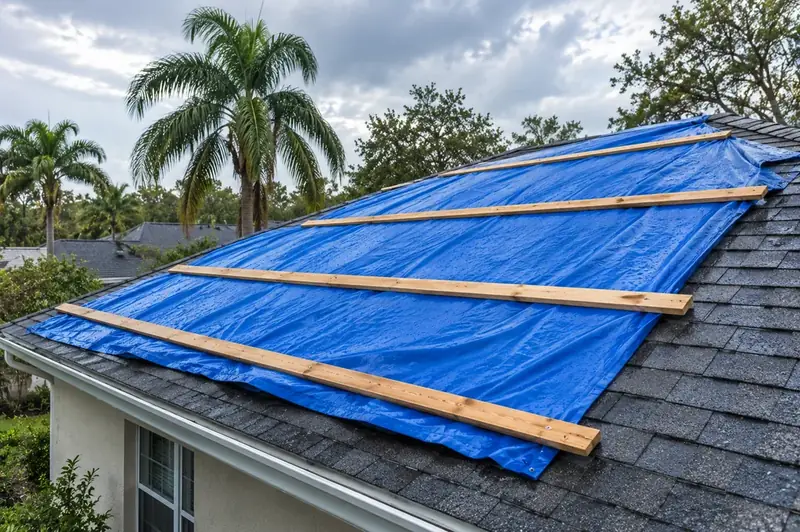
If mold, rotted wood trusses, or collapsed drywall ceilings develop because you failed to take reasonable temporary steps—such as catching drips in buckets, extracting standing water, and securing an emergency waterproof tarp over the roof breach—the insurance company will cite the Neglect Exclusion. They will pay to replace the torn shingles, but completely deny thousands of dollars in interior drywall, insulation, and mold remediation expenses.
Save All Emergency Mitigation Invoices
Emergency roof tarping and water extraction performed by a professional mitigation company are fully reimbursable under the "Reasonable Repairs" clause of your policy. Document the roof before and after tarping, and submit the itemized invoice with your initial claim.
Pitfall 3: Falling for the "Free Roof" Deductible Waiver Scheme
Following storms in Orlando, canvassers and unscrupulous contractors frequently knock on doors claiming: "We will handle your claim and waive your deductible so your new roof costs zero dollars."
This is illegal insurance fraud under Florida law. Under Florida Statute § 817.234(7), it is a third-degree felony for a contractor to offer to pay, waive, rebate, or absorb any portion of an insurance deductible, or provide a gift or allowance to offset it. When an insurer discovers that a contractor artificially inflated the initial Xactimate estimate to hide the deductible, the carrier can void the entire claim, deny coverage, and refer both the contractor and homeowner to the Florida Department of Financial Services Division of Investigative and Forensic Services.
Need Honest, Code-Compliant Roof Storm Inspection?
We provide licensed, transparent damage evaluations with zero illegal deductible gimmicks or high-pressure sales tactics.
Pitfall 4: The Anti-Concurrent Causation Trap and Wind-Driven Rain
One of the most complex policy clauses in Florida is the Anti-Concurrent Causation (ACC) clause. Standard Florida homeowners policies explicitly exclude damage caused by "wind-driven rain" unless the wind first physically damaged the exterior roof or walls, creating an opening through which water entered.
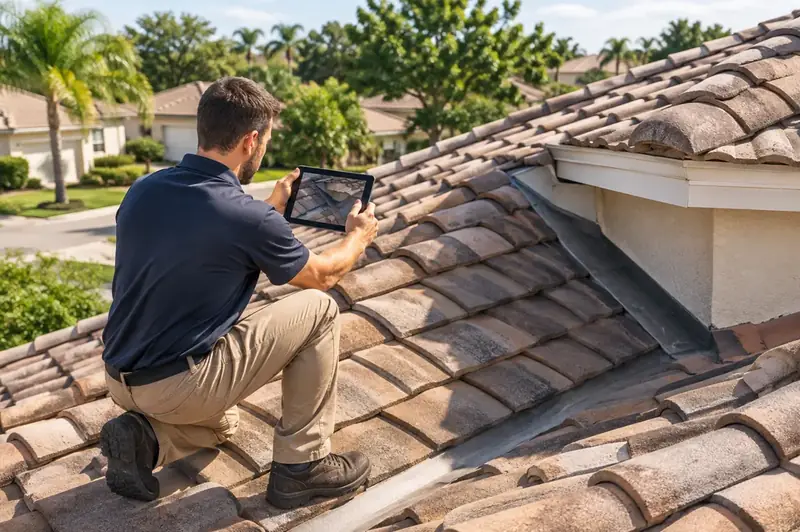
If torrential tropical rain is driven under aging, curled shingles or past deteriorating valley flashing that had no physical wind fractures, the adjuster will classify the intrusion as uninsurable maintenance neglect rather than storm damage. To overcome an ACC denial, your contractor must provide clear photographic proof of a physical storm-created breach—such as a torn shingle tab, lifted ridge vent, or punctured membrane.
Pitfall 5: Signing an Invalid Assignment of Benefits (AOB) Contract
For years, Florida contractors used Assignment of Benefits (AOB) agreements to seize full legal rights to a homeowner's insurance policy, allowing the contractor to bill the insurer directly and initiate lawsuits without homeowner consent. In 2022/2023, the Florida Legislature enacted comprehensive tort reform through Senate Bill 2A:
- Under Florida Statute § 627.7152(13), any assignment of post-loss property insurance benefits executed on or after January 1, 2023, is legally void and unenforceable.
- If a contractor asks you to sign an AOB, "Direction to Pay," or agreement assigning your insurance policy rights, refuse immediately. You should always remain in direct contractual control of your insurance policy, claim checks, and contractor agreements.
Frequently Asked Questions
Yes. Under Florida Statute § 627.70132, an initial property claim for hurricane or windstorm damage must be submitted within exactly one year of the date of loss. If you miss this statutory deadline, your claim is legally barred, and the carrier has zero obligation to inspect or pay for the damage.
No. Under Florida Statute § 817.234(7), it is a third-degree felony for a contractor to offer to waive, absorb, or rebate a property insurance deductible. Homeowners are legally required to pay their deductible directly to the contractor. Participating in a deductible waiver scheme can void your entire insurance policy.
Failing to take reasonable temporary steps to mitigate leaks breaches your policy's "Duty to Protect Property." The insurer can legally deny coverage for all resulting secondary damage—including rotted drywall, ruined flooring, and mold growth—that occurred after the initial storm event.
An Anti-Concurrent Causation clause states that if a loss is caused by both a covered peril (wind) and an excluded peril (wear and tear, flood, or maintenance neglect), the entire loss is excluded from coverage. This is frequently used by adjusters to deny wind-driven rain claims that did not create a visible exterior hole.
No. Under major Florida insurance reforms enacted in Senate Bill 2A (codified under F.S. § 627.7152), all Assignment of Benefits agreements executed on or after January 1, 2023, are legally void. Policyholders must remain in direct control of their claim proceeds.
Sources & Statutory Verification
Florida insurance statutes and legal authorities verified in October 2026:
- Florida Statutes § 627.70132 — Notice of Property Insurance Claims (One-Year Mandatory Notice Rule)
- Florida Statutes § 817.234(7) — False and Fraudulent Insurance Claims; Prohibition of Deductible Rebates
- Florida Statutes § 627.7152 — Assignment of Post-Loss Property Insurance Benefits (Statutory Invalidation)
Failing to report storm damage promptly under Florida Statute § 627.70132 can void an otherwise valid claim. For homeowners in Celebration, FL, learn how ARC covenants impact repairs in our Celebration roof leak repair guide.
Keep Reading
- Celebration, FL Roofing Overview
- Roof Leak Repair in Celebration
- Complete Florida Roofing Insurance & Claims Guide
- Central Florida Storm Damage & Insurance Claims
- Emergency Roof Tarping & Leak Containment Services
- What to Do Immediately After a Hurricane Hits Your Roof
- Public Adjuster vs. Insurance Adjuster: Do You Need One?