Hear scratching in the attic? See how squirrels and roof rats chew pipe boots and ridge vents, and which barriers help. Call (689) 359-5257.
In Central Florida's heavily wooded suburban communities, roof rats (*Rattus rattus*) and Eastern gray squirrels cause extensive structural roof damage and hidden water leaks by chewing through soft lead plumbing boots, plastic off-ridge vents, and aluminum soffit returns. Left unaddressed, these rodent-compromised roof penetrations allow torrential subtropical rains to rot structural roof sheathing, contaminate attic insulation, and introduce severe residential electrical fire hazards.
The Arboreal Invaders: Biology and Behavior of Florida Roof Rodents
Florida's lush environment, mild winters, and dense urban tree canopy create an ideal habitat for arboreal wildlife. Unlike Norway rats that burrow underground, the roof rat (*Rattus rattus*, also known as the citrus rat or black rat) is an agile climber that spends its life elevated in trees, utility lines, and structural rooflines. Together with the Eastern gray squirrel (*Sciurus carolinensis*), roof rats treat suburban roof penetrations as direct gateways to sheltered nesting grounds.
Rodents possess open-rooted, continuously growing incisor teeth that must be constantly worn down against hard surfaces. To an eager rodent seeking an entry point into a warm, quiet attic, standard roofing materials present zero deterrent. A rat can squeeze its collapsible skeleton through an opening as small as a nickel (0.75 inches), while a juvenile squirrel requires an aperture scarcely larger than a quarter. Once a rodent detects the thermal exhaust or air movement flowing from an attic vent or plumbing stack, it will tirelessly gnaw through soft metals and plastics to gain entry.
The 5 Most Vulnerable Roof Penetrations Targeted by Wildlife
Roof inspections across Central Florida routinely reveal animal-inflicted damage concentrated across five critical roof envelope components:
- Lead Plumbing Pipe Boots: The number one target of squirrels across Florida. Traditional plumbing vent stacks are flashed with soft, 2.5-lb or 4-lb pure lead boot flashings. Squirrels are chemically drawn to chew lead, grinding down their incisors on the malleable metal until the entire upper collar is shredded away. Once the lead collar is severed down to the PVC pipe line, rainwater cascades directly down the plumbing chase, rotting surrounding ceiling joists.
- Plastic Off-Ridge Static Vents: Many builders install inexpensive injection-molded plastic off-ridge exhaust vents (turtle vents). Squirrels and rats easily gnaw through the exterior plastic louvers and side baffles, creating gaping holes that allow stormwater to pour into the attic during torrential rains.
- Aluminum Soffit Returns and Fascia Transitions: Where the sloped roof rake meets the horizontal eave fascia, small architectural gaps frequently exist. Rodents chew through lightweight aluminum soffit trim, tear out wire mesh, and establish runway tunnels directly into the exterior wall cavities.
- Ridge Vent End-Plugs and Mesh: Continuous shingle-over ridge vents utilize corrugated plastic or woven fiber matrixes for attic exhaust. Rats chew through the soft plastic end-caps, creating hidden tunnels running along the entire apex of the roof.
- Drip Edge and Rotted Eave Decking: Gutter backups or overflowing leaves soften the wooden edge of the roof decking along the eaves. Rodents exploit this soft, moisture-degraded wood, chewing away the deck lip beneath the metal drip edge.
The Arc Fault Fire Hazard of Attic Rodents
Beyond water leaks, rodent roof damage poses an immediate life-safety hazard. The National Fire Protection Association (NFPA) notes that rodent gnawing on interior electrical wiring is a major unrecorded cause of unexplained residential attic fires. When rodents strip the thermoplastic insulation from 120V NM cable (Romex), bare copper wires short-circuit across dry attic trusses, creating dangerous electrical arc faults.
Secondary Structural Damage: The Cascading Cost of Animal Intrusions
Homeowners frequently ignore the faint scratching sounds in their ceilings, assuming wildlife presence is merely an annoyance handled by an exterminator. However, from a structural roofing perspective, rodent entry points trigger severe, cascading physical damage:
- Localized Deck Rot: A squirrel-chewed lead boot allows wind-driven rain to soak the surrounding plywood decking. Because this water enters beneath the shingles, the wood rots silently from the top down, eventually collapsing under foot traffic during routine maintenance.
- Saturated and Contaminated Insulation: Rain entering chewed vents saturates blown-in fiberglass or cellulose insulation. Saturated insulation loses all thermal resistance, compacts into a heavy, soggy mass, and causes drywall ceiling sagging. Furthermore, rodent urine, feces, and nesting pheromones create severe biohazards and airborne indoor air quality issues.
- HVAC Duct Infiltration: Once inside the attic, rats shred flexible R-6/R-8 ductwork jackets to harvest fiberglass nesting material, puncturing inner duct cores and dumping conditioned cold air into unconditioned attics while pulling contaminated attic air into home living spaces.
| Roof Component | Vulnerable Material | Animal Damage Mechanism | Engineering Hardening Solution | Rodent Resistance Rating |
|---|---|---|---|---|
| Plumbing Pipe Boots | Soft Lead (ASTM B749) | Squirrels chew lead collar down to PVC pipe | Heavy-gauge galvanized steel boots; UV polycarbonate critter sleeves | Superior (Impervious to gnawing) |
| Off-Ridge Static Vents | Thin Polypropylene Plastic | Rats/squirrels chew through louvers and baffles | Replace with 26-gauge galvanized steel or aluminum vents with internal screen | Exceptional (Chew-proof metal body) |
| Ridge Cap Vents | Corrugated Plastic / Nylon Matrix | Rats chew through end caps and baffle foam | Install 1/4" hot-dipped galvanized hardware cloth behind end plugs | High (Prevents apex entry) |
| Soffit Returns | 0.019" Aluminum / Vinyl | Rats push through corner seams and chew trim | Heavy-gauge steel flashing backing; seal construction gaps with flashing metal | High (Eliminates physical access) |
| Gooseneck Exhaust Fans | Lightweight Aluminum Flapper | Rats push open unweighted damper flappers | Heavy steel animal hoods with internal 1/2" galvanized wire mesh | Superior (Mechanical barrier) |
Hardening Roof Vents: Metal Critter Guards and Code-Compliant Barriers
Pest control companies can trap and remove the animals currently inhabiting your attic, but if your roofing contractor does not permanently harden the exterior entry points with building-science-approved materials, a new rodent family will move in within weeks.
Permanent exclusion requires mechanical roof hardening. Under Section R806 of the Florida Building Code (Ventilation), all attic ventilation openings must be protected against the entrance of rain and wildlife. Code mandates that vent openings be protected with corrosion-resistant wire cloth screening with openings between 1/16 inch and 1/4 inch. Screen openings smaller than 1/16 inch clog rapidly with atmospheric dust and Spanish moss, choking off essential attic airflow, while openings larger than 1/4 inch allow juvenile roof rats to squeeze through.
To eliminate animal vulnerability, professional roofing crews execute three vital hardening upgrades:
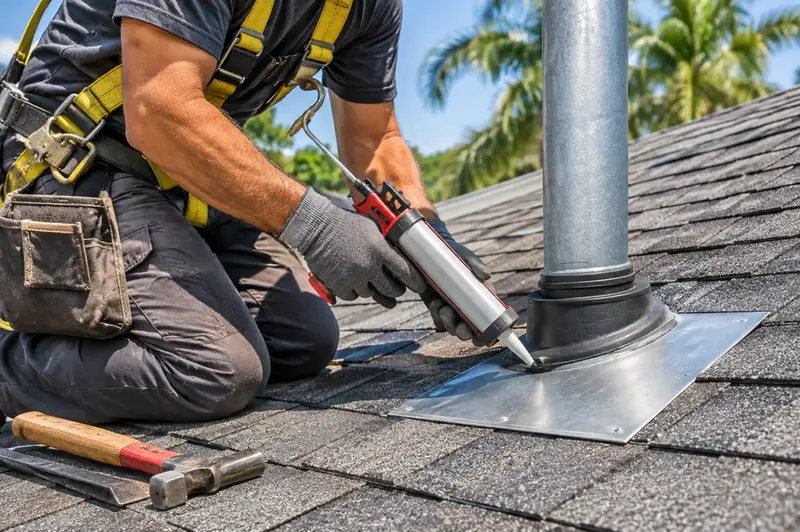
- Galvanized Pipe Boot Guards: We replace chewed lead boots or install heavy-gauge, powder-coated steel or UV-stabilized polycarbonate critter guards that encase the plumbing vent stack. These impenetrable sleeves prevent rodent teeth from reaching the soft lead or rubber seals.
- Heavy-Gauge All-Metal Turtle Vents: We excise brittle plastic vents and install commercial-grade 26-gauge galvanized steel or heavy aluminum vents equipped with internal hot-dipped galvanized steel wire cloth (ASTM A740).
- Soffit and Eave Flashing Plates: We mechanically anchor custom-bent metal flashing plates behind roof returns and eave intersections, sealing the hidden construction voids left by original framing crews.
Oviedo's Environmental Landscape: Living Among Oak Hammocks
In the historic and wooded communities of Oviedo, FL, including Alafaya Woods, Remington Park, and Live Oak Reserve, homes are nestled directly against sprawling oak hammocks, wetland preserves, and the Lake Jesup conservation basin. The majestic live oaks and laurel oaks that give Oviedo its lush character provide continuous arboreal highways directly onto residential roofs.
Property owners in these heavily canopied subdivisions should schedule a thorough annual roof inspection to evaluate tree canopy clearances and audit roof penetrations for early rodent gnawing. Overhanging branches that touch or hang within 8 feet of a roofline allow squirrels and rats to leap effortlessly onto shingles, bypassing ground-level pest barriers entirely. Trimming tree branches back a minimum of 8 to 10 feet from roof eaves dramatically reduces animal traffic across your roof deck.
When unexpected water stains appear on ceilings after animal intrusions, Oviedo homeowners rely on specialized roof leak repair in Oviedo, FL to restore rotted plywood decking, re-flash chewed penetrations with rodent-proof metals, and ensure complete compliance with local Seminole County building and permitting codes.
Step-by-Step Restoration Protocol Following Animal Roof Damage
Remediating animal roof damage requires a coordinated approach that addresses both biological exclusion and structural roofing restoration:
- Wildlife Trapping and Verification: Ensure a licensed Florida wildlife trapper has verified that all animals have exited the attic space before permanently sealing all exterior penetrations; sealing live animals inside causes them to chew through interior drywall in desperation.
- Roof Deconstruction Around Damage: Shingles surrounding damaged pipe boots, vents, or eave returns are detached and removed to expose the underlying plywood sheathing.
- Deck Rot Repair: Any wood sheathing decayed by water entry is excised back to sound framing members and replaced with new code-compliant 15/32-inch exterior structural panels, fastened with 8d ring-shank nails.
- Secondary Water Barrier Application: High-temperature self-adhering modified bitumen membrane (ASTM D1970) is adhered directly to the bare wood deck, sealing all fastener penetrations.
- Installation of Chew-Proof Components: Heavy-gauge all-metal vent fixtures and steel critter-shielded pipe boots are mechanically secured and sealed with high-performance elastomeric flashing adhesive.
- Shingle Reintegration: Matching architectural shingles are woven cleanly back into the existing roof field, sealed with asphalt shingle adhesive tabs to restore maximum wind uplift resistance.
Frequently Asked Questions About Animal Roof Damage
Typically, no. Most standard homeowners insurance policies in Florida contain specific exclusions for damage caused by rodents, vermin, or insects. However, "ensuing sudden water damage" resulting from an unpredicted leak may occasionally qualify for interior coverage depending on your specific policy language. Check your policy endorsement forms with your insurance agent.
Squirrels have continuously growing incisors that require constant gnawing to prevent overgrowth. Lead is a very soft, malleable metal that is easily ground down by their teeth without breaking them, and some wildlife biologists believe the metallic salts in oxidized lead may have a slightly sweet taste that attracts them.
No. Standard expanding polyurethane foam offers virtually zero resistance to rodent incisors; rats can chew through hardened spray foam in minutes. Permanent exclusion requires physical mechanical barriers: heavy 26-gauge galvanized sheet metal, copper, or 1/4-inch hot-dipped galvanized steel hardware cloth.
Tree limbs should be maintained at a minimum distance of 8 to 10 feet away from your roofline and gutters. Squirrels can jump 8 feet horizontally and up to 10 feet downward from overhanging tree canopies. Trimming branches also prevents moss accumulation, gutter clogging, and storm branch damage.
Under Florida Building Code Section R806, vent protection screening must have mesh openings between 1/16 inch and 1/4 inch made of corrosion-resistant wire cloth (such as hot-dipped galvanized or stainless steel wire). This aperture prevents rodent entry while maintaining code-compliant Net Free Ventilating Area (NFVA) without clogging from airborne debris.
Related Central Florida Roofing Guides: Continue reading Chimney Flashing Leaks: Why Flashing Fails in Florida and Roof Repair in the Rain: What Emergency Crews Do.