Roof leaking mid-storm? See how emergency crews stabilize it with tarps, wet seals and diversion dams in active rain. Call (689) 359-5257 for help now.
Professional roofing contractors cannot perform permanent roof repairs during active rainfall because adhesives, self-adhering membranes, and asphalt shingle sealants require completely dry surfaces to form a structural bond. Instead, licensed emergency crews perform critical mitigation protocols—deploying heavy-duty reinforced tarpaulins, tactical water-diversion channels, and specialized wet-surface elastomeric compounds to arrest active interior flooding until storm systems pass and permanent repairs can begin.
The Physical and Chemical Realities of Wet Roofing Substrates
When ceiling drywall softens and water starts pouring into your living room during a violent Florida downpour, calling for immediate assistance is essential. However, understanding the physical limitations of building materials explains why no reputable contractor will attempt to install new shingles, underlayment, or hot metal while the sky is open.
Modern steep-slope roofing systems rely heavily on chemical bonding agents. Asphalt shingles utilize thermal self-sealing adhesive strips composed of polymer-modified asphalt that requires heat and dry contact to cross-link to underlying shingle tabs. If applied over wet surfaces, the thin film of water acts as a bond breaker, preventing the shingle from sealing and leaving it completely vulnerable to wind uplift during the next gust.
Furthermore, the self-adhering modified bitumen underlayments (ASTM D1970) mandated by the Florida Building Code for secondary water resistance cannot adhere to moisture-laden roof sheathing. Nailing shingles or applying underlayment over wet plywood or oriented strand board (OSB) traps gallons of water within the roof deck sandwich. In Central Florida's warm climate, this trapped moisture triggers rapid wood rot, delamination of structural sheathing, fungal growth, and toxic indoor mold within 48 to 72 hours.
OSHA Safety and Lightning Hazards in Central Florida
Beyond material science, human safety is an absolute constraint during wet weather operations. Central Florida is widely recognized as the lightning capital of the United States. Afternoon convective storms and tropical storm bands generate severe cloud-to-ground lightning strikes that can strike miles ahead of or behind the rain core.
Under federal Occupational Safety and Health Administration (OSHA) regulations (29 CFR 1926 Subpart M), steep-slope roofing operations must halt when environmental conditions introduce uncontrollable fall hazards. Wet asphalt shingles, slick metal panels, and glazed roof tiles experience a catastrophic loss of friction when coated with rain. Walking on a 6:12 slope metal or tile roof during rainfall is extraordinarily dangerous even with personal fall arrest systems (PFAS). Therefore, emergency response protocols focus on stabilizing the building envelope from safe access positions, bucket lifts, or ridge anchor lines once lightning threats have passed.
What Emergency Roofing Crews Actually Do During Active Storms
When you contact an emergency service for emergency roof repair, professional crews arrive equipped with specialized stabilization gear designed specifically for wet-weather deployment. Rather than executing premature permanent fixes, technicians carry out five tactical interventions:
- Attic Moisture Mapping and Interior Water Containment: Before setting foot on a slick roof, technicians inspect the attic space with high-resolution thermal imaging cameras and non-invasive moisture meters. Tracing the path of water across trusses and rafter plates allows crews to locate the exact penetration point on the exterior deck, while deploying commercial catchment bladders and drain hoses to channel leaking water away from ceilings.
- Tactical Emergency Tarping: The primary defense against severe storm damage is the deployment of industrial 10-mil to 12-mil cross-laminated woven polyethylene tarps. Unlike consumer-grade blue tarps that shred in 30-knot winds, commercial tarps are secured with 2x4 kiln-dried wood batten furring strips, fastened directly into rafters beyond the roof ridge to eliminate wind billowing and water bypass.
- Wet-Surface Mastic Application: For localized punctures caused by fallen tree limbs or dislodged satellite dishes, technicians apply specialized wet-surface flashing cement meeting ASTM D4586 Type I or Type II standards. These solvent-based formulations are engineered with chemical wetting agents that displace water molecules, allowing the sealant to bond directly to wet asphalt, masonry, or metal in pouring rain.
- Water Diversion Dams and Valley Clearing: Severe downpours frequently overwhelm roof valleys choked with pine straw and oak leaves. Crews clear mechanical debris dams and install temporary flexible metal flashing channels to redirect rushing torrents away from compromised underlayment areas.
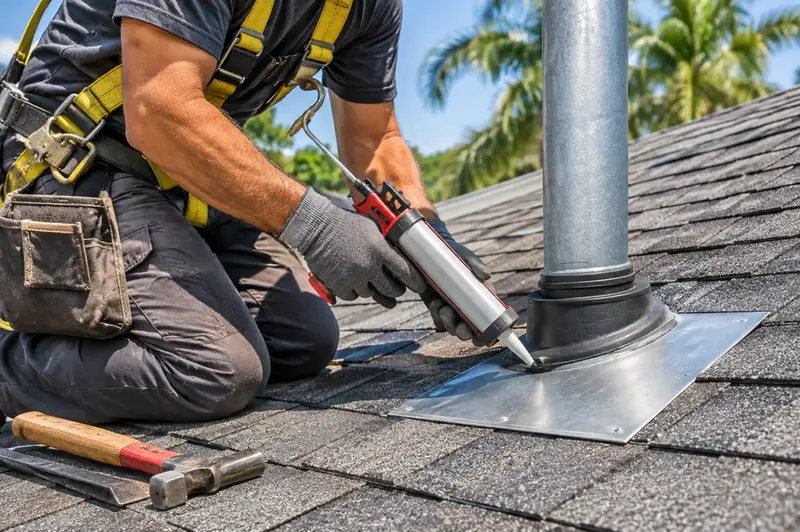
- Chimney and Penetration Wrapping: Dislodged pipe boots and torn chimney flashings are wrapped in heavy reinforced heat-shrink or reinforced membrane wraps, mechanically secured with ratcheting straps to withstand wind-driven squalls until dry weather arrives.
| Operational Factor | Emergency Storm Stabilization | Permanent Code-Compliant Repair |
|---|---|---|
| Substrate Moisture Requirement | Tolerates active wetness; surface water displaced mechanically | 100% bone-dry decking required (<15% wood moisture content) |
| Primary Materials Utilized | 10-mil woven poly tarps, 2x4 furring battens, ASTM D4586 mastic | ASTM D1970 membrane, FBC-approved shingles/tiles, 26-gauge flashing |
| Operational Wind Resistance | Engineered to withstand 45 to 60 mph gust buffering | Tested to ASTM D7158 Class H (a test classification, not a guaranteed survival speed) |
| Expected Service Lifespan | 30 to 90 Days (Temporary mitigation window) | 20 to 30+ Years (Full manufacturer and workmanship warranty) |
| Permitting Requirement | Exempt under Florida emergency life-safety mitigation rules | Requires municipal building permit, NOC, and dry-in inspections |
| Insurance Classification | Incurred Emergency Mitigation Expense (Reasonable repairs) | Coverage A Dwelling Loss (Building restoration scope) |
The Legal and Insurance Mandate: Mitigation of Further Loss
Homeowners often hesitate to call for emergency tarping during bad weather, worrying that their property insurance policy will not reimburse the cost. In reality, Florida law and standard homeowners insurance policies place a strict contractual obligation on the policyholder to protect the property from secondary damage.
Under Florida Statute s. 627.70131, insurance carriers review claims based on timely notification and demonstrable mitigation. If a tree branch punctures your roof at 3:00 PM and you permit rain to cascade through your ceiling for three consecutive days without contacting an emergency stabilization crew, the insurer's adjuster may deny coverage for the resulting mold, ruined cabinetry, and destroyed flooring under the policy's "failure to protect property" exclusion.
Professional emergency stabilization contractors photograph the damage before securing the tarp, catalog every damaged section of roof decking, and provide detailed written mitigation reports that insurance adjusters require to reimburse emergency invoices under your policy's reasonable emergency repairs coverage.
Rapid Response Protocols in Dr. Phillips Communities
In the upscale neighborhoods and golf communities of Dr. Phillips, FL, severe storm cells sweeping off the Butler Chain of Lakes routinely generate localized microbursts that dislodge concrete tiles and tear asphalt hip shingles. These executive residences often feature complex multistory rooflines with steep gables, dead valleys, and intricate parapets where water collects rapidly.
When severe weather strikes luxury communities like Bay Hill, Sand Lake Hills, or Orange Tree, property owners require specialized emergency roof repair in Dr. Phillips, FL. Securing large concrete barrel tiles or heavy standing-seam metal roofs during stormy conditions demands specialized rigging equipment, padded ladder standoffs that protect delicate Spanish tiles from cracking, and high-tensile ridge-wrapping tarpaulins that span multiple intersecting valleys without sagging under rainwater weight.
What Happens Once the Storm Clears: The Permanent Restoration Path
Emergency tarping is strictly a temporary bridge, not a permanent roof repair. Leaving a tarp installed on a Florida roof for months under scorching sunshine leads to rapid degradation: UV radiation breaks down polyethylene fibers within 90 days, while wind vibration chafes surrounding shingle granules down to bare fiberglass.
Once the rain ceases and high winds subside, the permanent restoration process begins:
- Moisture Verification: Specialized pin-type electronic probes verify that the structural wood decking has dried to below 15 percent internal moisture content.
- Deck Evaluation and Re-Nailing: Any weakened, delaminated, or rotted plywood sheathing is cut away and replaced with code-approved 7/16-inch or 15/32-inch exterior structural panels, fastened with 8d ring-shank nails at 6 inches on center per Florida Building Code requirements.
- Permitting and NOC Filing: In municipal jurisdictions like Orange County, repairs exceeding established square footage thresholds require a recorded Notice of Commencement (F.S. s. 713.13) and a residential roofing permit.
- Secondary Water Barrier Installation: Modern self-adhering modified bitumen underlayment (ASTM D1970) or taped synthetic underlayment is installed across the entire repaired section to meet Florida wind mitigation standards.
- Factory-Approved Covering Installation: New shingles, metal panels, or tiles matching the existing roof covering are installed in strict compliance with manufacturer specifications and local wind uplift requirements.
Frequently Asked Questions About Emergency Wet Roof Repairs
Yes. Almost all standard Florida homeowners policies cover reasonable emergency measures taken to protect the property from further water intrusion. Keep all contractor invoices, photographic evidence, and written mitigation reports to submit directly with your insurance claim.
Yes, but only if they utilize specialized wet-surface flashing cements conforming to ASTM D4586 Type I or II. These specialized solvent-based mastics contain surfactant chemicals that displace water to bond temporarily to wet metal, shingles, or masonry. However, this is strictly a temporary patch that must be permanently rebuilt when dry.
A professionally secured, heavy-duty commercial tarp (10-mil or greater) secured with wooden furring strips typically lasts 30 to 90 days. However, you should initiate permanent repairs as soon as weather permits, as Florida's extreme solar UV rays will eventually degrade the plastic weave.
Walking on wet roofs is one of the leading causes of catastrophic ladder and fall accidents. Wet shingles lose virtually all friction, wet tiles are slick as ice, and active electrical storms in Central Florida present immediate lightning hazards. Professional crews utilize certified fall arrest rigging, proper ladders, and commercial tie-off anchors.
Reputable local emergency roofing contractors maintain dedicated storm response units that dispatch within 1 to 4 hours of a call, depending on regional storm severity, active roadway flooding, and ongoing lightning activity. Life safety and lightning cessation always dictate physical exterior climbing times.
Related Central Florida Roofing Guides: Continue reading Chimney Flashing Leaks: Why Flashing Fails in Florida and How Many Roof Repairs Before You Should Replace?.