Get your Central Florida roof ready before hurricane season. Check flashing, seals and drainage with this checklist, then call (689) 359-5257.
Conducting a thorough pre-season roof maintenance inspection between March and May is the single most effective way to protect a Central Florida home before the Atlantic hurricane season begins on June 1. By identifying degraded pipe boots, loose flashing, unbonded shingle sealant strips, and clogged drainage paths during the dry spring months, homeowners prevent high-velocity tropical squalls from turning minor exterior defects into catastrophic interior water damage.
The Critical Spring Window: Why Timing Your Roof Audit in April and May Matters
In Central Florida, meteorological conditions dictate strict timelines for exterior home maintenance. Between June 1 and November 30, the region enters the Atlantic hurricane season. Simultaneously, Central Florida experiences daily convective thunderstorms throughout the summer months, bringing sudden microburst wind gusts and localized deluges with rainfall rates exceeding three inches per hour.
Attempting to diagnose or repair roofing assemblies in the middle of summer is fraught with logistical challenges. Daily lightning hazards force crews off roof decks, damp surfaces prevent elastomeric sealants from curing properly, and emergency service backlogs lengthen repair wait times. March, April, and early May present the "golden window" for roof maintenance. Daytime humidity is moderate, afternoon rains are rare, and professional roofing contractors have open schedules to complete thorough, non-rushed evaluations before tropical systems begin churning in the Atlantic basin.
A proactive pre-season audit evaluates the building envelope as an integrated, aerodynamic system designed to withstand cyclic wind loads and positive/negative pressure differentials per the Florida Building Code 8th Edition (2023; in effect through Dec 31, 2026, when the 9th Edition takes effect).
Step 1: Perimeter Drip Edge, Fascia, and Soffit Integrity
The roof's perimeter represents the primary line of aerodynamic defense against tropical weather. When hurricane-force winds hit a residential structure, air accelerates up the exterior wall, creating an intense localized low-pressure vortex along the eaves and rake edges:
- Drip Edge Code Compliance (FBC R905.2.8.5): Florida Building Code mandates that metal drip edges must extend at least two inches down the fascia face and at least two inches onto the roof deck, fastened at four-inch intervals along the flange. Inspect the drip edge for loose nails, corrosion, or separation from the sheathing.
- Fascia Board Wood Rot: Inspect wooden sub-fascia and trim boards behind gutters. Winter rainwater overflow often wicks into unpainted end grains, fostering subterranean fungal decay. Rotted fascia cannot hold gutter brackets securely under heavy hydraulic storm loads.
- Soffit Fastening and Blowout Prevention: Look for loose, sagging, or unclipped vinyl and aluminum soffit panels. During tropical storm events, wind pressurization can blow unanchored soffits outward, allowing massive volumes of wind-driven rain to enter the attic envelope and soak ceiling drywall from above.
Step 2: Testing Shingle Adhesion, Thermal Sealant Strips, and Ridge Caps
Asphalt shingles achieve their tested wind resistance—such as ASTM D7158 Class H ratings (up to 150 MPH)—primarily through continuous thermal adhesive sealant strips (often called bitumen bond lines) that fuse adjacent shingle courses together under solar warmth.
Over 8 to 12 years of Florida summer heat, thermal cycling and dust accumulation can degrade this adhesive bond. Shingles that appear visually flat from the ground may actually have completely failed sealant strips:
- Hand-Tab Bond Verification: A technician wearing soft-soled shoes gently tests shingle tabs across field, ridge, and rake zones. If a tab lifts freely with light finger pressure, its thermal adhesive has failed. In a tropical squall, wind will lift the unsealed tab, bend it backward, and snap the fiberglass mat along the top nail line.
- Hand-Tab Resealing: Unbonded tabs in otherwise healthy shingles must be manually hand-sealed using an approved roofing plastic cement meeting ASTM D4586 Type I or II, applying coin-sized dabs under each tab corner and pressing firmly into place.
- Ridge Cap Vulnerability: Ridge caps endure the highest aerodynamic uplift pressures on any roof. Inspect hip and ridge shingles for cracking along the crest, rusted exposed nail heads, or detached end laps that could peel off and expose the ridge vent opening.
Step 3: Auditing Penetration Flashings, Pipe Boots, and Valley Channels
Over 85% of roof leaks in Central Florida originate at penetrations rather than within the primary field of shingles or tiles. Penetrations break the continuous water-shedding plane and rely on mechanical metal flashings and elastomeric gaskets to exclude moisture:
- Plumbing Pipe Boot Degradation: Neoprene and EPDM rubber collar boots on plumbing vent stacks have an average lifespan of only 6 to 8 years in Florida's intense UV radiation environment. The rubber ring dries out, shrinks, and develops radial cracks around the PVC pipe. Inspect every boot collar for splitting; cracked collars should be retrofitted with a lifetime silicone slip collar or replaced entirely.
- Valley Metal and Debris Cleansing: Valleys channel the highest volume of surface runoff during heavy rainstorms. Remove accumulated pine needles, oak leaves, and moss from valley troughs. Trapped organic debris acts as a sponge, holding water against shingle edges and inducing capillary action that pulls water horizontally beneath valley flashings.
- Step Flashing and Counter-Flashing: Inspect metal step flashing where roof planes intersect vertical exterior walls, dormers, and masonry chimneys. Ensure counter-flashing sealants have not shrunken or cracked away from stucco or brick mortar joints.
Step 4: Gutter Cleansing and Downspout Drainage Velocity
Seamless aluminum gutters are not merely convenience items—they are vital hydrological control mechanisms for your roofing system and building foundation. Following the heavy spring shedding of live oak pollen catkins and pine needles, gutters across the region are frequently packed with dense organic sludge.
When a Central Florida convective storm dumps two inches of rain in forty-five minutes, clogged gutters immediately fill and spill backward. Water ponds against the bottom flange of the drip edge, exploiting capillary pathways to seep behind the fascia and soak the lower edge of the plywood decking. Furthermore, overflowing water cascades down exterior walls, degrading foundation soil and damaging stucco footing seals. Clear all gutter troughs, flush downspouts with water, and verify that downspout discharge extensions carry water at least five feet away from foundation walls.
Step 5: Examining the Attic Underside for Hidden Moisture in Celebration
A comprehensive pre-season roof audit is never complete without inspecting the underside of the roof assembly from inside the attic envelope. In master-planned communities like Celebration, where architectural guidelines emphasize complex rooflines with multiple dormers, hips, and intersecting valleys, hidden leaks can remain concealed within exterior wall cavities for months before emerging inside finished living spaces.
Access the attic space on a sunny afternoon and inspect the sheathing with a high-lumen inspection light:
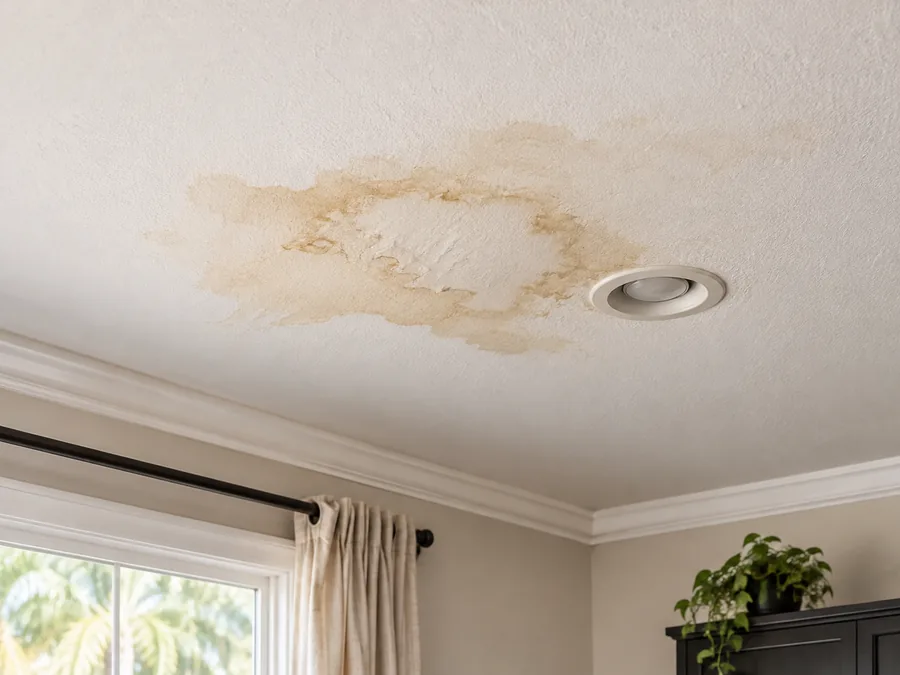
- Water Staining Along Sheathing Seams: Look for dark discoloration, efflorescence, or rust streaks running down CDX plywood or OSB panels. Pay special attention to areas directly beneath roof valleys and adjacent to chimney chases.
- Roofing Nail Shiners and Corrosion: Inspect protruding roofing nails. Nails that missed the framing rafters ("shiners") often condense moist attic air in summer, dripping water onto insulation. If nails show heavy white or brown corrosion, moisture is entering the assembly through compromised shingle nail holes.
- Ventilation Inflow: Inspect the perimeter soffit baffles. Ensure blown-in cellulose or fiberglass insulation has not shifted to block intake airflow from the eave vents, which would starve the attic of fresh air and drive decking temperatures over 150°F.
| Roof Assembly Zone | Targeted Inspection Objective | Visual Warning Signs of Failure | Recommended Corrective Action |
|---|---|---|---|
| Perimeter Drip Edges | Verify mechanical fastening and FBC R905.2.8.5 overlap | Loose metal flanges, corrosion, separation from fascia | Re-fasten at 4" intervals; seal laps with roofing mastic |
| Shingle Sealant Strips | Verify thermal adhesion of all field tabs | Tabs lift freely with light hand pressure; wind flutter | Hand-seal with ASTM D4586 asphalt plastic cement |
| Plumbing Pipe Boots | Examine elastomeric collar gaskets for UV embrittlement | Radial splits, tears, loose fit around PVC pipe | Install tight-fitting silicone repair collar or replace boot |
| Roof Valleys & Intersections | Verify unobstructed water shedding velocity | Pine needle dams, decomposing mulch, silt lines | Hand-clean debris; inspect underlying metal for pinhole rust |
| Gutters & Downspouts | Ensure unobstructed high-volume drainage capacity | Standing water, sagged hangers, overflow mud stains | Flush troughs, re-pitch slope (1/4" per 10 ft), secure spikes |
| Attic Roof Deck Underside | Check structural sheathing and nail holding power | Dark water stains along seams, rusted nail shiners, mold | Locate exterior water entry point; replace damaged decking |
When Maintenance Is No Longer Enough: Recognizing End-of-Life Indicators
While an annual routine roof maintenance program can easily add three to five years to the usable lifespan of a Florida roof, it cannot reverse fundamental material exhaustion. Shingles manufactured 15 to 20 years ago undergo severe binder hardening, thermal cracking, and loss of impact resistance under Central Florida's relentless solar radiation.
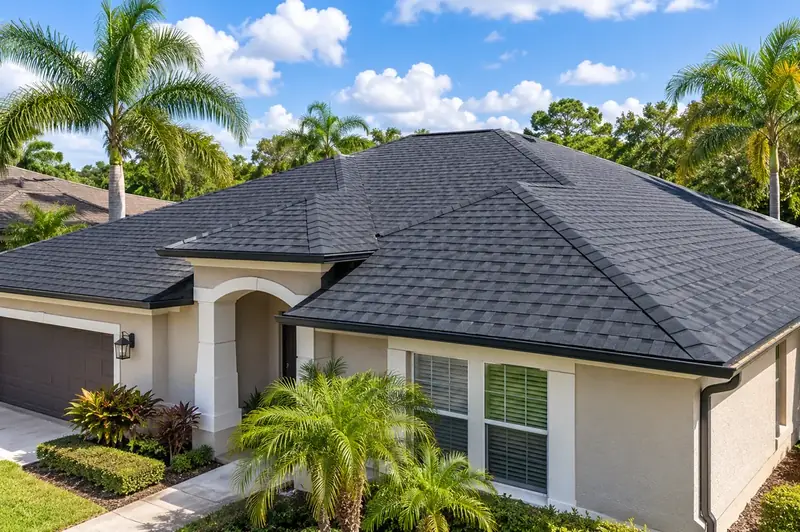
If your pre-season inspection reveals widespread granule loss with fiberglass mat visibly showing through, brittle tabs that break off when bent slightly, or extensive nail pop clusters across multiple slopes, minor patch repairs are a temporary gamble against hurricane season. In these cases, home resilience and property insurance security require budgeting for a complete roof replacement in Celebration, FL engineered with modern self-adhering secondary water barriers and Class H wind-rated coverings.
Frequently Asked Questions About Pre-Season Roof Prep
Homeowners can safely conduct preliminary visual inspections from the ground using high-powered binoculars and by thoroughly inspecting their attic space with a flashlight. However, walking on roof slopes—especially multi-story or steep-pitch designs—presents severe fall hazards and can inadvertently damage brittle shingles or crack delicate barrel tiles. Comprehensive physical inspections and hand-tab sealant checks should be delegated to licensed, insured roofing professionals equipped with proper fall protection harnesses and ladders.
Yes. Wind failure on shingle roofs almost always begins when high gusts catch the unbonded lower edge of a single shingle tab. Once the initial tab lifts and tears, the wind establishes a peeling action, rapidly ripping away adjacent courses and exposing the underlayment. Hand-sealing loose tabs with ASTM D4586 roofing cement restores the continuous aerodynamic plane, dramatically reducing the risk of progressive wind peel during tropical storms.
In the Orlando metropolitan area, a professional preventative roof maintenance service typically ranges from $250 to $600 depending on roof square footage, pitch, and complexity. This service generally covers clearing valley debris, resealing loose shingle tabs, re-caulking pipe boots and counter-flashings, securing loose drip edges, and providing a written condition report documenting roof health for your insurance records.
Absolutely. Florida homeowners insurance carriers routinely demand 4-Point Inspection reports for homes with roofs over 10 to 15 years old. A 4-Point inspector specifically looks for unsealed tabs, rusted flashings, cracked pipe boots, and active ceiling stains. Completing pre-season repairs ensures your roof easily passes these exams, preventing sudden policy cancellations or demands for premature replacement.
Missing shingles must be replaced immediately. When a shingle is missing, the underlying organic felt or synthetic underlayment is exposed directly to solar UV radiation, which degrades underlayment water resistance in as little as 14 to 30 days. Have a licensed roofing contractor remove remaining fastener shanks, slide new matching shingles into position, and secure them with code-approved roofing nails and sealant before summer rains begin.
Related Central Florida Roofing Guides: Continue reading Black Streaks on Florida Roofs: Algae Cause & Prevention and Roof Cleaning in Orlando: Soft Wash vs. Pressure Washing.