Overhanging limbs can scrape, rot and crush Florida roofs. See how trees damage roofing and what to trim first. Call (689) 359-5257 for a roof check.
Overhanging tree branches represent one of the most destructive, multifaceted hazards to the structural longevity of a Central Florida roof. Beyond the catastrophic danger of heavy limbs snapping during tropical storms, close-proximity branches act as abrasive sandpaper that strips protective shingle granules, deposit decomposing organic tannins that rot decking, and provide direct structural bridges for invasive rodents and pests.
The Physics of Branch Sway: Continuous Abrasive Granule Stripping
Mature oak and pine trees enhance the beauty and energy efficiency of Central Florida neighborhoods by providing shade against intense solar heat. However, when tree canopies encroach within six to ten feet of a roof plane, normal meteorological conditions transform flexible branches into continuous mechanical hazards.
In Florida's subtropical climate, daily trade winds, thermal sea breeze fronts, and afternoon storm squalls cause tree canopies to oscillate continuously. When an overhanging branch makes physical contact with an asphalt shingle roof, it does not simply rest lightly against the surface. As the wind rocks the branch back and forth, the rough bark and stiff twigs scrape across the shingles with rhythmic mechanical force.
Under ASTM D3462 standards, the ceramic-coated mineral granules embedded on asphalt shingles are designed to resist vertical raindrop impact—not sustained lateral friction. Within just a few weeks of branch contact, the abrasive sweeping action gouges deep channels through the mineral surfacing, scouring the granules down to the bare black asphalt bitumen beneath. Once the asphalt is stripped of its mineral armor, ultraviolet solar rays rapidly degrade the petroleum binder, causing the shingle to crack, curl, and expose the underlying fiberglass matting. On barrel tile roofs, wind-swung branches chip decorative glaze finishes and crack brittle crest tiles, creating immediate water entry points.
The Organic Debris Cycle: Moisture Retention, Acidic Tannins, and Rot
Direct mechanical abrasion is only the beginning of canopy-related roof damage. Trees shed tons of organic biomass annually, dropping dead leaves, pollen catkins, twigs, Spanish moss, and seed pods directly onto the roof slope:
- Moisture Traps and Microclimates: Tree canopies block sunlight and reduce wind velocity across the roof deck. When organic debris gathers in roof valleys, behind chimney crickets, or along low-slope dormers, it creates a permanent damp zone. Decomposing leaves retain moisture like a saturated sponge, preventing morning dew and rainwater from evaporating.
- Acidic Chemical Leaching: As oak leaves, pine needles, and organic debris decompose on damp shingles, they leach concentrated tannic and humic acids. These mild natural acids react chemically with the petroleum compounds in asphalt bitumen, softening the binder and accelerating the debonding of adjacent ceramic granules.
- Microbial Breeding Grounds: The combination of constant shade, high humidity, and decomposing organic nutrients creates an ideal incubator for biological infestations. Heavy moss, lichens, and wood-decaying fungi establish deep colonies in shaded valleys, sending microscopic root filaments into shingle edges and expanding under tile watercourses.
Hurricane Wind Shear and Impact Physics in Lake Mary
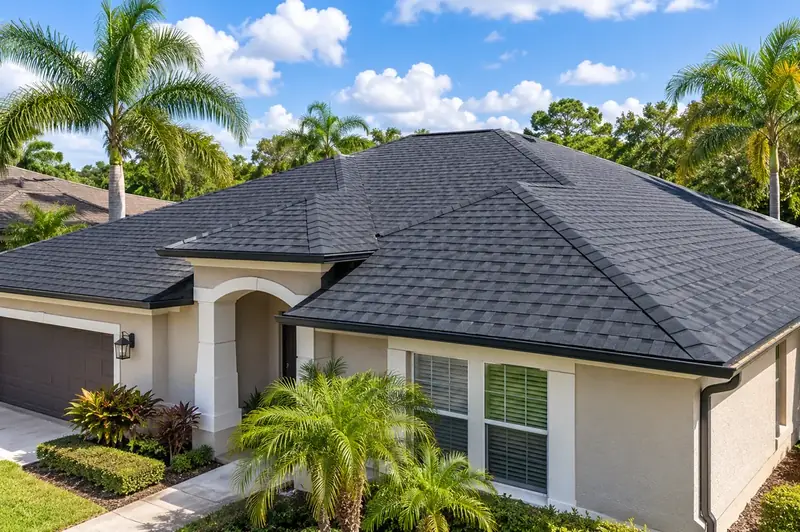
Nowhere is the danger of unmaintained tree canopies more acute than in heavily wooded suburban communities like Lake Mary, where extensive master-planned neighborhoods were deliberately carved out of native pine flatwoods and hardwood hammocks.
During the Atlantic hurricane season, tropical systems subject mature trees to massive aerodynamic shear loads. Tree species common to Central Florida possess radically different mechanical failure thresholds under sustained tropical-storm and hurricane winds:
- Laurel Oaks (Quercus laurifolia): Extremely common throughout Central Florida developments built in the 1980s and 1990s, laurel oaks grow rapidly but possess weak, brittle wood with lifespans rarely exceeding 50 to 60 years. In mature trees, internal heart rot often hollows out major scaffold limbs without showing visible exterior decay. In wind gusts exceeding 60 to 75 MPH, massive laurel oak limbs frequently snap without warning, plunging thousands of pounds of deadweight onto the roof structure.
- Southern Live Oaks (Quercus virginiana): In contrast to laurel oaks, live oaks are remarkably wind-firm, featuring dense, interlocking wood grain and wide root flares that withstand Category 3 hurricane forces. However, unpruned lower limbs that extend horizontally over rooflines can still whip against gables or split under asymmetric wind pressure.
- Longleaf and Slash Pines (Pinus palustris / elliottii): Tall, slender pines possess high center-of-gravity canopies. Under severe cyclonic winds, saturated soils can cause pines to uproot entirely, or their tops can snap off in wind shear, creating high-velocity timber missiles capable of punching through 1/2-inch CDX plywood roof decking and ceiling joists.
The Wildlife Superhighway: How Overhanging Limbs Invite Roof Invasions
Overhanging branches serve as elevated expressways for destructive wildlife seeking shelter in residential attics. Central Florida hosts abundant populations of arboreal rodents and pests, including the invasive roof rat (Rattus rattus), eastern gray squirrels, northern raccoons, and flying squirrels.
Roof rats are agile climbers that live primarily above ground in palms, citrus trees, and hardwood canopies. If a branch extends within four to six feet of a roof eave, rodents leap effortlessly onto the shingles. Once on the roof, these animals exploit vulnerable architectural transitions:
- Chewing Lead Pipe Flashing: Roof rats have continuously growing incisors and frequently gnaw the soft lead flashing boots surrounding plumbing vent pipes, tearing gaping holes in the waterproofing collar to sharpen their teeth and gain attic access.
- Tearing Plastic Ridge Vents and Soffits: Squirrels and raccoons use their claws and teeth to chew through plastic ridge vent end caps, gnaw through vinyl soffit vents, or tear away rotten fascia board edges to establish nesting grounds within blown-in attic insulation.
- Parasites and Fire Hazards: Once inside the attic envelope, animals contaminate insulation with droppings, chew through electrical wiring insulation creating severe fire hazards, and track fleas and mites into living spaces. Maintaining a wide canopy clearance physically severs their primary access route.
| Tree Species | Wind Failure Risk | Debris / Moisture Impact | Recommended Roof Clearance | Pruning Frequency |
|---|---|---|---|---|
| Laurel Oak (Q. laurifolia) | Severe (Brittle wood, internal heart rot) | High (Heavy seasonal leaf & catkin drop) | Minimum 10 to 12 Feet | Every 12 to 24 Months |
| Southern Live Oak (Q. virginiana) | Moderate (Very strong wood; heavy lateral limbs) | Very High (Heavy spring catkins, dense shade) | Minimum 10 Feet | Every 24 to 36 Months |
| Slash / Longleaf Pine | High (Top-snapping under extreme wind shear) | Moderate (Acidic needles, pinecones, sap) | Clear all overhangs entirely | Inspect deadwood annually |
| Crape Myrtle (Lagerstroemia) | Low (Small ornamental; flexible branches) | Moderate (Flower petals, aphid honeydew mold) | Minimum 6 Feet | Annual winter trimming |
| Cabbage / Sabal Palm | Very Low (Exceptional hurricane survival) | High (Heavy falling fronds, rodent highways) | Clear fronds 6+ feet from edge | Semi-annual hurricane pruning |
Florida Property Insurance Underwriting: The 10-Foot Clearance Standard
In Florida's rigorous property insurance marketplace, overhanging tree limbs have evolved from an aesthetic recommendation into a strict underwriting mandate. Insurance companies—including Citizens Property Insurance Corporation and private carriers—increasingly utilize aerial high-resolution satellite imagery, aerial flyovers, and field inspection audits to evaluate exterior property risks.
Insurance underwriting manuals establish clear standards: any tree branch extending directly over a roof plane or hanging within six to ten feet of the roofing surface is classified as an immediate underwriting hazard. When underwriters detect encroaching canopies during annual policy renewals or pre-binding 4-Point inspections, they routinely issue conditional cancellation notices. Property owners are granted 30 days to provide photographic proof of professional tree trimming by a licensed contractor; failure to comply results in policy non-renewal or outright cancellation.
Integrating professional arboricultural trimming into a regular roof maintenance plan ensures that your home remains fully compliant with insurance underwriting requirements while safeguarding structural integrity.
Safe Tree Pruning Standards: ANSI A300 Protocols vs. Unregulated Tree Topping
When trimming trees near your roofline, hiring unqualified handymen or practicing "tree topping" (indiscriminately hacking off the top of major branches) causes severe long-term harm. Topping shocks the tree, creates large open wounds that invite wood-rotting fungal infections, and triggers the rapid growth of weakly attached vertical water sprouts that are vastly more prone to snapping in future windstorms.
Homeowners must insist that all canopy maintenance adheres to ANSI A300 standards (the recognized national tree care industry specification):
- Directional Pruning and Crown Reduction: Rather than blunt topping, a certified arborist uses crown reduction techniques, cutting encroaching limbs back to healthy lateral branches that are at least one-third the diameter of the stem being removed. This redirects growth away from the roofline while preserving the tree's natural compartmentalization barriers against decay.
- Crown Thinning: Selectively removing non-structural, overcrowded branches within the interior canopy reduces wind drag (the "sail effect") during tropical storms, allowing high-velocity winds to blow cleanly through the tree without transferring torsional twisting loads into the trunk.
- Utility Line Clearance: When branches intermingle with overhead electric power service drops leading to the weatherhead on your roof, private homeowners must never attempt to prune them. Contact your local electrical utility to execute safe line clearance with certified high-voltage crews.
Addressing Cumulative Tree Damage on Aging Roofs
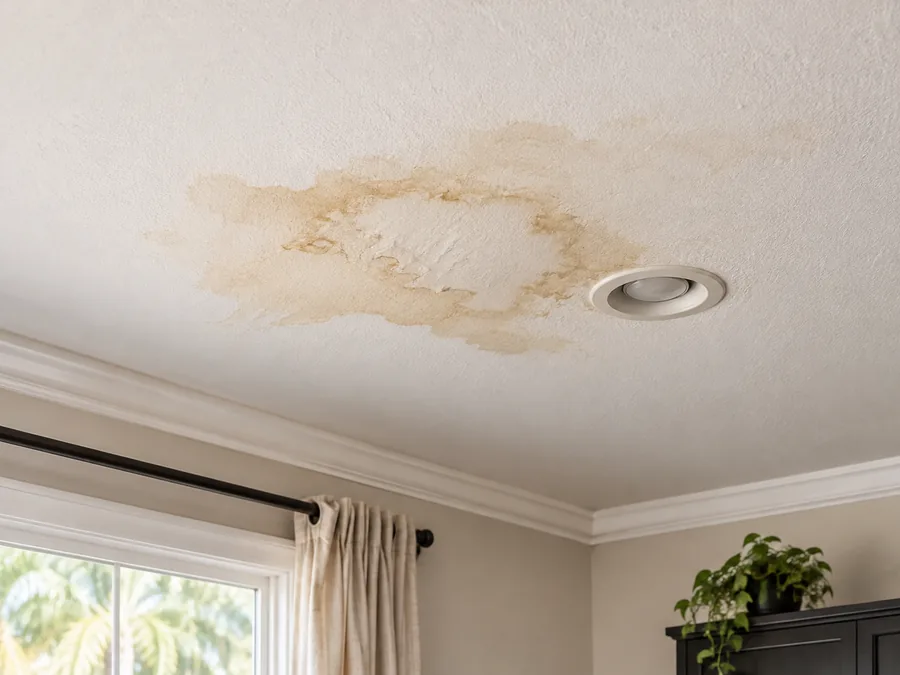
If overhanging branches have been allowed to scrape your roof for several seasons, the resulting damage may extend far beyond superficial scuffs. Chronic abrasion often wears away entire shingle sections, while trapped organic mulch rots the underlying decking.
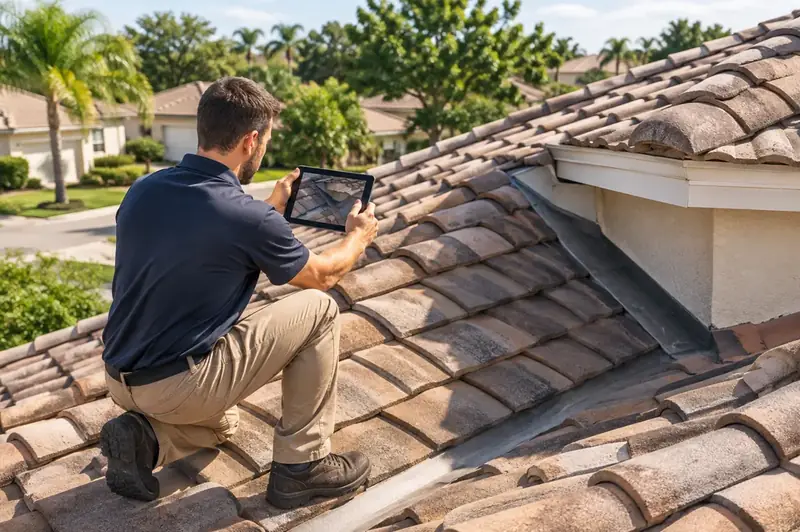
When extensive branch scouring coincides with widespread shingle brittleness or structural sheathing sag across multiple roof planes, simple spot repairs are no longer adequate to ensure hurricane readiness. Homeowners in these circumstances should consult with licensed roofing professionals to evaluate whether a comprehensive roof replacement in Lake Mary, FL—combined with an initial perimeter canopy setback—provides the necessary storm-rated protection and peace of mind.
Frequently Asked Questions About Tree Trimming and Roof Care
Arborists and roofing structural engineers recommend maintaining a minimum clearance of 10 feet between any tree limb and your roof covering. A 10-foot buffer accounts for branch sag under heavy summer rainfall, accommodates vigorous seasonal growth, prevents wind gusts from whipping branches against the roof, and exceeds the maximum leaping distance of roof rats and gray squirrels.
Yes. Under Florida common law (specifically established by the Florida Supreme Court in Gallo v. Heller), property owners have the legal right to trim encroaching branches and roots extending across their property boundary line up to the vertical property plane, provided the trimming does not cause permanent structural damage or kill the neighbor's tree. The cost of trimming overhanging limbs across your boundary line rests with you as the property owner executing the maintenance.
Typically, no. Standard Florida homeowner insurance policies only provide debris removal coverage if the fallen tree or branch has struck a covered structure (such as the main dwelling, garage, or fence) and caused physical damage. If a branch falls harmlessly across your lawn without damaging a building or blocking a primary driveway, the cost of tree removal and disposal is the homeowner's out-of-pocket responsibility.
Not when performed by an ISA-certified arborist following ANSI A300 standards. Professional arborists adhere to the "25% rule," ensuring that no more than 20% to 25% of a mature tree's living canopy is removed in a single calendar year. By pruning selectively and cutting back to proper branch collars rather than flush-cutting or topping, the tree remains healthy and vigorous while establishing safe clearance from your home.
The ideal window for heavy canopy pruning in Central Florida is during the winter dry season, between December and March. Trees are in a semi-dormant state, minimizing physiological sap stress and allowing pruning cuts to begin compartmentalizing before spring growth resumes. Furthermore, trimming trees during the winter guarantees your roofline possesses full clearance months before the Atlantic hurricane season starts on June 1.
Related Central Florida Roofing Guides: Continue reading Black Streaks on Florida Roofs: Algae Cause & Prevention and Roof Cleaning in Orlando: Soft Wash vs. Pressure Washing.