How often should you inspect your Florida roof? See the schedule that satisfies insurers and catches hidden leaks. Call (689) 359-5257 to book.
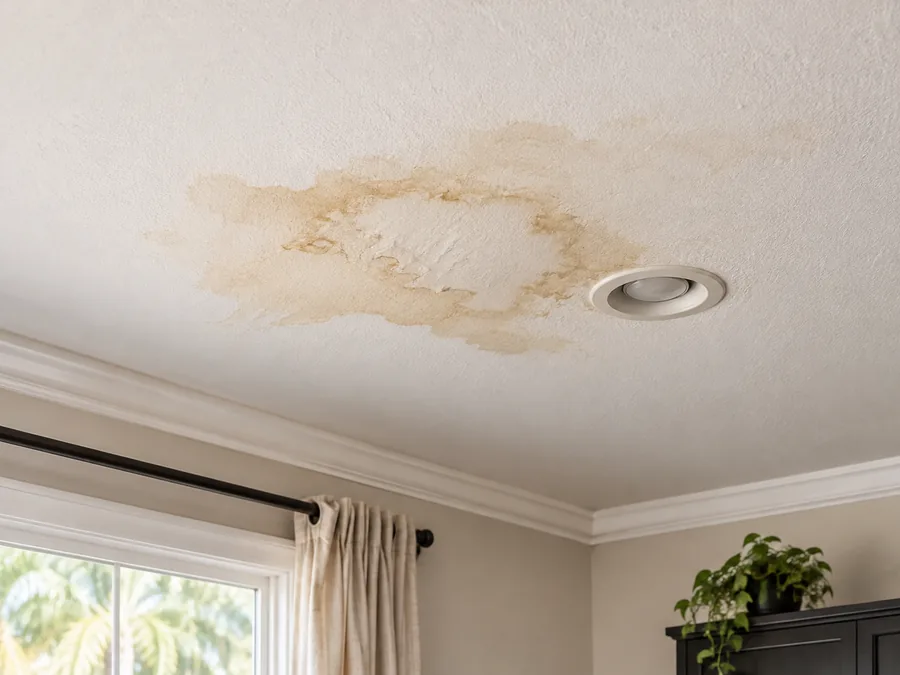
In Central Florida's subtropical climate, residential roofs should receive a comprehensive professional inspection at least once every 12 to 24 months, with immediate evaluations following any named tropical storm or severe hail event. Because extreme solar ultraviolet exposure, 150-degree attic heat, and heavy convective rains degrade flashings and sealants twice as fast as in northern regions, waiting until a leak stains indoor ceilings often results in thousands of dollars in preventable structural rot and drywall damage.
The Central Florida Climate: Why National Inspection Guidelines Fail
Standard home improvement publications frequently tell homeowners that a roof only needs inspection every three to five years, or when selling the property. While this advice might suffice for moderate northern climates, applying it in Central Florida is a recipe for premature roof failure.
Central Florida roofs operate under continuous, severe thermodynamic stress. The region experiences over 3,000 hours of intense sunshine annually, bombarding asphalt shingles, concrete tiles, and underlayments with high-energy ultraviolet (UV) radiation. In mid-summer, dark roof surfaces reach temperatures between 150°F and 165°F. When a typical afternoon convective thunderstorm suddenly dumps cold 65°F rain across the hot roof, the assembly undergoes rapid "thermal shock." This sudden 80-degree temperature drop induces microscopic contraction cycles that pull at sealant bonds, stress fastener penetrations, and cause metal flashings to expand and contract repeatedly against adjacent masonry.
Compounding this thermal stress is Central Florida's average annual precipitation of over 50 inches, delivered largely in high-intensity downpours. A micro-fracture or failed pipe boot seal that might go unnoticed in a dry state will allow gallons of water to saturate roof sheathing and interior insulation within a single Florida afternoon storm.
Inspection Frequency Benchmarks by Material Type and Age
The ideal inspection cadence depends heavily on the specific covering material, system design, and chronological age of the assembly:
- Architectural Asphalt Shingles (Years 0 to 10): Modern dimensional shingles should be inspected every two years during their first decade. These early-stage evaluations verify that manufacturer sealant strips remain properly bonded, that high winds have not caused localized tab uplift, and that tree branches have not begun scouring the mineral granules.
- Architectural Asphalt Shingles (Years 11 to 15+): Once asphalt shingles pass their tenth year under the Florida sun, professional inspections must occur annually. At this stage, volatile petroleum plasticizers have evaporated from the asphalt bitumen, making the shingle mat brittle. Annual audits check for micro-cracking, granule thinning in watercourses, and flashing caulking separation.
- Concrete and Clay Tile Roofs: While heavy concrete tiles can endure for 40 to 50 years, the underlying waterproofing membrane (modified bitumen or organic felt) typically breaks down between years 18 and 25. Tile roofs should receive a professional evaluation every two years, focusing specifically on broken tiles, clogged drainage valleys, and degraded valley flashings.
- Standing Seam and 5V Crimp Metal Roofs: High-grade concealed-fastener standing seam systems require inspection every two to three years, primarily to verify that ridge vent closures, gable trim seals, and expansion clips operate smoothly. Exposed-fastener metal roofs (such as 5V Crimp) require inspection every 12 to 18 months because their exposed neoprene washer screws degrade under UV rays and back out under wind vibration.
Mandatory Trigger Events: When to Inspect Immediately Regardless of Schedule
Beyond routine calendar intervals, specific environmental and operational trigger events demand immediate professional inspection:
- Named Tropical Storms and Hurricanes: Any time a named system impacts the Central Florida corridor with sustained winds or gusts exceeding 50 MPH, a post-storm roof inspection is mandatory. Even if no shingles are visibly missing from the yard, wind uplift forces routinely break thermal adhesive bonds, leaving tabs loose and fluttering without obvious displacement.
- Severe Hail Events: Convective storms in Central Florida periodically produce hail measuring 0.75 inches or larger. Hail impact shatters the brittle fiberglass reinforcement mat beneath asphalt granules without necessarily punching a hole through the shingle. Over subsequent months, rainwater washes granules out of these bruised indentations, causing rapid localized rot.
- Tree Limb Strikes and Severe Overhangs: If a dead branch or falling tree limb impacts your roof during a summer storm, schedule an immediate professional audit to inspect the underlying plywood decking for structural hairline fractures that water can exploit.
- Following Third-Party Rooftop Trades: Whenever air conditioning mechanics, solar installers, pest control operators, or satellite technicians walk on your roof, having an independent roofing contractor verify that tiles were not cracked or flashing boots stepped on protects your home from unassigned liability.
Florida Insurance Mandates: 4-Point Inspections and Wind Mitigation Forms
In Florida's challenging property insurance market, professional roof inspections are not just good maintenance—they are frequently mandatory legal and financial prerequisites for obtaining or retaining homeowner coverage.
Under underwriting guidelines established by Citizens Property Insurance Corporation and private admitted carriers, homes with roofs exceeding 10 to 15 years of age must submit a certified 4-Point Inspection report completed by a licensed inspector or roofing contractor. Florida Statute § 627.7011 outlines replacement cost and actual cash value requirements, and insurance carriers routinely require documentation proving that an aging roof possesses at least three to five years of remaining useful life. Failing an inspection can trigger immediate non-renewal notices.
Additionally, scheduling a professional roof inspection to verify your roof's wind-resistive features via the Uniform Mitigation Verification Inspection Form (Form OIR-B1-1802) can save homeowners hundreds to thousands of dollars annually. Qualified inspectors verify deck nail spacing (such as 8d ring-shank nails at 6-inch intervals), the presence of a sealed secondary water barrier, and roof-to-wall hurricane clip attachments, translating physical resilience into substantial statutory insurance discounts.
What a Comprehensive Inspection Examines in Windermere
A true professional roof audit is vastly different from a casual glance from the driveway. In affluent, lakefront communities like Windermere, homes often feature intricate custom rooflines with steep multi-plane geometries, delicate imported barrel tiles, and expansive low-slope covered patios that require sophisticated evaluation methods.
A rigorous professional inspection encompasses three distinct structural zones:
- Exterior Surface and Flashing Evaluation: The inspector systematically probes shingle tab adhesion, examines valley metal troughs for silt damming, checks step flashing kick-out angles along exterior stucco walls, inspects chimney crickets, and evaluates the UV elasticity of all plumbing vent pipe boots. On fragile tile roofs, inspectors often deploy high-resolution commercial drones with optical zoom to inspect tile crests and hip mortar caps without cracking delicate clay or concrete assemblies underfoot.
- Attic Underside Inspection: The technician enters the attic cavity with a high-lumen inspection light. They inspect the underside of the CDX plywood or OSB roof sheathing for moisture staining, wood delamination, mildew growth, and rusted "shiner" nails. They also verify that soffit intake baffles are unobstructed by insulation, ensuring proper airflow per Florida Building Code Section R806.
- Moisture Detection and Thermal Imaging: On low-slope or complex tile assemblies, certified inspectors utilize non-destructive electronic moisture meters and forward-looking infrared (FLIR) thermal imaging cameras. These instruments detect hidden moisture trapped within underlayment layers long before water penetrates the ceiling drywall below.
For homeowners managing lakefront weather exposure, scheduling a targeted roof inspection in Windermere, FL ensures that subtle wind-driven rain penetration points along lake-facing gables and tile flashings are diagnosed and corrected before the height of storm season.
| Roofing System | Age Bracket | Recommended Frequency | Primary Inspection Targets | Insurance Scrutiny Level |
|---|---|---|---|---|
| Architectural Shingles | 0 to 10 Years | Every 24 Months | Sealant line bonding, pipe boots, ridge cap stability | Low (Standard underwriting acceptance) |
| Architectural Shingles | 11 to 15+ Years | Every 12 Months | Granule thinning, fiberglass exposure, tab embrittlement | High (Annual 4-Point inspection demands) |
| Concrete & Clay Tile | Any Age | Every 24 Months | Cracked/slipped tiles, valley silt dams, underlayment age | Moderate (Focus on remaining underlayment life) |
| Standing Seam Metal | Any Age | Every 24 to 36 Months | Ridge vent seals, gable trim fasteners, end lap caulking | Very Low (Recognized for exceptional longevity) |
| Exposed-Fastener Metal (5V) | Any Age | Every 12 to 18 Months | Gasket washer degradation, backed-out screws, rust | Moderate (Fastener washer inspection required) |
| Flat / Low-Slope Membranes | Any Age | Every 12 Months | Ponding water, seam delamination, scupper drains | High (Low-slope systems require documented care) |
Documenting Roof Condition for Insurance Claims and Property Resale
Maintaining a documented history of periodic professional inspections is one of the strongest legal and financial safeguards a Florida property owner can possess. Under Florida Statute § 627.70132, homeowners face strict statutory deadlines for filing property insurance claims following a hurricane or severe storm event.
When an insurance field adjuster inspects a storm-damaged roof, insurance companies frequently attempt to classify torn shingles or water intrusion as "pre-existing wear, tear, and deferred maintenance." If you possess signed, dated inspection reports from an independently licensed roofing contractor from the preceding 12 to 24 months showing that your roof was in sound, leak-free condition prior to the storm, the insurance carrier cannot credibly claim the damage was pre-existing neglect. This written documentation routinely represents the difference between a fully approved insurance claim and an outright denial.
Frequently Asked Questions About Professional Roof Inspections
A free roofing estimate is typically a brief sales evaluation designed to measure square footage and calculate pricing for an immediate replacement. A comprehensive professional roof inspection is a detailed technical diagnostic audit. A true inspection evaluates all flashing details, penetrations, attic decking integrity, ventilation balances, and granule adhesion, producing a written diagnostic report with photographic evidence regardless of whether you need a new roof.
Yes. Licensed roofing contractors and certified building inspectors assess specific physical degradation markers—including remaining shingle granule coverage, asphalt brittleness, tab adhesion strength, and underlayment elasticity—to calculate an estimated remaining useful life. This figure is officially required on standard Florida 4-Point Inspection forms submitted to insurance underwriters.
In the Orlando metropolitan area, a standalone professional roof inspection providing a certified condition report typically ranges from $150 to $350 for standard residential homes. Standalone Wind Mitigation Inspections (Form OIR-B1-1802) generally cost between $75 and $150, while bundled 4-Point and Wind Mitigation packages run between $200 and $400. Many roofing contractors also offer zero-obligation health evaluations as part of routine service calls.
If an inspector is not specifically trained in tile roofing, walking across barrel tiles will easily crack fragile interlocking edges. Experienced roofing specialists know the exact weight distribution points—stepping only on the lower three inches of the tile where the overlapping course rests directly on the battens below. Furthermore, modern professional inspectors utilize high-definition aerial drones to inspect fragile tile roofs thoroughly without setting foot on the covering.
You should schedule an inspection within 7 to 14 days following any named tropical storm or hurricane. While emergency tarping is prioritized immediately for active breaches, having an inspector evaluate subtle wind uplift, unsealed tabs, and pipe boot dislodgement promptly ensures that storm-related micro-damage is documented before subsequent afternoon rainstorms worsen interior damage.
Related Central Florida Roofing Guides: Continue reading Black Streaks on Florida Roofs: Algae Cause & Prevention and Roof Cleaning in Orlando: Soft Wash vs. Pressure Washing.