Worried a roof claim will get you dropped? See what s. 627.4133 says about notice, hurricane damage and roof age, and what to ask your insurer first.
Following a destructive storm in Central Florida, one of the most common fears preventing homeowners from filing a legitimate roof damage claim is the threat of retaliation: "Will my insurance company drop me if I file a roof claim?" In Florida's volatile and tightly restricted property insurance market, this anxiety is completely understandable. However, Florida law provides explicit statutory protections that prevent insurance companies from arbitrarily canceling or non-renewing policyholders simply for filing a single covered storm claim. At the same time, carriers utilize subtle underwriting rules—including market de-risking, roof age thresholds, and CLUE claims databases—to reshape their portfolios. This guide explains Florida Statute § 627.4133 notice protections, the 15-year roof age rule under § 627.7011, and the step-by-step action plan if your insurer issues a non-renewal notice.
The Short Answer: The Legal vs. Underwriting Reality
Under Florida law, an insurance company cannot immediately cancel your active policy simply because you filed a legitimate storm damage claim. When you purchase a policy, you pay premiums for protection against covered perils like hurricane wind, hail, and fallen trees. Filing a claim under a policy in good standing is your contractual right.
However, an insurance company is not legally obligated to renew your policy indefinitely once your current annual term expires. While Florida statutes prevent retaliatory non-renewals while storm repairs are actively underway, insurers can choose not to renew a policy at the end of the policy term by providing proper advance notice and citing approved underwriting reasons.
| Statutory Protection / Scenario | What Florida Law Mandates | What Insurers Can Still Legally Do |
|---|---|---|
| Active Hurricane / Storm Claim | Cannot cancel or non-renew until 90 days after repairs are substantially completed (F.S. § 627.4133(2)(d)) | Can non-renew after the 90-day post-repair window closes with proper 120-day notice |
| Roof Age Under 15 Years | Cannot refuse coverage solely for roof age if the roof is under 15 years old (F.S. § 627.7011) | Can non-renew for other underwriting factors (such as proximity to coast or high claims ZIP codes) |
| Roof Age 15+ Years Old | Cannot refuse coverage if an authorized inspection proves at least 3 years remaining life | Can require full roof replacement as a mandatory condition of renewal if inspection fails |
| Non-Renewal Notice Timing | Insurer must provide at least 120 days advance written notice prior to expiration | If 120 days notice is properly provided, non-renewal is legally enforceable |
| Multiple Water/Storm Claims | No specific statutory cap; governed by actuarial underwriting guidelines | Can legally non-renew if home has 2+ claims within a 3-year rolling window |
Statutory Protection 1: The Hurricane Claim Shield (F.S. § 627.4133)
The strongest protection in Florida law applies to damage caused by a declared hurricane or windstorm event. Under Florida Statute § 627.4133(2)(d), an insurer is strictly prohibited from canceling or non-renewing a residential property insurance policy if the property has suffered damage from a hurricane or windstorm until at least 90 days after the dwelling has been repaired.
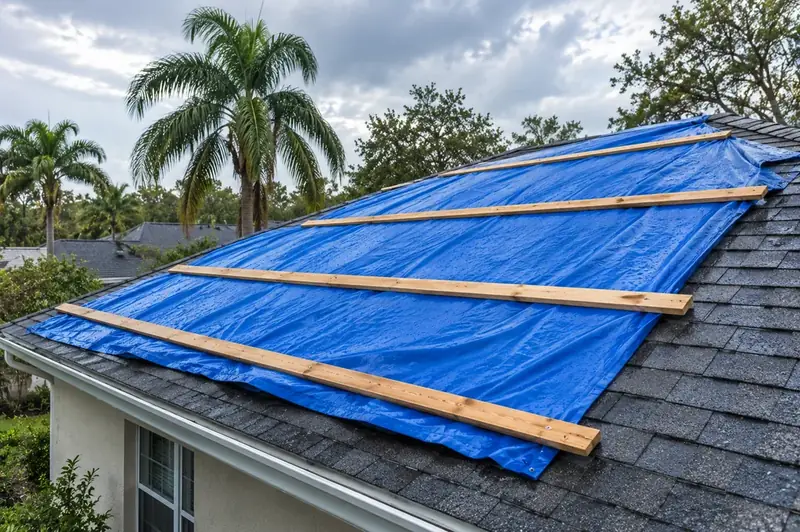
This law prevents an insurer from abandoning a homeowner in the middle of a disaster. If your roof suffers severe damage during a storm and you file a claim, your insurance company cannot issue a cancellation notice while your home is covered by an emergency tarp waiting on permit approvals or contractor materials. The 90-day protection clock does not even begin until the city or county building department completes the final re-roofing inspection and issues a Certificate of Completion.
What If the Insurer Goes Insolvent?
The only exception to the 90-day post-repair shield is if the Florida Office of Insurance Regulation (OIR) determines that the insurance company is financially impaired or insolvent. In that scenario, the Florida Insurance Guaranty Association (FIGA) assumes responsibility for paying outstanding covered repair costs.
Statutory Protection 2: The 15-Year Roof Age Law (F.S. § 627.7011)
Historically, Florida insurance carriers routinely dropped homeowners simply because their asphalt shingle roof reached 10 or 12 years of age, regardless of whether the roof was in pristine condition. To protect consumers, the Florida Legislature enacted major underwriting reforms under Florida Statute § 627.7011(5):
- Roofs Less Than 15 Years Old: An admitted Florida insurer cannot refuse to issue or renew a homeowners insurance policy solely because of the age of the roof if the roof is less than 15 years old.
- Roofs 15 Years of Age or Older: If your roof is 15 years old or older, the insurer cannot deny coverage solely for age if you provide a certified roof inspection report from a licensed roofing contractor or certified home inspector stating that the roof has at least 5 years of remaining useful life (under Florida Statute s. 627.7011 for roofs 15+ years old).
If your roof is 14 years old and an insurer attempts to drop you citing "roof age," they are in direct violation of Florida law. If your roof is 16 years old, hiring a licensed contractor to perform a certified roof inspection verifying at least 5 years (per s. 627.7011 for roofs 15+ years old) of serviceable life legally obligates the carrier to maintain coverage.
How Insurers Drop Policyholders in Practice: The "De-Risking" Playbook
If Florida law protects policyholders against direct retaliation for filing a storm claim, how do homeowners still find themselves dropped? Insurance carriers use indirect underwriting mechanisms:
1. Blanket Market De-Risking and ZIP Code Withdrawal
Rather than dropping you specifically because of your claim, the insurance company files an approved "underwriting reduction plan" with the Florida OIR. They may decide to non-renew 5,000 policies across specific Orlando or Central Florida ZIP codes to reduce their total catastrophic exposure. If your home happens to sit in that targeted boundary, you will receive a non-renewal notice regardless of your personal claims history.
2. The CLUE Claims Database (Comprehensive Loss Underwriting Exchange)
When you file an insurance claim, the data is reported to the CLUE database, operated by LexisNexis. The CLUE report records the property address, date of loss, cause of loss (wind, water, hail), and total amount paid. CLUE records remain attached to the property for 5 to 7 years. While your current insurer may keep you, having a major roof claim on your CLUE report can make switching to a cheaper private insurer difficult until the claim ages past 3 to 5 years.
3. The 120-Day Notice Rule
In Florida, an insurer can choose not to renew your policy at the expiration of your annual term for general underwriting reasons, provided they deliver written notice to you at least 120 days prior to the expiration date. The notice must state the specific reason for non-renewal in plain language.
Facing a Roof Inspection or Insurance Non-Renewal?
We provide certified Florida roof inspection letters and 4-point documentation to keep your homeowners policy active.
What to Do If You Receive a Non-Renewal Notice in Orlando
If a 120-day non-renewal notice arrives in your mailbox, do not panic. Follow this step-by-step strategy:
- Review the Stated Reason: Read the letter carefully. If the reason cited is "roof age" and your roof is under 15 years old, contact your insurance agent immediately and cite F.S. § 627.7011. Insurers frequently make automated administrative errors that an agent can correct.
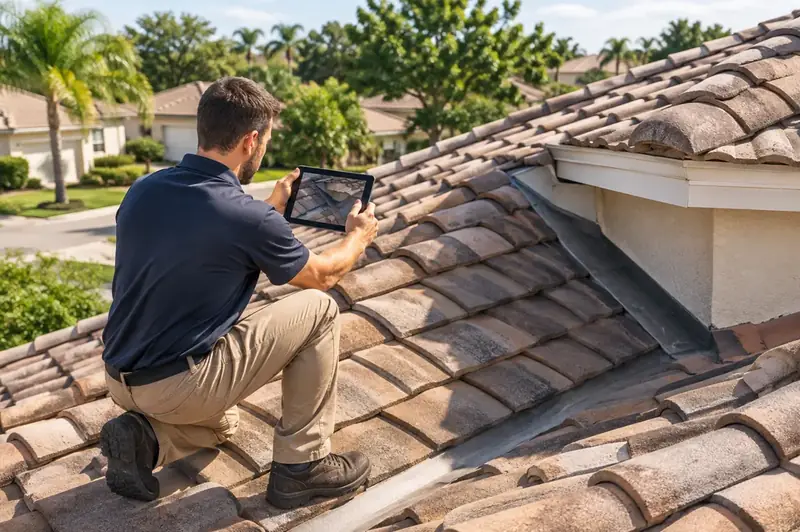
- Obtain a Roof Remaining Useful Life Inspection: If your roof is over 15 years old, hire an independent licensed roofing contractor to perform a formal inspection. If they certify 3+ years of useful life, submit the signed form to your insurer.
- Complete Minor Repairs: If an insurer threatens non-renewal due to minor issues identified in an aerial satellite sweep (such as minor tree branch rubbing or a missing shingle tab), complete the repair immediately, take color photos, and provide the paid contractor invoice to rescind the notice.
- Shop the Florida Private Market: Work with an independent Florida insurance broker who represents multiple regional carriers (such as Slide, Florida Peninsula, Heritage, American Traditions, and TypTap).
- Turn to Citizens Property Insurance: If you cannot secure private market coverage, you are legally eligible for coverage through Citizens Property Insurance Corporation, the state-backed insurer of last resort. Under current Florida law, you can remain with Citizens if comparable private insurance quotes are more than 20% higher than the Citizens premium.
Frequently Asked Questions
No. Under Florida Statute § 627.4133(2)(d), an insurer cannot cancel or non-renew a policy on a property damaged by a hurricane or windstorm until at least 90 days after the repairs have been substantially completed and finalized through building permits.
No. Under Florida Statute § 627.7011, property insurers cannot refuse to write or renew a homeowners insurance policy solely because of roof age if the roof is less than 15 years old. If an insurer cites a 12-year-old roof as the sole reason for non-renewal, they are violating state law.
Florida law mandates that residential property insurers provide at least 120 days advance written notice prior to the policy expiration date. The notice must specify the clear underwriting reason for non-renewal.
Under Florida law, an insurer cannot raise an individual policyholder's rates solely because they filed a weather-related "Act of God" storm claim. However, insurers routinely file statewide rate increases for entire geographic regions following major hurricanes, affecting all policyholders equally.
If your roof is 15 years old or older, Florida law allows you to submit a certified inspection from a licensed roofing contractor stating that the roof has at least 5 years of remaining useful life (under Florida Statute s. 627.7011 for roofs 15+ years old). Submitting this certified inspection legally bars the carrier from dropping you solely due to roof age.
Sources & Statutory Verification
Florida statutes and regulatory references verified in October 2026:
- Florida Statutes § 627.4133 — Notice of Cancellation, Nonrenewal, or Renewal Premium (90-Day Post-Storm Repair Protection)
- Florida Statutes § 627.7011 — Homeowners Policies; Underwriting Criteria and 15-Year Roof Age Protections
- Florida Office of Insurance Regulation (OIR) — Consumer Guidance on Property Insurance Non-Renewals
Promptly repairing leak sources avoids insurer non-renewal notices triggered by open structural claims. For properties in Dr. Phillips, FL, arrange storm mitigation through our Dr. Phillips emergency roof repair service.
Keep Reading
- Dr. Phillips, FL Roofing Overview
- Emergency Roof Repair in Dr. Phillips
- Complete Florida Roofing Insurance & Claims Guide
- Roof Certification Letters & Useful Life Inspections
- Central Florida Storm Damage & Insurance Claims
- What Voids a Roof Insurance Claim in Florida?
- What to Do Immediately After a Hurricane Hits Your Roof