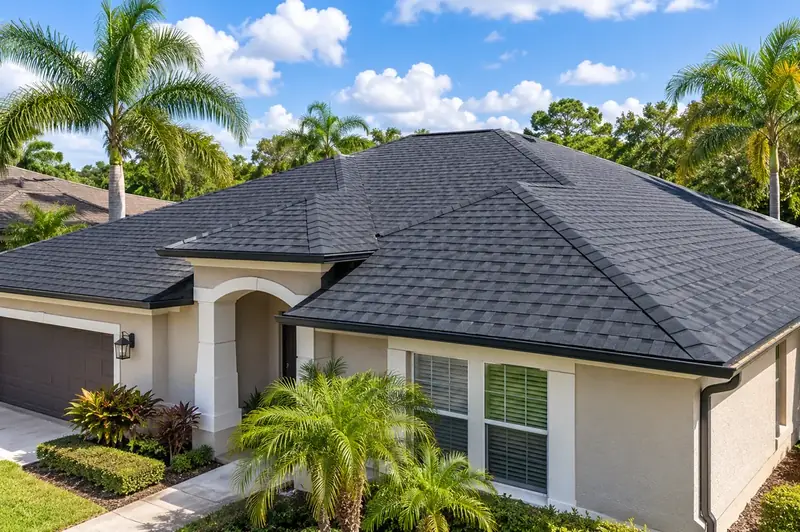
Want roofing quotes you can actually compare? Learn how to request several bids in Orlando, spot lowball tactics and choose on value, not just price.
Everyone says to get three quotes. Few people say what to do with them. In roofing, three quotes can be three different roofs, and the cheapest is often the one that left things out and will find them later as 'extras'. This post is a method: how to ask for quotes so they can be compared, how to spot a lowball, and how to choose a contractor on value.
Start With What You Are Asking For
Quotes are only comparable if every contractor prices the same job. Before you call anyone, write down what you want: tear-off to the deck, replacement of damaged sheathing, a named underlayment and secondary water barrier, new flashing and drip edge and boots, ventilation, the shingle line or material, and the permit. Ask each contractor to quote that, and to tell you where they would change it.
If you do not know what you want, a free inspection from a licensed contractor is a way to get the scope. Then use that scope for the other bids. See free roof inspection.
Ask for the Same Items From Everyone
| Ask each bidder to state | Why it matters |
|---|---|
| Roof area and how it was measured | So you compare price on the same area |
| Tear-off: number of layers and disposal | A hidden cost if extra layers are found |
| Deck allowance and per-sheet price | The most common source of 'extras' |
| Underlayment and secondary water barrier, by product | Affects waterproofing and wind credits |
| Flashing, drip edge, pipe boots, vents | Reuse versus replace |
| Product, line, color, and Florida product approval | Stops substitution of a cheaper product |
| Permit and inspections: who handles them | Unpermitted work is a red flag |
| Payment schedule | Protects your money |
| Workmanship warranty length and terms | The contractor's own promise |
| Start date and expected duration | Sets expectations |
How Lowballing Works
A lowball bid wins by being the cheapest number, and recovers the margin later. The common methods are well known.
- Leaving out the deck allowance, then charging per sheet at a high price once the roof is open
- Using a thinner underlayment or skipping the secondary water barrier
- Quoting a lower-grade shingle than the one you discussed
- Excluding permits, disposal, flashing, or ventilation
- Quoting a price that assumes no complications, then adding change orders
- Offering a big discount for signing today
None of these is illegal in itself, but they are how a low bid becomes a high bill. The defense is the checklist above and a contract that states each item.
Want a clear scope to compare?
A free inspection with photographs and a written scope gives you a baseline for other bids.
Red Flags Beyond the Price
- No verifiable Florida license. Check MyFloridaLicense.com
- No proof of insurance. Ask for a certificate showing general liability and workers' compensation
- A large deposit. Under Florida law a contractor taking more than 10% initially on residential work must apply for permits within 30 days and start work within 90 days after permits, unless there is lawful excuse
- Pressure to sign immediately
- Door-to-door solicitation after a storm
- An offer to waive or absorb your insurance deductible, which is insurance fraud when done with intent to defraud
- No written contract, or a contract that is vague about products and scope
Roofing contractors in Florida hold a Certified (CCC) or Registered (RC) license, and certified licenses are valid statewide, while registered licenses are limited to the registered jurisdictions. Verify the license type covers your address.
How to Compare Once the Bids Are In
- Line up the bids in a spreadsheet by item
- Mark what each includes and what is missing
- Add the cost of missing items, using the other bids' prices or asking for numbers
- Compare warranties and payment terms
- Check references and recent jobs similar to yours
- Ask each contractor to explain any big difference from the others
- Choose on value: scope, quality, warranty, and reliability, then price
If one bid is much lower, ask the contractor to confirm in writing what is and is not included. A contractor with a good explanation will give one. One without will not.
Questions That Reveal a Good Contractor
- Can you show me your license and insurance?
- Who will actually do the work: your crew or subcontractors?
- What happens if we find rotted decking, and how will it be priced?
- How do you protect the house when it rains during the job?
- Who pulls the permit, and what inspections will there be?
- What does your workmanship warranty cover, and for how long?
- Can I speak with a customer whose roof you installed in the last year or two?
Pay for Stages, Not Promises
A sensible payment schedule ties payments to completed stages: a modest deposit at contract, a payment when materials are delivered or tear-off completes, and a final payment after the final inspection and a walkthrough. Do not pay in full before the work is done, and do not let a contractor hold your final payment hostage with extras you did not agree to in writing.
Residential contracts over $2,500 must include the Homeowners' Construction Recovery Fund notice under section 489.1425. If yours does not, ask why.
A Sample Comparison, Line by Line
Here is how a comparison sheet might look for a hypothetical shingle re-roof. The figures are invented to show the method, not to suggest prices.
| Item | Bid A | Bid B | Bid C |
|---|---|---|---|
| Total price | Lowest | Middle | Highest |
| Roof area stated and measured | No | Yes, aerial report | Yes, on-roof |
| Tear-off and disposal | Not stated | One layer | One layer, extra layers priced |
| Deck allowance | None | Per-sheet price | Per-sheet price and 10 sheets included |
| Underlayment | Felt | Synthetic | Synthetic plus sealed barrier |
| Flashing and drip edge | Reuse | Replace | Replace |
| Product and approval | 'Architectural shingle' | Named line and color | Named line, color, approval number |
| Permit and inspections | Not mentioned | Included | Included, with schedule |
| Workmanship warranty | Not stated | 5 years | 10 years |
Illustration only. Real bids vary.
Bid A is cheap because it says less. Bids B and C say more, and the question becomes whether the extra scope in C is worth its price to you. That is a decision you can make with information, not a guess.
Handling Pressure and Deadlines
Pressure tactics are common: a discount that expires today, a claim that materials are about to go up, a crew that is only in your neighborhood this week. Real scheduling pressure exists after storms, but it does not justify skipping the license check or the written scope. A good contractor can wait a few days for you to compare, and a contractor who cannot is telling you something.
- Ask for the quote in writing and take time to compare
- Say that you are collecting several itemized bids
- Do not sign a blank or incomplete contract
- Do not sign inspection or authorization forms that assign your claim rights
When Storm Damage Is Involved
If a covered event damaged your roof, the insurer's adjuster sets the claim, and the contractor's estimate is a separate document. A contractor cannot waive your deductible or negotiate your claim, and Florida law restricts offers tied to roof inspections and claims. Collect your own estimates, and do not sign anything that assigns your claim rights. See the Florida roofing insurance guide.
Sources & Verification
Facts on this page were checked against the sources below in October 2026. Laws, codes, and program rules change, so confirm current details with the agency before you rely on them.
Frequently Asked Questions
Two or three itemized quotes on the same scope are enough for most homes.
No. Check what is included, and weigh warranty and reliability.
A price low enough to win the job, with the margin recovered through extras and omissions.
Search the contractor on MyFloridaLicense.com and confirm it is active and covers your location.
Not if the contractor provides photographs and a written scope without pressure. It is a good way to define the scope.
Ask each bidder to explain, and line up the scopes. The cause is usually the scope.
Comparing detailed written proposals ensures you evaluate identical underlayment, ventilation, and permit line items. For property owners in Winter Garden, FL, review our Winter Garden roof replacement guide to see complete scope breakdowns.
Keep Reading
- Winter Garden, FL Roofing Overview
- Roof Replacement in Winter Garden
- Roof Replacement Cost Guide
- How We Vet Local Roofing Crews in Orlando
- Orlando Roof Replacement Guide & Standards
Related Central Florida Roofing Guides: Continue reading How Much Does a New Roof Cost in Orlando Without Insurance? and Roof Cost Per Square vs. Per Square Foot Explained.